BAE Systems collaborates with GlobalFoundries to produce RAD510 SoC
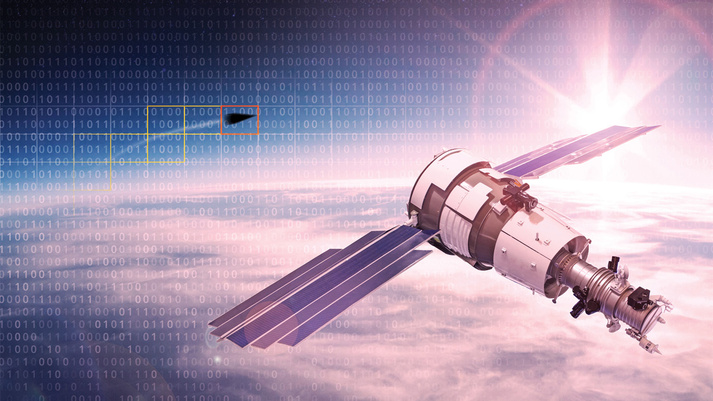
Above:
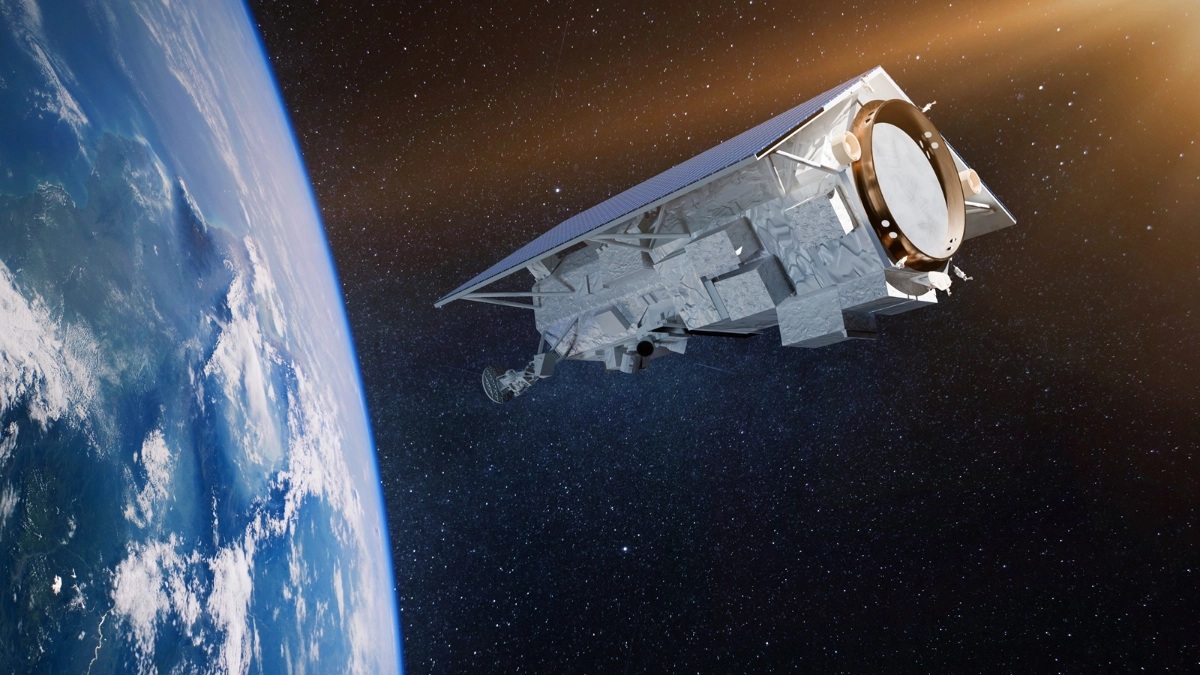
The RAD510 SoC will provide Power Architecture software-compatible processing more advanced than the industry standard RAD750, while demanding less power from its spacecraft.
Courtesy BAE Systems
Designed by BAE Systems and manufactured by GlobalFoundries (GF), the radiation-hardened RAD510 System on Chip (SoC) for space-based computing is now entering fabrication.

The RAD510 SoC will be the core of a single board computer (SBC) with twice the performance capability of the industry standard RAD750 microprocessor. The new SBC will provide Power Architecture software-compatible processing that is more advanced than the RAD750 radiation-hardened general purpose processor, while demanding less power from its spacecraft.
“The RAD510 SBC is the natural evolution of our RAD750 heritage microprocessor-based SBC, which has powered many of the most important national space assets,” said Ricardo Gonzalez, director of Space Systems at BAE Systems. “These high-reliability computers increase performance capability for satellites and other spacecraft, making space missions more effective. BAE Systems’ relationship with GlobalFoundries began in 2001 with the development of the highly successful RH25 semiconductor technology node.”
The RAD510 SoC is already being integrated into SBCs that will be available to space agencies and spacecraft manufacturers this year. For ease of transition, the software is compatible with both the RAD750 and RAD5545 computers. The BAE Systems family of space-based electronics can withstand radiation doses a million times stronger than a fatal human dose; that durability is valued on missions like GPS III, Mars rovers and many satellites on-orbit today. The RAD510 SBC also requires less power and has the radiation advantages of RH45 45nm silicon-on-isolator (SOI) technology.
“We are proud to work with BAE Systems and leverage the performance, reliability and energy efficiency of our 45nm semiconductor platform to meet the stringent requirements of space,” said Mike Hogan, senior vice president and general manager of Automotive, Industrial and Multi-market at GF. “As the industry leader in semiconductors for sensitive aerospace and defence applications, GF knows what it takes to develop and manufacture solutions requiring the highest levels of security.”
BAE Systems’ facility in Manassas, Va. is a US Department of Defense Category 1A Microelectronics Trusted Source. The company’s radiation-hardened electronics have been on-board satellites and spacecraft for almost 30 years, delivering long-lasting computing power in extreme environments.
The RAD510 SoCs are manufactured at GF’s Fab 10 facility in East Fishkill, NY, also a US Department of Defense Category 1A Microelectronics Trusted Source. GF and BAE Systems have initiated the process of transitioning the manufacturing of 45 nm SOI technology to GF’s most advanced facility, Fab 8 in Malta, NY, making it available to the space community in the future.
BAE Systems also offers a suite of radiation-hardened Serial RapidIO network products which complement the RAD510 SBC and allow the user to efficiently manage and route data through the system. These include the RADNET 1848-PS, an 18-Port RapidIO Packet Switch, the RADNET 1616-XP Crosspoint, a protocol agnostic SerDes signal circuit switch and replicator, and the RADNET SRIO-EP, a Serial RapidIO endpoint.
GlobalFoundries delivers differentiated feature-rich solutions for customers to develop innovative products for high-growth market segments. The company provides a broad range of platforms and features with a unique mix of design, development and fabrication services. With an at-scale manufacturing footprint spanning the US, Europe and Asia, it is owned by the Mubadala Investment Company.