BAE Systems' flight control tech to dive with Dreadnought
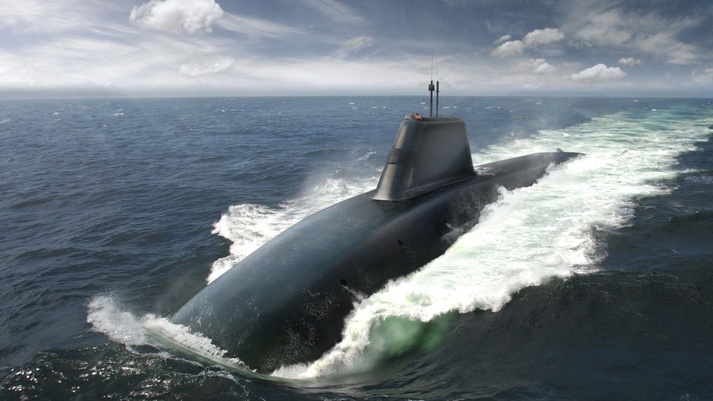
Above:
BAE Systems is taking decades of flight controls expertise underwater on-board the UK's next generation submarine, Dreadnought.
Courtesy BAE Systems
This innovative approach involves adapting controls that are usually used in fly-by-wire aircraft and applying them in a marine environment. The complete Active Vehicle Control Management (AVCM) system will oversee all major aspects of the submarines’ manoeuvering capability to the highest levels of safety and reliability, similar to existing systems on modern air transport platforms.
Jon Tucker, Director for Maritime Controls at BAE Systems Controls and Avionics said: "With over 50 years of avionics experience, we already have a great understanding of how to develop complex, control systems for hi-tech platforms. However, taking our technology underwater brings exciting new challenges and we are proud to support the Dreadnought programme and play an important part in our national security effort."
Similar to how fly-by-wire works for aircraft - whereby electronic systems are used to control the movement of aircraft - the Company’s engineers are developing electronics that control the heading, pitch, depth and buoyancy of the Dreadnought class among other critical elements with added safety benefits.
Work has already begun, supporting more than 130 highly skilled jobs in Rochester, UK, with the number expected to grow. The programme is one of the largest development projects taking place at the Rochester site and we have made significant investments at the site to create new labs and workspaces to support this exciting programme.
The project marks the first time that major Royal Navy work has taken place in the Medway Towns since the Chatham Dockyard closure more than 25 years ago. The Dockyard itself was synonymous with the building of ships and submarines for centuries, up to the Royal Navy Submarine, HMS Ocelot, being built there in 1962.
The innovation has been developed in Rochester with engineers in our Electronic Systems business working closely with colleagues across the Company’s Maritime and Air sectors to develop a world-class system as part of our Active Vehicle Control One-Team. Our engineers will continue to develop the technologies with a view to expanding its applications to both other underwater and surface vessels.

BAE Systems has - for the first time - revealed the significant contribution the Dreadnought submarine programme makes to the UK economy, supporting almost 30,000 jobs across the country.
While nearly half of these jobs reside in the North West of England, the supply chain for Dreadnought extends to every region of the UK. Working with partners Rolls-Royce and the Submarine Delivery Agency as part of the Dreadnought Alliance, BAE Systems estimates it will spend in the region of £7.5 billion with 1,500 supply chain companies over the life of the programme across England, Scotland, Wales and Northern Ireland.
The Dreadnought class boats will be the Royal Navy’s biggest, most powerful and most technically advanced submarines when they begin to enter service from the early 2030s and will play a pivotal role in the nation’s defence and security for decades to come.
Work on the first two boats in the class is well underway at the Company’s shipyard in Barrow-in-Furness, Cumbria.
The research, which highlights the scale and influence the programme has on the UK’s industrial base and its contribution to the country’s economic prosperity, comes as the Government has reaffirmed its commitment to maintaining the UK’s Continuous At Sea Deterrent. Key findings of the research include:
- £2.5 billion worth of contracts have already been placed with suppliers across the UK, including:
- North West - £400m spent to date, including on power systems and sensors, supporting 13,500 jobs;
- Yorkshire and Humber - £350m spent to date, including on gear boxes and steel, supporting 2,500 jobs;
- South East - £235m spent to date, including on electrical systems, antenna systems and control panels, supporting 2,500 jobs;
- Scotland - £215m spent to date, including on periscopes, supporting 2,000 jobs.
- Of the 30,000 jobs which are sustained by the Dreadnought programme, nearly 8,000 are directly employed by BAE Systems, with 11,800 jobs in the programme’s supply chain and a further 10,200 (induced) jobs supported across the country.
- Dreadnought will have a sustained and lasting impact on UK employment, supporting thousands of jobs reaching all UK regions to at least 2035.