Advancing UK Aerospace, Defence, Security & Space Solutions Worldwide
  • Home
  • /
  • Space
  • /
  • BAE Systems launches MethaneSAT

Space

BAE Systems launches MethaneSAT
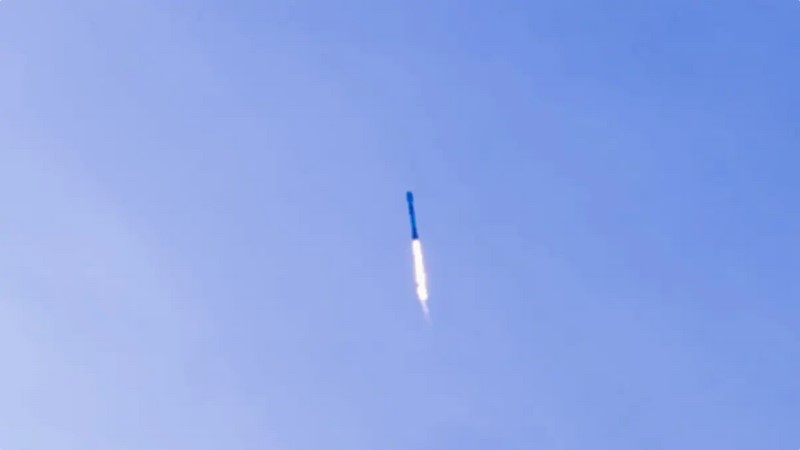
BAE Systems is celebrating alongside its customers at the Environmental Defense Fund (EDF) following the successful launch of the MethaneSAT satellite from Vandenberg Space Force Base in California yesterday.

Above: The MethaneSAT satellite successfully launched on a SpaceX Falcon 9 rocket from Vandenberg Space Fore Base in California, USA.
Courtesy BAE Systems

The satellite will provide the public with reliable scientific data about the sources and scale of methane emissions globally, with the ultimate goal of driving reductions in the near future.

Advertisement
PTC rectangle

Advertisement
ODU RT

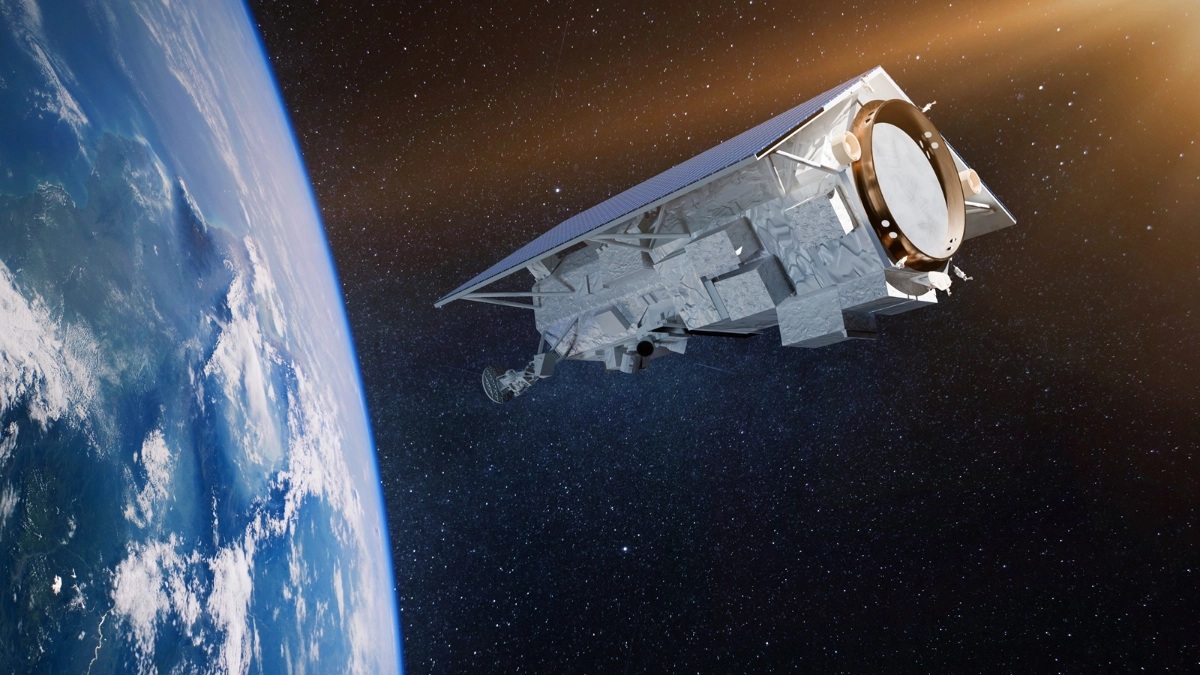
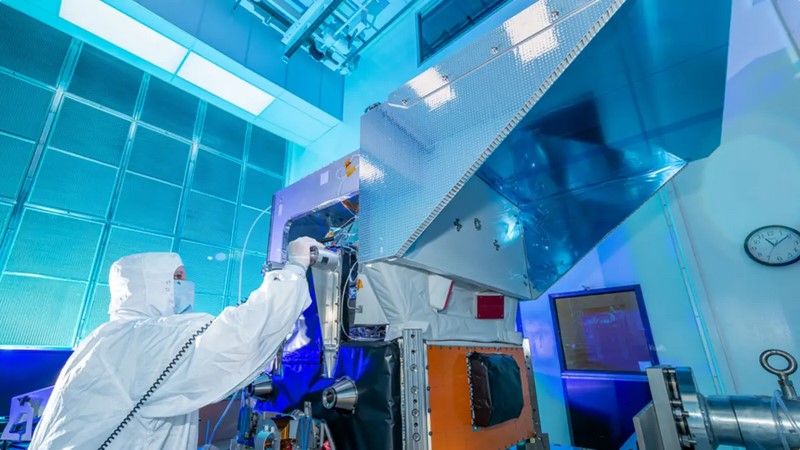
MethaneSAT’s primary instrument includes a BAE Systems-built spectrometer that will identify and quantify methane emissions by measuring the narrow part of the infrared spectrum where the gas absorbs light reflected off the Earth. The satellite will monitor emissions from the oil and gas sector, which accounts for about 40% of all human-caused methane emissions and it will be able to revisit the same sites daily in most instances.
 
MethaneSAT will also fill a gap in existing remote methane monitoring capabilities, offering high-precision emissions mapping over a broad 200km by 200km field of view. This satellite will further complement existing methane-monitoring satellites that focus on either larger scales or detecting point sources.


 
“MethaneSAT will make a critical difference in helping us better understand and remedy global greenhouse gas emissions,” said Dr. Alberto Conti, vice president and general manager of Civil Space for BAE Systems Space & Mission Systems. “MethaneSAT will advance our ability to identify and track emissions from their source, empowering stakeholders and the public with actionable data to enable reductions. We are thankful to our customers at the Environmental Defense Fund for developing this crucial mission, and we look forward to seeing all the change it will bring.”
 
BAE Systems worked alongside scientists from EDF and MethaneSAT, LLC, to design and build the primary instrument. The company also led spacecraft integration, environmental testing, and will provide commissioning services. Once commissioning is complete, EDF will launch a cloud-based platform in partnership with Google to distribute MethaneSAT data publicly and free of charge, ensuring the data will be easily accessible for all.
 
“MethaneSAT is a unique instrument with demanding specifications,” said Peter Vedder, senior director for mission systems at MethaneSAT. “It’s designed to see methane emissions that other satellites can’t, with unprecedented precision. BAE Systems helped us push the envelope to deliver a powerful new tool for protecting the climate.”


Advertisement
FIA2026 animated banner
UK and Ukraine strengthen civil space cooperation

Space

UK and Ukraine strengthen civil space cooperation

18 March 2026

A landmark agreement between the UK Space Agency and State Space Agency of Ukraine (SSAU) will open a new chapter in civil and commercial space cooperation between the two countries.

Met Office launches MAVIS

Aerospace Security Space

Met Office launches MAVIS

18 March 2026

The Met Office have officially launched the Met Office Aeronautical Visualisation Service (MAVIS) - a next-generation aviation weather platform designed to support a rapidly evolving aviation landscape, from traditional crewed aircraft to emerging spaceport operations.

Viasat

Aerospace Space

Viasat's advanced in-flight connectivity selected by National Airlines

17 March 2026

Viasat today announced that its advanced in-flight connectivity has been selected by charter operator National Airlines to enhance the passenger experience onboard a new fleet of three Airbus A330 aircraft.

ODU joins the UN Global Compact

Aerospace Defence Security Space

ODU joins the UN Global Compact

17 March 2026

Manufacturer of connector systems, ODU, has joined the United Nations Global Compact (UNGC), the world’s largest sustainability and corporate responsibility initiative.

Advertisement
PTC rectangle
UK–South Africa partnership using AI to make telescopes smarter

Space

UK–South Africa partnership using AI to make telescopes smarter

16 March 2026

AI is set to transform how South Africa’s astronomical observatories operate, as the Science and Technology Facilities Council (STFC) Hartree Centre is working with the South African Astronomical Observatory (SAAO), a centre for optical and infrared astronomy, to deliver the ‘Intelligent Observatory’ programme.

Cranfield University unveils wind-powered WANDER-bot

Space

Cranfield University unveils wind-powered WANDER-bot

13 March 2026

Researchers at Cranfield University have created WANDER-bot, a low-cost, 3D-printed robot that is powered by wind energy.

Advertisement
ODU RT
Advertisement
Gulfstream banner