BAE Systems to provide synthetic training for Typhoon pilots
The Ministry of Defence (MoD) has awarded BAE Systems contracts valued at more than £220 million to deliver advanced synthetic training for pilots training to fly Typhoon, one of the world’s leading combat aircraft.
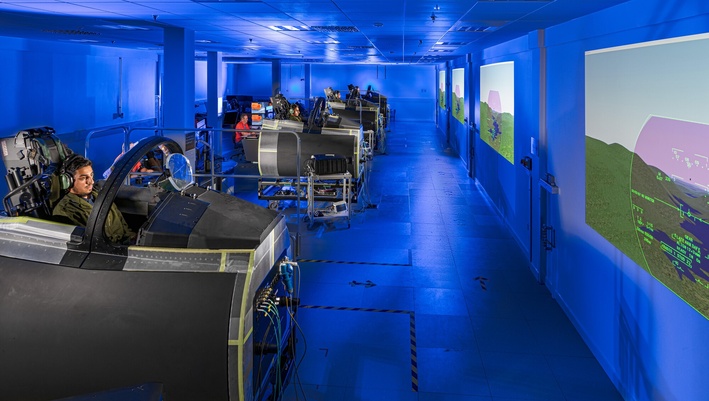
Image courtesy BAE Systems
Under the Typhoon Future Synthetic Training (TFST) contracts, BAE Systems is leading work to deliver ten high fidelity, immersive simulators, together with highly-secure state of the art training facilities at RAF Coningsby in Lincolnshire and RAF Lossiemouth in Moray.
The new training environments will be linked together providing an integrated environment for pilots to train and carry out complex combined training exercises using real world mission software and tactics.

The investment by Defence Equipment and Support, the MOD’s procurement arm, reflects the Royal Air Force (RAF)’s ambition to increase its use of synthetic training, delivering cost, time and sustainability benefits over live training. This technology will also provide students with a more complex and secure training experience tailored to the individual which are often difficult to achieve in live training environments.
Speech marks Richard Hamilton, Typhoon Programme Director, Europe – BAE Systems Air, said:
“We pride ourselves in delivering world-class training capability as we understand how critical it is to deliver the highest quality skills and capabilities to the front line. This contract builds on existing work to deliver synthetic training to the RAF’s Typhoon Force, which will eventually enable pilots from different locations to fly virtual missions together and provide the ability to ‘plug into’ other assets across air, land and sea.
“The investment will deliver a number of valuable operational benefits for the RAF, alongside the positive impact that the increased use of synthetic training will make to reduce carbon emissions. With 9.6 tonnes of carbon saved by every synthetic flight, it will help reduce the current carbon footprint of live training, supporting the net zero ambitions held by our customers and ourselves.”
The contract will support approximately 120 jobs in the delivery of new infrastructure at two RAF bases with a further 60 engineering jobs sustained at BAE Systems and many more with a number of specialist UK companies throughout its supply chain.
BAE Systems has significant experience in providing world-leading training capability for the UK and international air forces throughout the training pipeline including the classroom, synthetic and live environments.
The Company works with customers to provide the best training services to meet their needs, across the training spectrum, from identifying and recruiting students and providing them with the foundation skills required to succeed, to delivering state-of-the-art facilities to provide effects-led training.
Working with industrial and academic partners, the Company integrates world-class innovative technologies – such as virtual assistants, data analytics, single synthetic environments and artificial intelligence – into next generation training solutions, such as simulators.
BAE Systems delivers training programmes and capability output for the world’s leading military forces, taking students from the classroom to the frontline, and delivering around the clock training capability.
Annually the Company delivers training for more than 2,500 technicians and ground crew across a wide range of skill sets and for more than 450 pilots and officers to ensure they are ready for life in a fast jet cockpit.