British Army brings back war horses – this time in camouflage


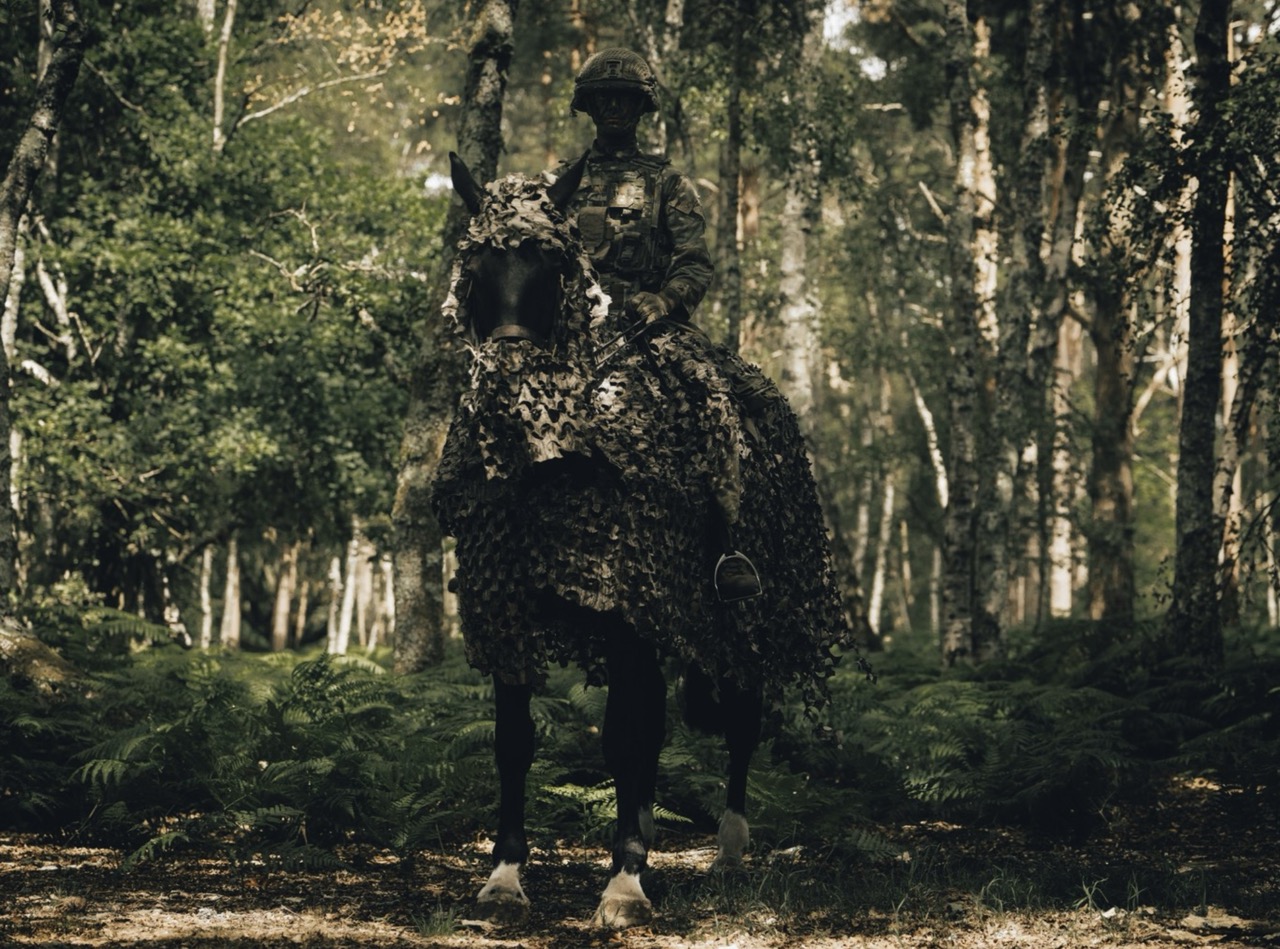
The British Army is testing camouflage for horses as it explores whether mounted troops could play a role on the battlefield again.
Soldiers from the Household Cavalry Mounted Regiment have trialled camouflage during exercises at Longmoor Training Area in Hampshire.
The Ministry of Defence confirmed the experiments to The Telegraph.
“Soldiers are exploring mounted reconnaissance, mobility in difficult terrain, concealment, sustainment and equine welfare, drawing inspiration from allied nations that continue to employ horses in operational environments,” the Telegraph quotes an MoD spokesperson as saying.
Rather than replacing military vehicles, horses could provide a low-signature way to move troops and supplies through forests, marshland and other difficult terrain.
British Army explores return of the ‘war horse’
The camouflage trials follow an earlier programme the British Army announced in April, which it described as “bringing back the war horse.”
It was partly inspired by Estonia, where volunteers, including former soldiers, established a horse-mounted unit within the Estonian Defence League.
The Household Cavalry Mounted Regiment subsequently introduced mounted navigation into its Princess Elizabeth Cup competition at the Royal Military Academy Sandhurst.
Soldiers crossed the Barossa Training Area on horseback using maps and compasses rather than GPS, while dealing with mud, dense vegetation and nearby gunfire.
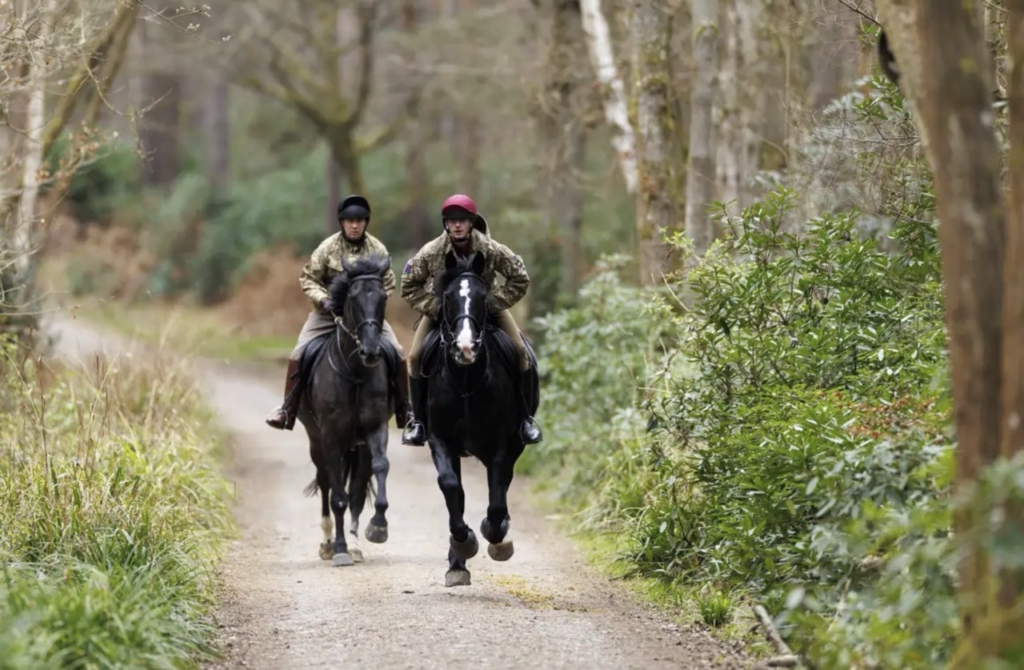
“The only way we can be better as soldiers is to do the basics well. A cavalryman is platform-centric whatever that platform is – a horse or an armoured vehicle,” said Lieutenant Colonel Ben McNeil, the regiment’s Commanding Officer. “If you can navigate while riding an unpredictable, powerful animal, you’re exercising every part of your brain at once, and if you can keep calm in all that chaos, you can be a formidable force to reckon with, whatever the context.”
The modern war horse would have very specific strategic missions.
“Nobody is suggesting cavalry horses will replace tanks,” the Army stated, adding: “If the terrain demands it, the cavalry will be ready.”
Why horses could work on a modern battlefield
The experiment comes as armies face an increasingly visible battlefield dominated by drones, sensors and electronic surveillance.
The Army’s official 2025 Challenge Set describes an “increasingly expanded, transparent and lethal battlespace” where concealment and dispersal are increasingly important.
It identifies reducing dependence on fuel and other supplies and “minimising signatures” among the challenges facing military logistics.
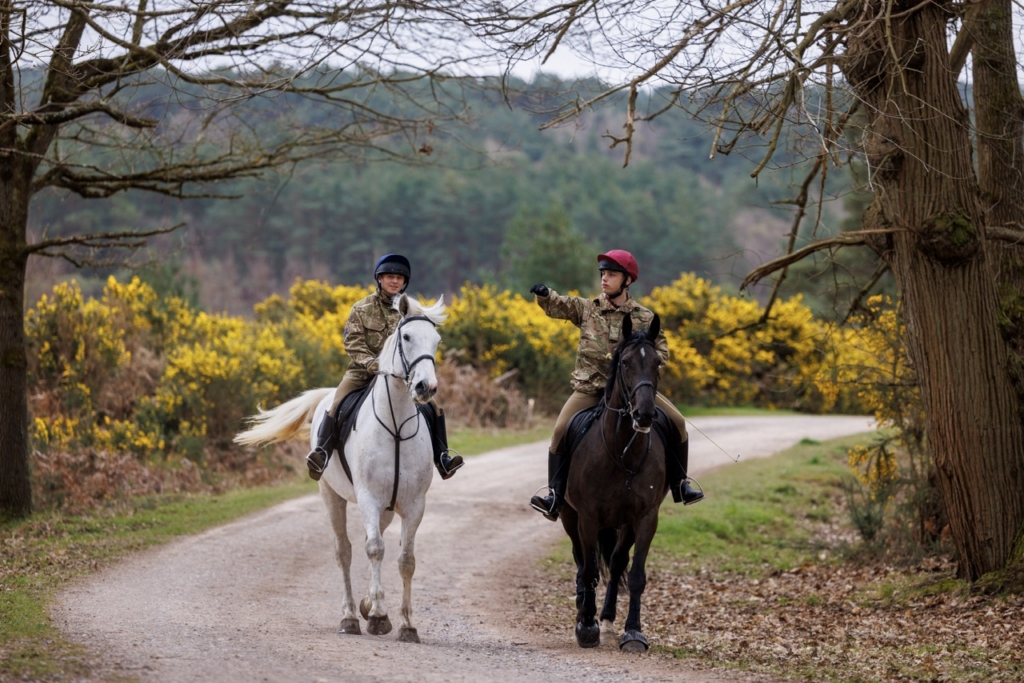
Horses need food, water, veterinary care and trained handlers, and cannot match the speed or carrying capacity of vehicles. But they require no diesel and produce little mechanical or electronic signature.
Horses never disappeared from warfare
The British Army noted that allied forces have used pack animals in Afghanistan and the Balkans.
US Special Forces also rode horses alongside Afghan fighters during operations following the September 11 attacks in 2001.
The UK already has the expertise to support military horses. The Royal Army Veterinary Corps supports Military Working Horses used by the Household Cavalry and King’s Troop Royal Horse Artillery.
The Defence Animal Training Regiment also operates an Equine Training Squadron providing trained horses, riders, instructors and farriers.
As warfare becomes increasingly high-tech, the Army sees value in testing a low-tech equine alternative.
Sign up for our newsletter and get our latest content in your inbox.
Similar Reads

Sign up for our newsletter. Select all sectors relevant to you.
Related