

CAA expands Hydrogen Challenge

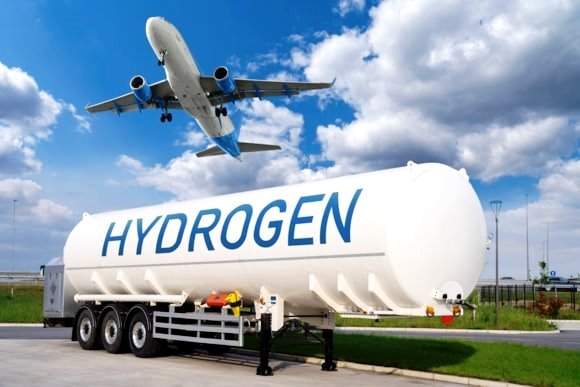
Image courtesy CAA
Hydrogen offers one option for revolutionising the aviation industry. The challenge covers hydrogen propulsion testing, airport infrastructure development and innovating aircraft systems.
The Challenge is designed to prepare the aerospace industry for the adoption of hydrogen as a zero-carbon aviation fuel.
Multiple leading UK companies are working with the UK Civil Aviation Authority to develop the technology and infrastructure of the future to see widespread hydrogen fuel use in aviation.
The next stage of the Hydrogen Challenge will see the development of:
- New designs of cutting-edge aircraft that use hydrogen fuel cell power systems and remotely piloted systems to drive down carbon emissions.
- Changes to airport infrastructure that could be rolled out nationwide in future, paving the way for hydrogen including safe storage and refuelling.
- New scientific research by some of Britain’s leading aeronautical institutes that will expand our understanding of this new fuel.
- Flight trials, safety assessments, and demos to refine performance, address regulatory challenges and unlock the full potential of the technology.
It comes as part of the regulator’s work to enable aerospace and drive growth of the sector through fostering innovation and collaboration.
Tim Johnson, Director of Communications, Strategy and Policy at the UK Civil Aviation Authority, said: “These trials keep the UK on course to be a world leader in hydrogen propulsion.
“We are working with some of the most innovative companies and minds to better understand this technology and how it might be introduced safely in the aerospace sector.
"In doing so, it offers the potential to enable a more sustainable aerospace system and support UK economic growth.”
The projects will create a better understanding of hydrogen technologies, shape future regulation, and ensure that they are safely adopted into the aerospace sector.
Some of the projects involved in the Hydrogen Sandbox include:
- Cranfield Aerospace Solutions will use their Project Fresson 1a, to test potential regulation for hydrogen fuel cell electric propulsion systems on aircraft.
- Oxford University is exploring the key scientific challenges of pressurising, heating and combusting initially cryogenic hydrogen to enable hydrogen combustion at the heart of gas turbines.
- ZeroAvia is setting out how we get to the widespread use of hydrogen-powered aircraft. This includes safe hydrogen fuel storage, distribution and refuelling practices at airfields and on aircraft.
- Qdot Technology is developing a zero-emission and long-range unmanned aircraft, with the ability to carry heavy loads. This would be used for logistics, monitoring and servicing offshore operations.
- Stratospheric Platforms is developing the ‘Stratomast’, a high-altitude, remotely piloted, liquid hydrogen-powered aircraft system designed to deliver high-capacity low-latency data connectivity direct-to-device.
- Rolls-Royce is designing gas turbines that will be compatible with net-zero fuels such as hydrogen. In partnership with easyJet, the project will build a crucial understanding of these emerging technologies.
- Intelligent Energy is exploring regulatory and certification challenges associated with integrating hydrogen fuel cell systems into aerospace applications.
- Consortium including Highlands and Islands Transport Partnership (HITRANS), Highlands and Islands Airports (HIAL), AGS Ltd, European and Marine Energy Centre (EMEC), Orkney Islands Council and Loganair are using Kirkwall Airport aerodrome as a test to explore how hydrogen fuel infrastructure would be rolled out across aircraft and airports in Scotland.
- Regional & City Airports Ltd is running trials at Exeter Airport to test different approaches for storing a refuelling hydrogen fuel and fill gaps in existing knowledge.
- Ultima Forma is developing vacuum containment barrier systems for liquid hydrogen storage. Lightweight composites and the electroformed materials structure maintain a high vacuum and provide a hydrogen barrier.
- Swift Aircraft is exploring the application of hydrogen as a fuel source in the development of a new sustainable training aircraft suitable for flight schools
- HyFIVE is a consortium of UK aerospace and academic leaders who have joined together to develop, test and validate a modular, scalable cryogenic hydrogen fuel system architecture.
The Challenge, which launched in 2024, has been expanded. Trials will now last three years to increase the development potential for the companies involved. The results from the 2024 Hydrogen Challenge will be published in the near future.
Sign up for our newsletter and get our latest content in your inbox.
Similar Reads


Sign up for our newsletter. Select all sectors relevant to you.
Related