Coalition set to shape urban airspace of European cities
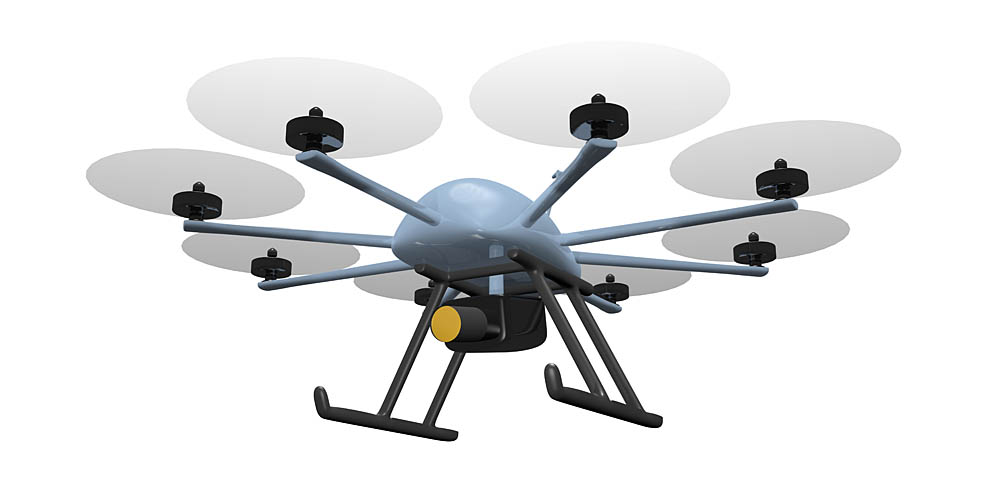
Image copyright Shutterstock
This new coalition creates fan end-to-end chain of Urban Air Mobility innovations and developments to improve the current urban airspace transport system in European cities.
The Urban Air Mobility (UAM) industry in Europe has grown rapidly in recent years, owing to Research and Development (R&D) investments from organisations, academia, governments and the European Commission. The goal of these R&D activities is to provide cities with safe and efficient solutions, resulting in reduced carbon footprint. Using very-low altitude zero emission passenger or cargo-carrying drones enables cities to improve the quality of life of their citizens.

Together towards sustainable and safe UAM
Currently, there is an urban airspace ecosystem consisting of various initiatives and EU-funded projects, working independently or in smaller networks on developing and incorporating these solutions to different sectors of city infrastructures and regulatory frameworks. However, for this ecosystem to become sustainable and have a long-term impact on European cities and their inhabitants, there is a need to establish a more comprehensive coalition. Combining efforts offers an opportunity to gain a broader perspective, resulting in an integral vision and better aligned outcomes.
The common purpose of this collaborative network – supported by UAM initiatives SESAR JU and UIC2 – is not only to establish an ecosystem of Urban Air Mobility solutions, but also to increase stakeholder and public knowledge and acceptance of these new developments and solutions. It also provides opportunities to exploit the synergy between each project and the associated demonstrator cities.
Joining forces provides benefits to all parties of this ever-expanding coalition and facilitates the strengthening of these relationships. Joint activities of this network will include the following tasks:
- Developing public and private partnerships (PPP) with Unmanned Aircraft Systems (UAS) industrialists, Unmanned Aerial Vehicle (UAV) operators, infrastructure developers, local governments and regulators to further develop and incorporate very-low altitude UAS transport
- Consolidating current UAM activities to form a community of knowledge transfer and engagement-building practices
- Unifying stakeholder management processes to organise, monitor and improve relationships with stakeholders to achieve a successful positioning of this UAM ecosystem globally
- Connecting urban airspace experts from different sectors of the ecosystem to facilitate crossover industry innovation and knowledge transfer
In the coming years the projects will showcase interesting real-life demonstrations, state of the art technologies and will work on improving UAM regulatory frameworks.
Seeking open dialogue with the EU and stakeholders
Regulation can be swiftly outpaced by technology. As urban airspace operations are continuously evolving, valid questions regarding safety and possible bottlenecks will continue to be raised, which is why it remains imperative to maintain an open dialogue with European Member States and regulating bodies. This collaborative network builds, integrates and aligns technology, along with EU-compliant interoperability, governance model and legal frameworks. This will help to address any concerns in a unified approach for a common purpose.
Joining forces also delivers a unique opportunity to craft an efficient urban airspace transport system building on living lab results. The knowledge gained from these demonstrators makes it possible for cities to achieve decreased pollution levels, reduced transportation time, less congestion on the ground and improved emergency medical services, to name a few.
Ultimately, the focal ambition of this collaborative network between FF2020, AiRMOUR and AURORA is to expand knowledge and awareness in cities and increase public acceptance of Urban Air Mobility developments. The mutual goal is to break through current European environmental, societal, economic and technological barriers in order to positively impact the lives of all members of all European communities.
Stay informed with all the new developments of this collaborative network by visiting the sibling project websites and social media accounts. The next joint statement will be published in September to announcing joining sibling projects, as well as to elaborate on shared activities and approach.
To become part of this collaborative network, contact:
Consortium: Flying Forward 2020
Name: Lisa van der Heijden
Email: lisa@digie.expert
For questions regarding the projects, contact:
Consortium: Flying Forward 2020
Name: Nathy Ercol
Email: nathy@digie.expert
Consortium: AURORA
Name: Sandra Lima
Email: sandra.lima@epf.eu
Consortium: AiRMOUR
Website: www.airmour.eu