Cranfield helps explore use of drones for medical deliveries
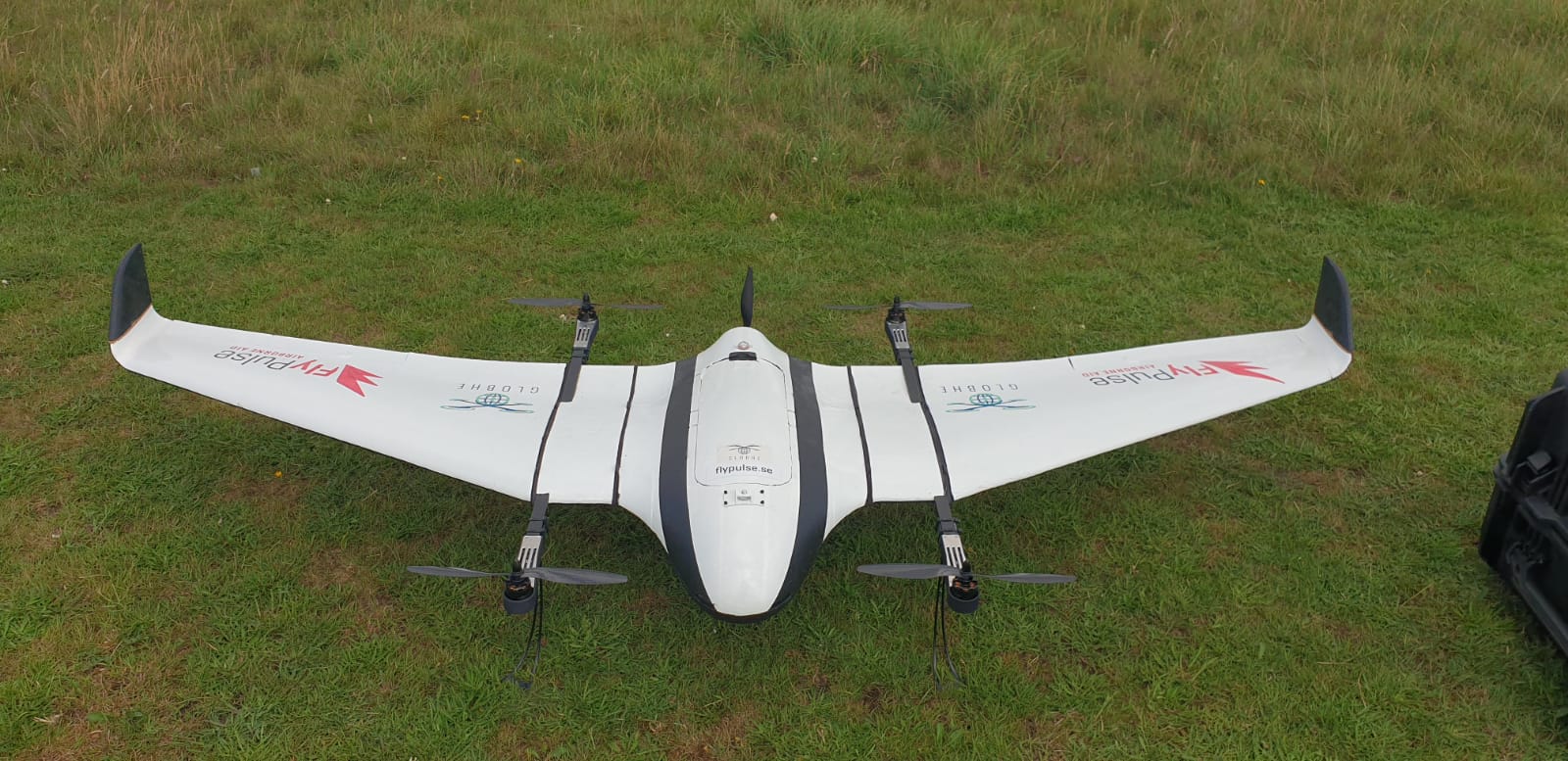
Image courtesy Skyfarer
There are over 2.5 million movements of medical supplies, samples and other items between hospitals and medical centres annually in the UK, with the majority of movements being undertaken by commissioned couriers on the country’s road network.
The projects, funded by Innovate UK, part of UK Research and Innovation, will seek to facilitate the movement of medical items and speed up deliveries, while also alleviating strain on congested roads and reducing emissions.

A project led by Skyfarer will look to create a flight testing corridor – subject to Civil Aviation Authority (CAA) approval – in Warwickshire, making history by providing the UK’s first drone-based medical deliveries in a populated suburban environment within unsegregated airspace.
A second project, working with hospitals and NHS trusts directly, will create the first UK set of standard operational procedures (SOPs) for routine, drone-enabled delivery operations and demonstrate within hospital environments the automatic take-off, remote piloting and precision drone landing by hospital staff using the SOPs.
Professor Antonios Tsourdos, Head of the Autonomous and Cyber-Physical Systems Centre, Cranfield University, said: “The impact of the Covid-19 pandemic and subsequent social distancing measures have expedited the need for home deliveries of goods, with the influx in demand putting massive strain on traditional delivery methods and supply chains, as well as hospital inventories. Autonomous drones are the ideal solution for efficiently delivering essential goods in compliance with social distancing regulations, since they don’t require a person to operate them or rely on traditional road-based infrastructure.
“We are delighted to be involved in these projects which could significantly improve point-to-point movement of critical medical supplies and allow hospitals to get the right product at the right time, quickly and efficiently, while limiting staff exposure to health risk and avoiding cross-contamination.”
Elliot Parnham, CEO and Founder, Skyfarer Ltd, said: “The Skyfarer project will move the adoption of drone solutions for logistics in the UK one step closer to reality. Heralding a new age of aerospace innovation, setting up this flight testing corridor will enable the testing of autonomous beyond visual line of sight (BVLOS) drone technology in a suburban setting, providing a sustainable blueprint for gaining CAA approval and paving the way for commercial deliveries by drones to begin in the UK.”
Jens Mangelsen, Technical Director, DGP Intelsius Ltd and Principal Investigator for the Enabling UK Inter-site Medical Delivery Drone Operations project, said: “DGP Intelsius is continually seeking to be involved in the next generation of medical transportation systems and recognises that short-distance, airborne movements through the use of drone technologies are a potential new transportation mode, particularly in times of national contagion. This project brings together for the first time a unique consortium of hospital NHS trusts, nationally recognised airspace and drone specialists and ourselves to provide a rapid study, with outputs scalable at a UK level.”
The Skyfarer project will focus on validating the reliability and redundancy of the technology and creating a Concept of Operations (ConOps) in order to work towards an application to the CAA for the creation of the drone flight corridor.
Regulations currently require UAVs to be operated within visual line of sight of the remote pilot at all times. Through the ongoing creation of the National Beyond visual line of sight Experimentation Corridor (NBEC), Cranfield University is also working with partners Blue Bear Systems Research, Thales and Vodafone to provide a safe, managed environment for UAV experimentation, ultimately working towards their unsegregated operation with manned aircraft in both controlled and uncontrolled airspace. NBEC is a member of the CAA’s Innovation Sandbox, which only contains eight approved organisations.
Co-investigators for the ‘Skyfarer - enabling drone powered medical logistics in the UK’ project also include Skyfarer and Altitude Angel, with Apian, ERS Medical, Avy and FlyPulse supporting.
Other partners for the ‘Enabling UK Inter-site Medical Delivery Drone Operations: Meeting the logistical and operational challenges presented by SARS-CoV-2’ project are Blue Bear Systems Research, The Drone Office, Herotech8 and Kings College London University, who will work closely with Milton Keynes, Bedford and Luton & Dunstable hospitals.