Advancing UK Aerospace, Defence, Security & Space Solutions Worldwide
  • Home
  • /
  • Aerospace
  • /
  • Cranfield Uni helps ZeroAvia conduct world's first hydrogen-electric passenger aircraft flight

Aerospace Events

Cranfield Uni helps ZeroAvia conduct world's first hydrogen-electric passenger aircraft flight
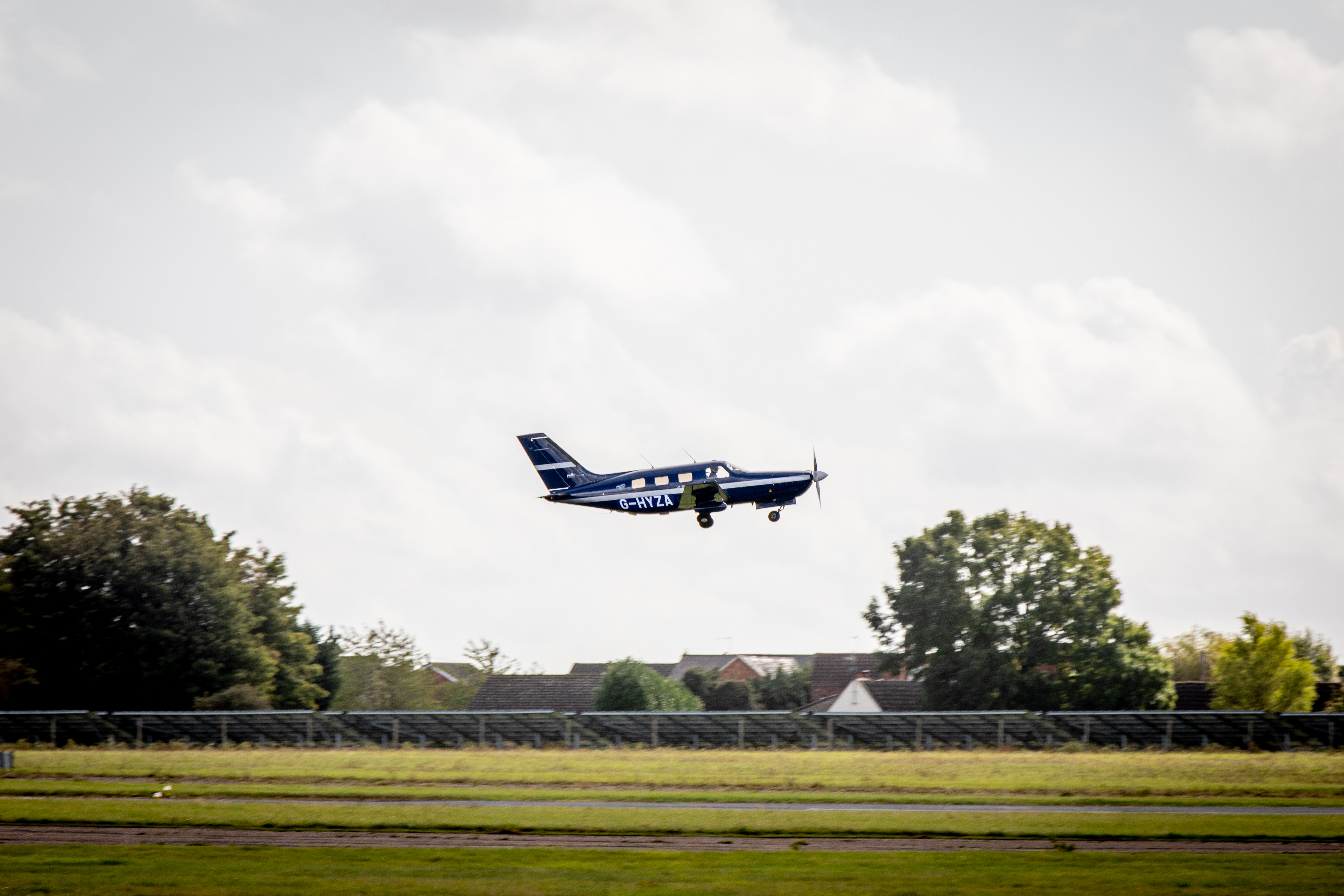
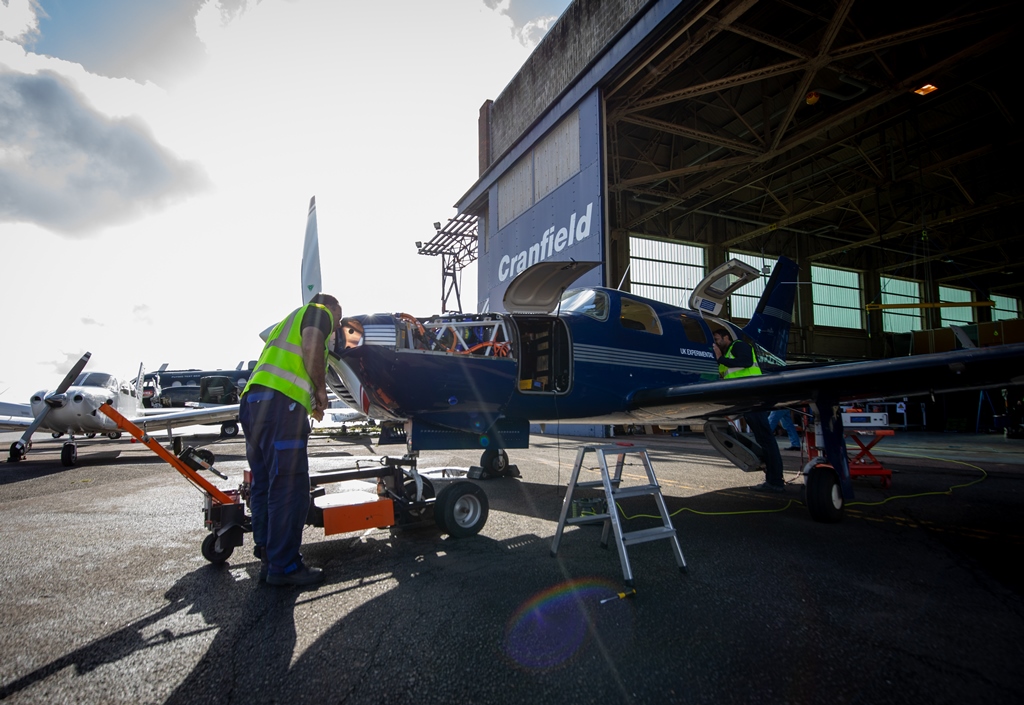
Cranfield University supported ZeroAvia in achieving the world’s first hydrogen fuel cell powered flight of a commercial-grade aircraft, which took place yesterday at the company’s R&D facility at the University-owned Cranfield Airport.

Image courtesy Cranfield University

The Piper M-class six-seat plane completed taxi, takeoff, a full pattern circuit, before landing back at the airport. The flight was watched by the Aviation Minister, Robert Courts.

Commenting on the achievement by ZeroAvia, Professor Iain Gray, Director of Aerospace at Cranfield University, said: “This is a momentous day for the aerospace and the aviation industry. Arguably, this is as a big a moment in aerospace as any in the last 75 years, comparable with the first flight of the jet engine.

Advertisement
ODU RT

“Thanks to ZeroAvia, it is fantastic to see the UK leading the world in moves to zero-emission aviation and this could be the start of the UK leading the world in a new generation of hydrogen aircraft. We are tremendously proud that ZeroAvia has chosen to develop their technology at our global research airport and we look forward to continuing to support their efforts.”
Rob Abbott, Director of Aviation Operations at Cranfield University, said: “All of us at Cranfield Airport are proud to have supported the world’s first hydrogen powered commercial-grade aircraft flight by ZeroAvia. This marks another momentous occasion for the airport and demonstrates further our commitment to innovation.”

In December 2018, Cranfield Airport became the first airport in the UK to have an operational digital control tower.

Last year ZeroAvia received a £2.7 million (US$3.3m) grant from the UK Government to support in the development of the principal technology to enable practical, zero emission aviation in commercial aircraft - part of the ATI programme, supported by the Department for Business, Energy & Industrial Strategy, the Aerospace Technology Institute and Innovate UK - to fund ZeroAvia's HyFlyer project to demonstrate principal technology readiness for a hydrogen fuel cell powertrain. The Government's grant was matched by Project HyFlyer participants, making the scope of the project in excess of £5 million (US$6.2m).

In June this year, ZeroAvia also conducted the first ever electric-powered flight of a commercial-scale aircraft carried out in the UK from its base at Cranfield Airport.

Advertisement
Security & Policing Rectangle

Cranfield Aerospace Solutions (CAeS) assisted with integrating ZeroAvia's powertrain into the Piper airframe and hosted the ZeroAvia team at their hangar facilities. With its expertise in airframe integration and modification, as well as whole aircraft design, CAeS brings the best of the UK aerospace industry into this collaboration.




Advertisement
General Atomics LB
Green aviation to get £43m boost

Aerospace

Green aviation to get £43m boost

21 January 2026

The aviation industry is set for a major boost as £43 million for green projects was announced by the UK Government today, aimed at supporting jobs and unlocking new investment.

Leonardo reduces ESG risk with Sustainalytics upgrade

Aerospace

Leonardo reduces ESG risk with Sustainalytics upgrade

21 January 2026

ESG research and ratings agency, Sustainalytics, has improved Leonardo’s ESG Risk Rating, reducing it to 22/100 from 29/100 (on a scale from zero to 100, where zero represents the best score), placing the Company third worldwide among aerospace & defence (A&D) companies.

IBA reveals 1,800 aircraft deliveries expected in 2026

Aerospace

IBA reveals 1,800 aircraft deliveries expected in 2026

21 January 2026

IBA's Chief Economist & Chief Data Officer, Dr Stuart Hatcher, has revealed his insights and predictions for the upcoming year as easing inflation, lower fuel prices and improving OEM production rates underpin a more stable outlook for airlines.

Smiths Detection delivers automated IRBS between South Korea and US

Aerospace Security

Smiths Detection delivers automated IRBS between South Korea and US

21 January 2026

Smiths Detection has enabled the launch of a fully automated International Remote Baggage Screening System (IRBS), setting a new global standard for cross-border aviation security and passenger processing between South Korea and the United States.

Advertisement
Security & Policing Rectangle
Newcastle Airport secures £364m refinancing package

Aerospace

Newcastle Airport secures £364m refinancing package

21 January 2026

Newcastle International Airport (NIAL) has successfully secured a new £364 million bank finance package, refinancing existing facilities and supporting its long-term growth ambitions and sustainability targets.

Base Materials develops proprietary LCA

Aerospace

Base Materials develops proprietary LCA

21 January 2026

Base Materials has developed a new proprietary Life Cycle Assessment (LCA) tool to calculate the carbon footprint of its full product portfolio, providing partners robust, transparent environmental data as part of their own sustainability and supply chain reporting.

Advertisement
ODU RT
Advertisement
Babcock LB Babcock LB