Advancing UK Aerospace, Defence, Security & Space Solutions Worldwide
  • Home
  • /
  • Defence
  • /
  • Cyber security key for SMEs to gain work in Australia’s defence industry

Defence Security

Cyber security key for SMEs to gain work in Australia’s defence industry

BAE Systems Australia, Saab Australia, industry partners and the Australian Government, have developed the Cyber Framework for the Defence Industry (CFDI) to measure and increase the cyber resilience of SMEs wanting to gain access to work in Australia’s defence industry.

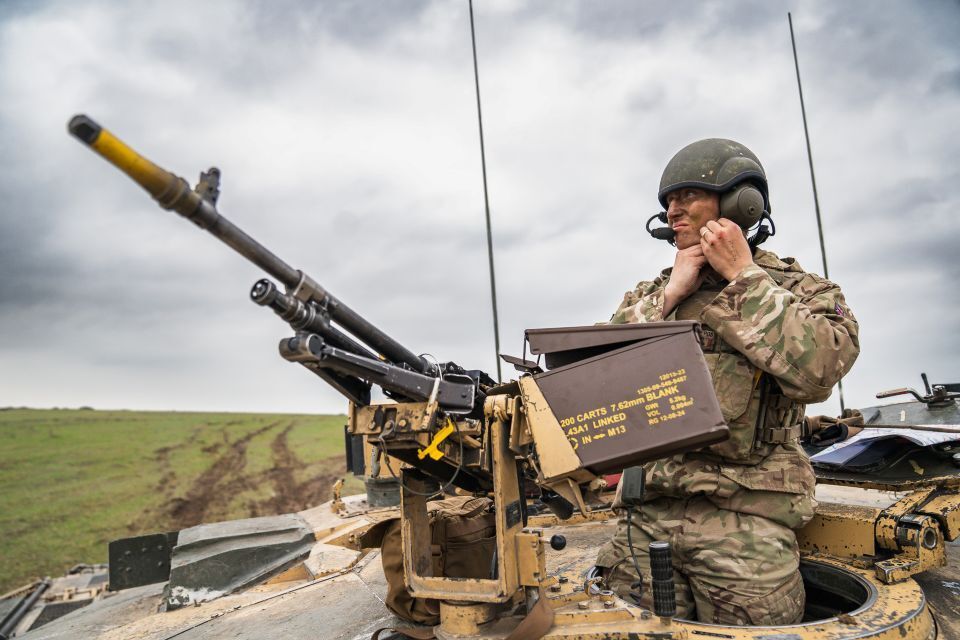
Image courtesy BAE Systems

The CFDI was developed to simplify and help address the growing cyber risk facing SMEs as many don’t have the same level of cyber resources and protections as the larger defence contractors.
 
The CFDI provides a standardised approach to cyber maturity assessment and can also be used to guide users to next steps to increase their levels of cyber protection. The tool aims to support companies so they can self-manage their cyber security requirements and risks.      
 
BAE Systems Australia Chief Information & Digital Officer, Michael Salas, said: “We want more Australian SMEs to provide services and new technologies into defence programs because a more diverse supply chain enables greater levels of innovation.

Advertisement
ODU RT

“The Cyber Framework is a great start for SMEs wanting to self-assess their level of cyber risk.

“They can undertake a quick assessment of their cyber maturity which then leads to the identification of key areas in which to invest and improve a company’s defences. This leads to improving the cyber maturity of our defence supply chain and better outcomes for our customers.”
 
Saab Australia Managing Director, Andy Keough, said: “The new framework will reduce barriers to entry for SMEs into defence supply chains by providing a common cyber assessment tool.

“Currently SMEs face a different and complex security assessment process each time they work with a different defence prime.

“In developing this framework we have reduced red tape, making it easier for SMEs to secure opportunities in the defence sector.

“By the very nature of their size, many SMEs do not have the resources or expertise to upskill in information handling or cyber protection to meet defence requirements. This framework gives them a clear roadmap to gaining the required levels of cyber maturity.”
 
Raising the level of cyber security and cyber resilience of suppliers should have a flow on effect of increasing defence industry opportunities for SMEs developing or producing innovative technologies and services.

According to the Australian Cyber Security Centre’s 2020-21 annual report:
Self-reported losses from cyber crime in Australia is more than $30 billion
70,000 cyber crimes were reported – an increase of 13% on the previous year
In Australia there is a cyber crime reported every eight minutes.
 
Defence companies require suppliers to have cyber security that reflects the products or services they provide and this can be a barrier to entry for many SMEs.

Twelve prime contractors have adopted the CFDI.

Advertisement
Security & Policing Rectangle


Advertisement
ECS leaderboard banner
Viasat launches satellite service portfolio for government UAV ops

Defence Security Space

Viasat launches satellite service portfolio for government UAV ops

2 February 2026

Viasat today launched its next-generation satellite service portfolio, engineered to meet the evolving demands for government uncrewed aerial vehicle (UAV) operations worldwide, including intelligence surveillance and reconnaissance (ISR), emergency response and special operations.

BAE Systems opens new office in Utah

Defence

BAE Systems opens new office in Utah

2 February 2026

BAE Systems has announced the opening of its new office in Utah, marking an expansion of the company’s local footprint and continued investment in the state’s workforce, economy and innovation ecosystem.

ABT sets framework for OEM battery development

Aerospace Defence Security

ABT sets framework for OEM battery development

2 February 2026

UK battery pack manufacturer Alexander Battery Technologies (ABT), has set out a clearer framework for how OEMs can approach battery development.

Marshall and Nordiq to advance defence medical technology

Defence

Marshall and Nordiq to advance defence medical technology

2 February 2026

Marshall Aerospace and Nordiq Products have commenced an industrial cooperation (IC) project to support the development and path to market for a next-generation vital signs monitoring capability.

Advertisement
PTC rectangle
NATO and Systematic to advance Land C2 training capabilities

Defence

NATO and Systematic to advance Land C2 training capabilities

30 January 2026

As part of the ongoing DEMETER Project, a new contract has been signed between NATO and Systematic to advance the delivery of both classroom and computer-based learning, ensuring seamless continuation and adaptation of current and future Land C2 training, while also securing the Alliance’s ability to provide learning throughout the capability ...

Cranfield recognised with Gold Employer Recognition Award

Aerospace Defence

Cranfield recognised with Gold Employer Recognition Award

30 January 2026

Cranfield University has successfully revalidated its prestigious Gold Employer Recognition Scheme status, awarded by the Ministry of Defence to organisations that support the Armed Forces community and share the values in the Armed Forces Covenant.

Advertisement
ODU RT
Advertisement
Babcock LB Babcock LB