Advancing UK Aerospace, Defence, Security & Space Solutions Worldwide
  • Home
  • /
  • Defence
  • /
  • DASA seeks revolutionary uncrewed systems

Defence

DASA seeks revolutionary uncrewed systems

The Defence and Security Accelerator (DASA) has launched a new Market Exploration called ‘Air Launched Effects: Revolutionary Deployment Systems’, run on behalf of the British Army.

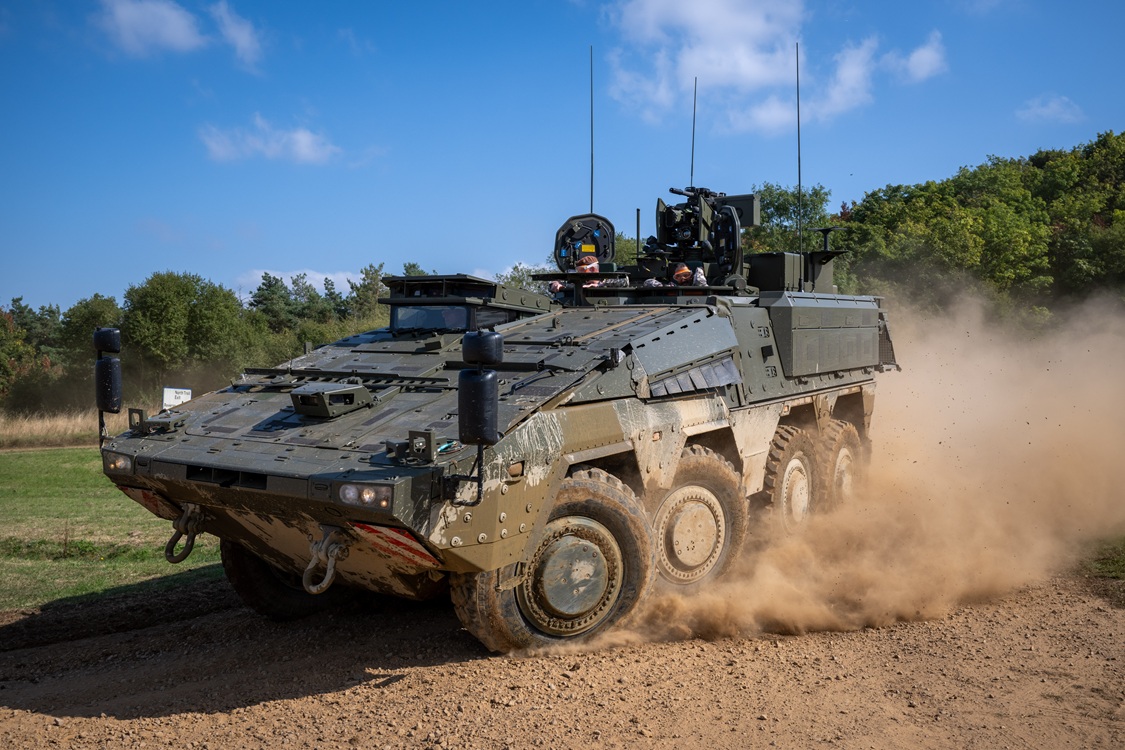
Image courtesy DASA

This Market Exploration is seeking to identify Uncrewed Systems (UxS) with extended range capabilities. They aim to discover cutting-edge UxS technologies at Technology Readiness Level (TRL) 4 or above that could potentially be deployed within the next 12 months.

Current events have demonstrated the importance of UxS in modern conflict and have shown that relatively low-cost UxS solutions can defeat more expensive systems. The UxS space is evolving at a rapid pace and, therefore, platforms and components must undergo rapid iterations to keep up with the latest battlefield adaptations and requirements. This Market Exploration reflects the growing importance of uncrewed systems in defence strategies and the need for agile, innovative solutions in the face of evolving global security challenges.

Advertisement
ODU RT

The British Army is actively pursuing cutting-edge technologies to enhance their operational capabilities. A key initiative of this endeavour is the development of an uncrewed Deep Recce Strike platform capable of operating at ranges greater than 80 kilometres. This platform should also be able to deliver shorter-range one-way effectors onto designated targets.

In addition to its strike capabilities, the system needs to have the ability to incorporate sophisticated Intelligence, Surveillance, Target Acquisition and Reconnaissance (ISTAR) functionalities. These features will enable the identification of dynamic targets and facilitate post-strike Battlefield Damage Assessment (BDA).

The British Army is seeking a solution that allows for rapid development, testing, production, deployment and iterative improvement. To ensure longevity and adaptability, the platform should feature a modular design, providing resilience against advancements in Counter Electromagnetic Warfare (EW) and Artificial Intelligence (AI) technologies. Particular emphasis is placed on maintaining operational effectiveness in EW-contested and GPS-denied environments.

Advertisement
ODU RT

Innovation capabilities that only rely on the supply chains of the UK and its allies are preferred.

Submit a proposal
Do you have an innovation that matches the requirements? Read the full Market Exploration document to learn more and submit a proposal. 

Advertisement
FIA2026 animated banner
Navantia UK debuts autonomous vessel design

Defence Events

Navantia UK debuts autonomous vessel design

19 May 2026

At the Combined Naval Event in Farnborough today, Navantia UK unveiled its large autonomous surface vessel - LASV75 - as an example of the hi-tech capabilities of its four yards, which are undergoing large-scale modernisation.

QinetiQ to test British Army’s remote-controlled artillery systems

Defence

QinetiQ to test British Army’s remote-controlled artillery systems

19 May 2026

QinetiQ has been awarded a contract from the National Armaments Director (NAD) Group to put the British Army’s newly contracted Remote Controlled Howitzer 155 (RCH155) next generation artillery system through rigorous tests to ensure it is safe to use on operations.

Hexagon releases NCSIMUL upgrade

Aerospace Defence

Hexagon releases NCSIMUL upgrade

19 May 2026

Hexagon’s Production Software Division has announced the latest release of NCSIMUL, strengthening its integrated approach to NC programme verification, simulation and optimisation with a new Selective Simulation capability.

Apache support drones get £10m boost

Defence

Apache support drones get £10m boost

18 May 2026

Fully autonomous drones which will accompany the British Army’s Apache helicopters are receiving a £10 million investment as Project NYX reaches a new milestone.

Advertisement
ODU RT
RAF Typhoons deploying APKWS in Middle East

Defence

RAF Typhoons deploying APKWS in Middle East

18 May 2026

A new Advanced Precision Kill Weapon System (APKWS) is being fitted to RAF Typhoons on operations in the Middle East, providing a low-cost anti-drone weapon to precisely destroy targets for a fraction of the price of missiles currently used.

BAE Systems delivers US Space Force missile warning sensor system

Defence Space

BAE Systems delivers US Space Force missile warning sensor system

18 May 2026

BAE Systems has delivered the sensor subassembly and sensor system controller components for the Next Generation Overhead Persistent Infrared Polar (NGP) programme, providing advanced missile warning, technical intelligence and battlespace characterisation mission capabilities, for the US Space Force.

Advertisement
ODU RT
Advertisement
General Atomics LB