Dstl acquires autonomous ground vehicles from HORIBA MIRA and QinetiQ
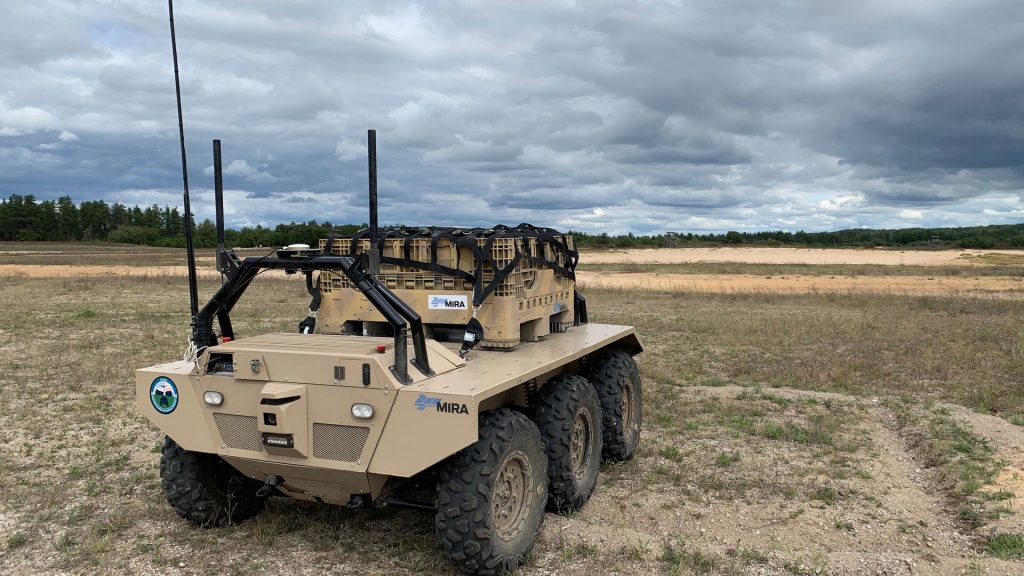
Above:
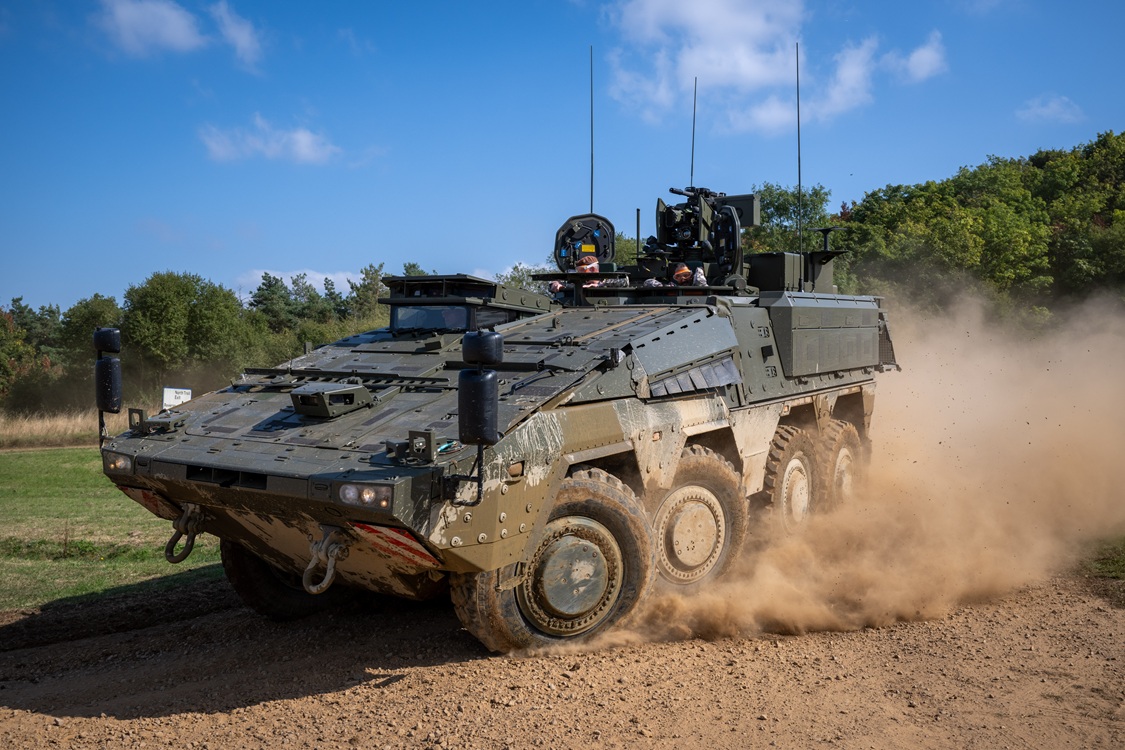
HORIBA MIRA VIKING UGV.
Courtesy HORIBA MIRA
Two contracts collectively worth £5 million have been awarded to HORIBA MIRA and QinetiQ to produce a number of unmanned ground vehicles (UGVs) and enabling autonomous systems as part of advancing Ministry of Defence (MoD) Transformation Fund commitments for the British Army.

Project Theseus, the development and operational field experimentation of autonomous logistic resupply systems, was announced by Secretary of State (SofS) for Defence, following the progress made by the Innovative Autonomous ‘Last Mile’ Challenge led by Dstl.
The contracts form part of early de-risking work to increase the MoD’s understanding of the capabilities and limitations of these systems in areas such as mobility, vulnerabilities and safety; enabling the Army to take the project to the next stage, pending a further significant competition for Project Theseus to be launched by DE&S later this year.
Dstl’s Autonomy Lead, Peter Stockel said: “These contracts are a demonstration of the continued commitment to progressing autonomous systems as innovative approaches for developing future Land force logistic capability. Under the Autonomous Last Mile Challenge, we have conducted a number of in-depth trials both in the UK and with our partners in the US. These UGV systems will be used to undertake a series of technical evaluations and user utility assessments with the British Army and other users to rapidly advance MOD’s understanding under the ‘Prototype Warfare’ agenda.”
Brigadier Darrell Amison, Head of Capability for Combat Service Support said: “Robotic and Autonomous Systems will provide commanders with more options to support a Land force operating at greater reach, dispersal and higher tempo. We look forward to ongoing collaboration with Dstl, wider Defence, and our strategic and commercial partners as we drive forward this ground-breaking and exciting project.”
Andy Maloney, Chief Engineer for Defence and Unmanned Solutions at HORIBA MIRA, said: “As the first autonomous UGV of its kind, our innovative VIKING platform could revolutionise how critical supplies are delivered to front-line soldiers, especially in combat scenarios, where it could dramatically reduce the risk to life. We’re delighted Dstl has recognised VIKING’s game-changing capabilities and has awarded us this major contract.”
Summer 2020 will see the arrival of three all-terrain VIKING 6x6 Unmanned Ground Vehicles, supplied by HORIBA MIRA, which are capable of carrying up to 750kg of supplies to frontline troops using advanced AI-based autonomy with GPS-denied navigation. Two TITAN Unmanned Ground Systems will then arrive through autumn 2020; comprising a tracked system based around a modular mission system software architecture. Experimentation and testing of these differing systems will inform further understanding of the capabilities that these autonomous systems can provide and implications for their integration with the wider defence logistics system.
The vehicles will be used by Dstl to conduct scientific and user trials in collaboration with the Combat Service Support Training and Development Unit (CSS TDU) based in Aldershot and other British Army units. The work will seek to increase understanding of system potential and limitations to reduce the risks specific to acquisition of the Joint Tactical Autonomous Resupply and Replenishment (JTARR) capability but will also develop deeper knowledge for the Army’s future employment of more advanced autonomous system capabilities.
Robert Mohacsi, Senior Commercial Manager for Defence Systems at HORIBA MIRA, said: “Autonomous systems present the British Army with game changing capabilities, redefining how we will conduct future operations. Building on more than a decade of experience in deploying autonomous technology into military applications, HORIBA MIRA has applied an agile and fast track approach that will enable the army to field this equipment and meet its critical objectives. We are immensely proud that VIKING, with its market leading capability, has been selected to support this critical programme.”
Speaking on award of the contract, Mike Stewart, Director for Research Experimentation and Innovation for QinetiQ said: “Working to the principles of “Prototype Warfare”, as adopted by the British Army, the Joint Tactical Autonomous Resupply and Replenishment (JTARR) risk-reduction contract is a prime example of how QinetiQ is taking an agile approach to delivering solutions into the hands of the military for evaluation whilst continuing spiralled capability development.”