Advancing UK Aerospace, Defence, Security & Space Solutions Worldwide
  • Home
  • /
  • Defence
  • /
  • Dstl awarded £3.5m for smarter missile systems

Defence

Dstl awarded £3.5m for smarter missile systems
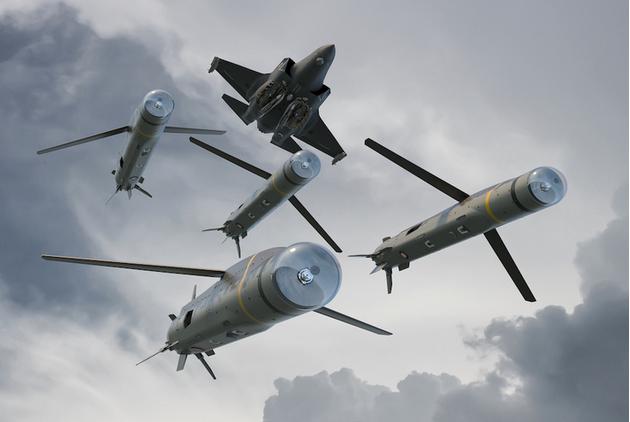
The Defence Science Technology Laboratory (Dstl) has been awarded £3.5 million to develop innovative new missile systems.

Above: F-35 graphic of Spear 3 Missile.
Crown Copyright Dstl

Known as the Co-operative Strike Weapons Technology Demonstrator (CSWTD), the Dstl-led project will explore how inter-missile communication can enable the weapons systems to work together and also improve the performance of current systems.

Advertisement
ODU RT

The project aims to increase the flexibility of missiles, ensuring that they can react to a changing threat or situation as it emerges, and improve their responsiveness. It will change the way missiles operate together with an upgrade to the software system that allows this co-operative behaviour.

Minister for Defence Procurement, Jeremy Quin said: "Drawing on the vital expertise of our Dstl scientists, innovative new missile systems will enhance our current capabilities as Defence adapts to meet future threats.

"With an investment into research and development, this project highlights the central role science and technology plays in informing how our assets operate."

Announced by the Prime Minister last November, Defence has received an uplift in funding of £24-billion over the next four years and, aided by commitments outlined in the recent Defence Command Paper, the MOD will invest £6.6-billion into Research & Development, enabling the Armed Forces to benefit from science and innovation.

The investment into the CSWTD project will deliver the foundations for future co-operative missiles, including hardware and software, and also provide a number of systems studies to understand how co-operative missiles could be used in real operational scenarios.

Dstl Scientist Charlie said: "Currently missiles can communicate with the launch platform but not each other.

"The aim of this programme is to investigate how inter-missile communication and cooperative behaviours can be technically achieved to solve UK military challenges."

Advertisement
ODU RT

Work began on the programme in April this year and is expected to last just over 2 years. The current stage of the programme sees Dstl scientists assessing different military tactics and scenarios in close collaboration with industry partner MBDA.

A demonstration will take place throughout the project, and if successful, UK platforms could be exploiting the benefits of a smarter integrated network of missiles within five years.

Dstl has just announced its biggest recruitment campaign in recent years and is celebrating its 20th anniversary of service.




Advertisement
Hexagon leaderboard
Navantia UK debuts autonomous vessel design

Defence Events

Navantia UK debuts autonomous vessel design

19 May 2026

At the Combined Naval Event in Farnborough today, Navantia UK unveiled its large autonomous surface vessel - LASV75 - as an example of the hi-tech capabilities of its four yards, which are undergoing large-scale modernisation.

QinetiQ to test British Army’s remote-controlled artillery systems

Defence

QinetiQ to test British Army’s remote-controlled artillery systems

19 May 2026

QinetiQ has been awarded a contract from the National Armaments Director (NAD) Group to put the British Army’s newly contracted Remote Controlled Howitzer 155 (RCH155) next generation artillery system through rigorous tests to ensure it is safe to use on operations.

Hexagon releases NCSIMUL upgrade

Aerospace Defence

Hexagon releases NCSIMUL upgrade

19 May 2026

Hexagon’s Production Software Division has announced the latest release of NCSIMUL, strengthening its integrated approach to NC programme verification, simulation and optimisation with a new Selective Simulation capability.

Apache support drones get £10m boost

Defence

Apache support drones get £10m boost

18 May 2026

Fully autonomous drones which will accompany the British Army’s Apache helicopters are receiving a £10 million investment as Project NYX reaches a new milestone.

Advertisement
ODU RT
RAF Typhoons deploying APKWS in Middle East

Defence

RAF Typhoons deploying APKWS in Middle East

18 May 2026

A new Advanced Precision Kill Weapon System (APKWS) is being fitted to RAF Typhoons on operations in the Middle East, providing a low-cost anti-drone weapon to precisely destroy targets for a fraction of the price of missiles currently used.

BAE Systems delivers US Space Force missile warning sensor system

Defence Space

BAE Systems delivers US Space Force missile warning sensor system

18 May 2026

BAE Systems has delivered the sensor subassembly and sensor system controller components for the Next Generation Overhead Persistent Infrared Polar (NGP) programme, providing advanced missile warning, technical intelligence and battlespace characterisation mission capabilities, for the US Space Force.

Advertisement
ODU RT
Advertisement
General Atomics LB