EasyJet trials fuel saving paint

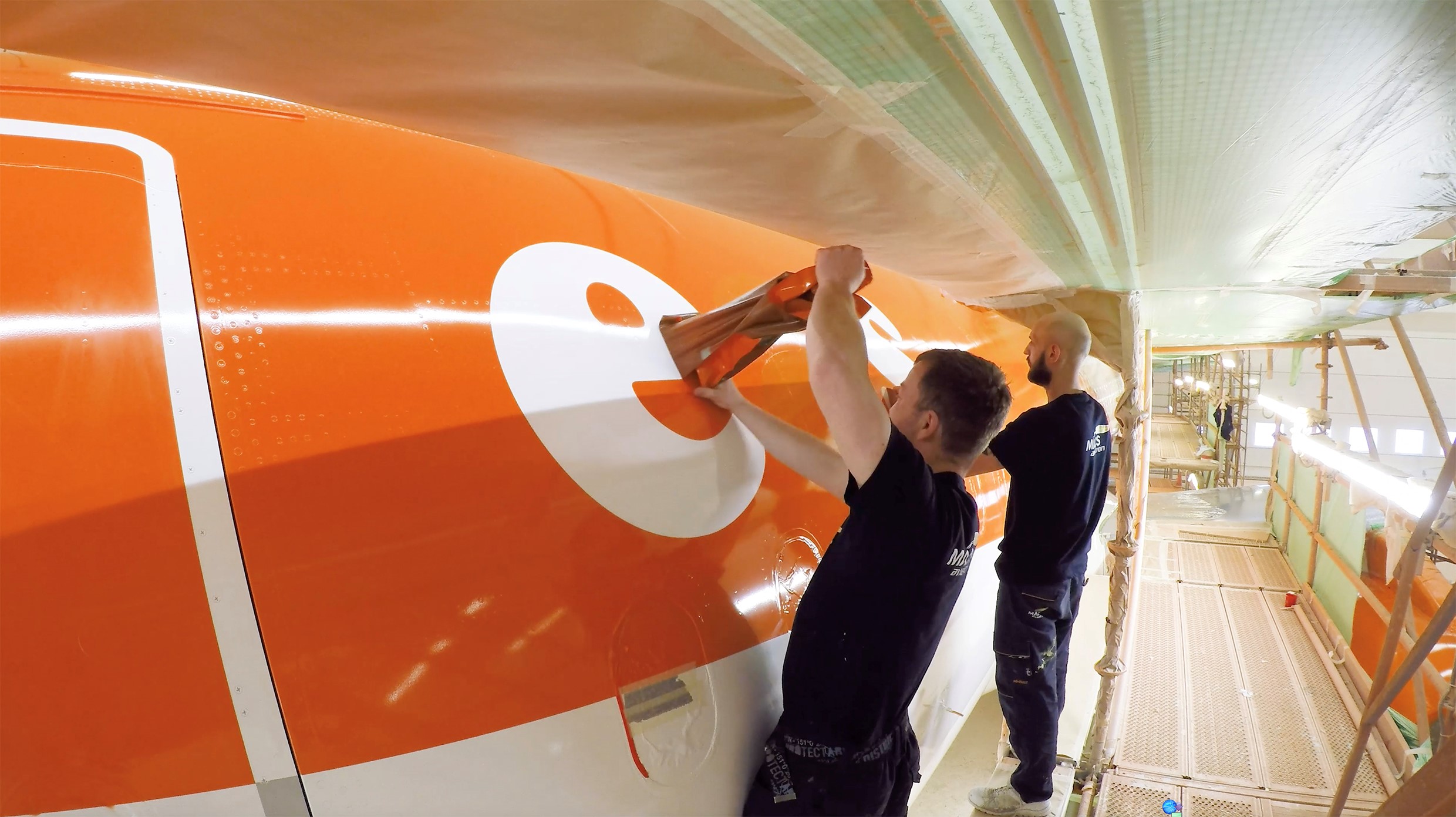
Image courtesy easyJet
EasyJet and its partner Mankiewicz Aviation Coatings have developed a new system that reduces the amount of paint previously needed to create the iconic easyJet livery colours. The innovative solution has already been applied to 38 aircraft and will be rolled out gradually to easyJet’s entire fleet, with the airline due to complete the transition by 2030.
While the lighter weight coat generates a relatively modest impact per plane (27kg weight reduction), complemented with other fuel reduction methods and applied to entire fleets, this could provide another important method of reducing carbon emissions for the sector and is one of many initiatives that easyJet is using to effectively reduce emissions and fuel burn.

The 38 easyJet planes that have been coated with the new paint are already delivering fuel savings thanks to their lighter weight and once rolled out to the entire fleet will account for a 1,296 tonne fuel reduction – equivalent to 4,095 tonne reduction of carbon emissions.
Eventually – and complementary to easyJet’s sustainability strategy and roadmap to net zero – the lightweight paint is expected to contribute to an overall saving of 1,296 tonnes of fuel per year – once the roll out is completed at the end of 2029.
Lahiru Ranasinghe, Director of Sustainability at easyJet, said: “EasyJet is constantly exploring and developing innovative solutions to lower the impact of our operations. While this forms a small part of a bigger strategy, formulating a new lightweight paint with our partners at Mankiewicz Aviation Coatings exemplifies how we’re assessing every single part of our operation to find efficiency gains to help us achieve this mission.”
Andrew Richardson, Aviation Sales Manager at Mankiewicz Aviation Coatings, said: "We are pleased to have been easyJet’s chosen coatings partner for the last 15 years and to have worked on this sustainability-driven project. We took the project one step further by optimising the colour formulations in order to minimise the amount of ‘paint film build’ needed to achieve the iconic easyjet livery colours.
"Sustainability and Environmental guardianship are at the heart of Mankiewicz’s core values and being able to work closely with easyJet on this has been very rewarding.”

Richard Marston, Chief Commercial Officer at MAAS Aviation added: “Environmental responsibility is taken extremely seriously throughout our operations at MAAS. We work closely with our supply chain to ensure we use the latest technology products that deliver the highest standards of performance and finish, while reducing the impact on the world around us. We are very proud to be part of such a groundbreaking initiative.”
Since launching its roadmap to net zero two years ago, easyJet continues to work hard to find solutions that will help decarbonise the aviation sector. Recently, the airline has reached various milestones including completing a full rollout of its multimillion-pound tech software installation of Descent Profile Optimisation (DPO) to its fleet and has achieved another record reduction in carbon intensity performance in FY24 versus its net zero baseline year of 2019.
Sign up for our newsletter and get our latest content in your inbox.
Similar Reads



Sign up for our newsletter. Select all sectors relevant to you.
Related