Edinburgh Airport partners with Ørsted to bring sustainable air travel to UK
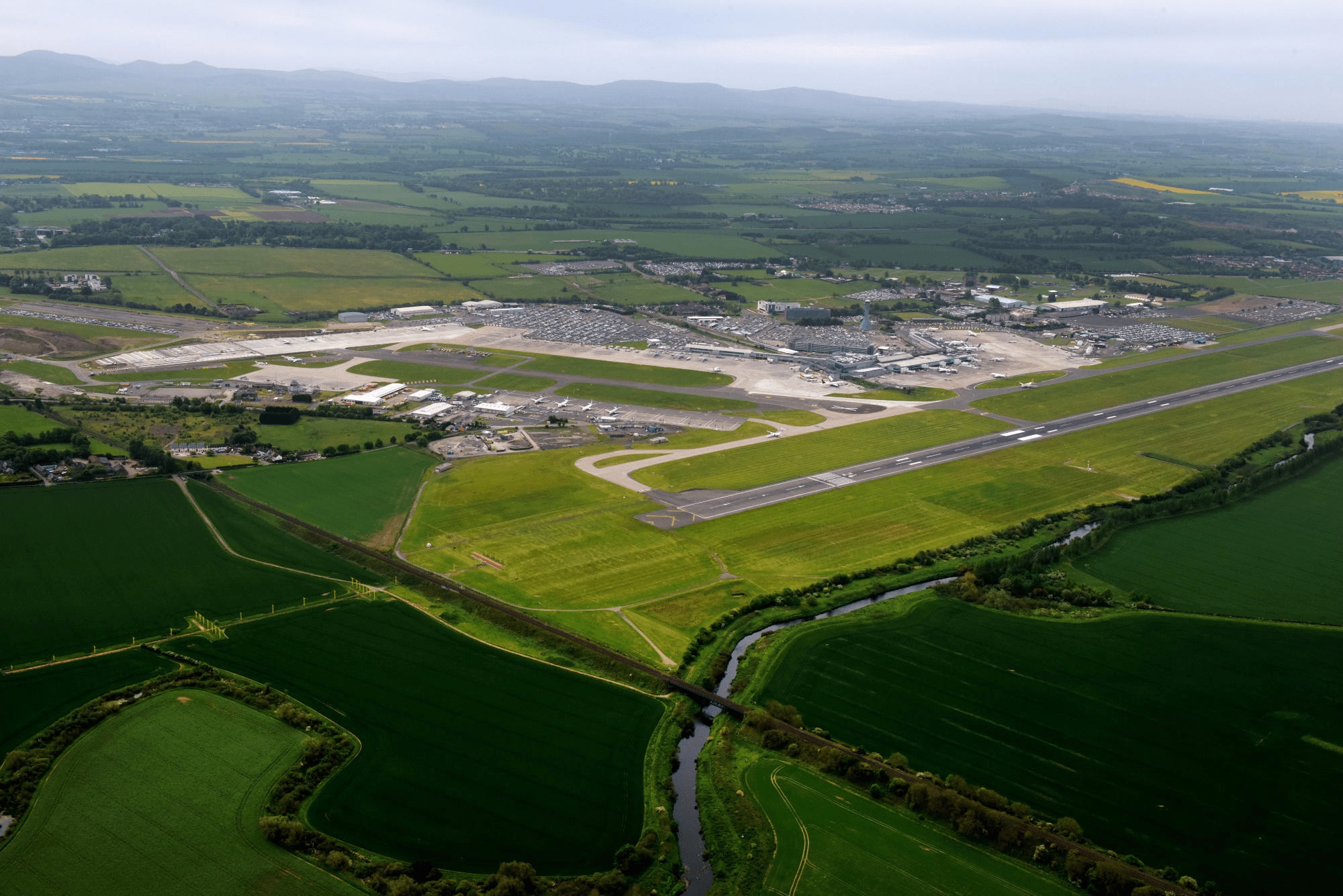
Image courtesy Edinburgh Airport
The parties have signed a Memorandum of Understanding (MoU) to work together to map out steps to reduce emissions at Edinburgh Airport and meet its net zero by 2040 vision. It’s hoped it will provide a template for other airports around the world.
The partnership will play an important part in Scotland’s Net Zero ambitions and will make the airport one of the most sustainable in the world through the use of green technologies, including new hydrogen-fuels produced at scale from offshore wind farms, to eliminate carbon emissions from Edinburgh Airport and the aircraft that operate from it.

The partnership will see Ørsted and Edinburgh Airport work together to decarbonise:
- the energy used in the airport itself
- the energy used by the vehicles that are used to operate the airport
- the energy used by the vehicles getting passengers and goods to and from the airport
- the fuel being used by the aircraft using the airport
They will identify the most effective and affordable options for Edinburgh Airport and work with Scottish and UK Governments on the changes to regulations and policy required to introduce them, needed to deliver net zero by 2040. This will include proposals for hydrogen production facilities powered by offshore wind to support decarbonisation.
Gordon Dewar, Chief Executive of Edinburgh Airport said: “The aviation industry realises the part it plays in emissions and the need to move towards a cleaner, more sustainable future. We have made huge advances in technology and we want to continue to innovate and ensure aviation’s future is one that is decarbonised and contributes positively to our economy and Scotland’s net zero ambitions.
“Although aviation emissions derive in the main from aircraft in flight, we can play our part within our estate and fuel for aircraft at Edinburgh and we are confident this exciting partnership will help us on our way to a sustainable travel future and see Edinburgh Airport helping to develop and support sustainable fuels and their use.”
Duncan Clark, Head of UK Region at Ørsted said: “This is a key stage on Scotland’s journey to reach net zero by 2045. Whilst we have made huge strides in decarbonising the way we generate electricity, the next stage is to use that renewable electricity to decarbonise industry and transport. This will involve renewable energy companies collaborating with forward-looking companies such as Edinburgh Airport. Renewable hydrogen is key to decarbonising heavy transport and air-travel and look forward to working together on this exciting technology.”
Minister for Transport Graeme Dey said: “Our recent report into decarbonising the transport sector makes it clear that all modes need to reduce emissions in order for Scotland to meet our ambitious climate change targets, so we welcome this partnership between Edinburgh Airport and Ørsted.
“Despite the current challenges faced by the aviation sector, it is good to see Edinburgh Airport preparing for a sustainable future. It is critical that businesses and other organisations at least match Scotland’s statutory targets and our ambition to create a net zero economy. This project has real potential in that regard and I look forward to hearing more about it and seeing it develop.”
During the first phase of the MoU this year the partners will examine and analyse options, with additional phases of the collaboration from 2022 focusing on implementing projects and bringing in other partners.
The MoU has been inspired by the Green Fuels for Denmark project, led by Ørsted, in which Ørsted, Copenhagen airport, SAS airline, Maersk and others are working together to create a renewable hydrogen hub to decarbonise transport, air-travel and shipping. The project unites leading Danish companies to develop industrial-scale production and offtake of renewable hydrogen and sustainable e-fuels for road, maritime and air transport. By combining both supply and consumer side actors, the project seeks to develop 10MW electrolyser capacity by 2023, 250MW electrolyser capacity with e-fuel production by 2027, and a vision to scale up to 1.3GW by 2030.
The Edinburgh Airport project will see electricity sourced from offshore wind farms and the renewable hydrogen will then be combined with sustainably sourced carbon to produce 250,000 tons of e-kerosene and e-methanol per year when fully scaled up. Ørsted will draw on the experiences of this project and work with Edinburgh Airport to implement an array of ambitious initiatives that will rapidly accelerate the shift to sustainable air travel.
Edinburgh Airport is owned by Global Infrastructure Partners (GIP), an independent infrastructure investor, which has also invested in a number of offshore windfarms including 50% ownership of Ørsted’s Hornsea One, the largest offshore wind farm in the world.