

Excercise Lanternfish: Royal Navy tests automated underwater warfare tech with AUKUS partners


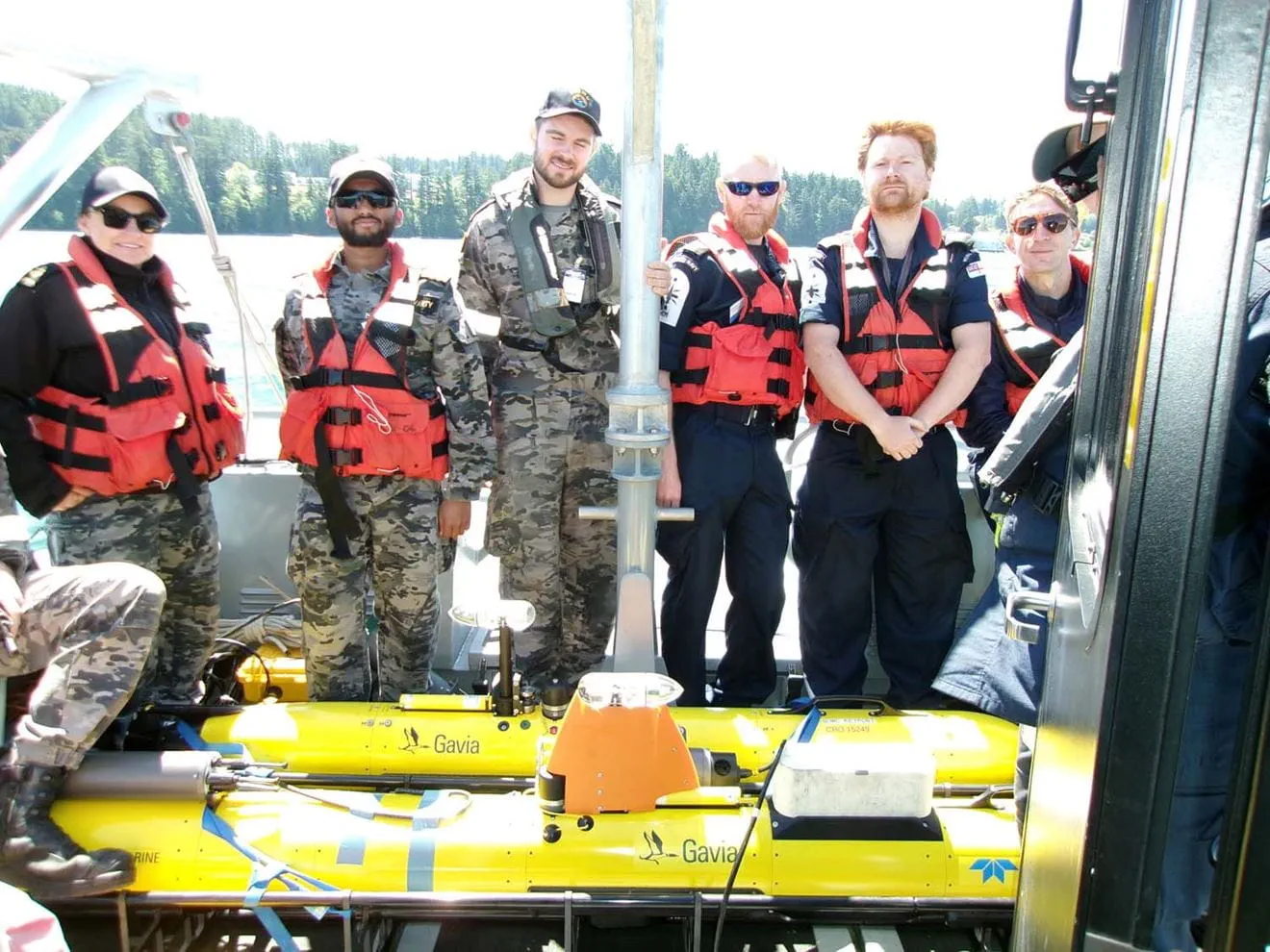
The Royal Navy has shared details of its succeessfull underwater warfare trials as part of AUKUS Excercise Lanternfish.
AUKUS has moved its underwater warfare programme into operational testing, as Britain, Australia and the United States begin evaluating autonomous systems designed to protect critical seabed infrastructure against increasingly sophisticated undersea threats.
The latest trials mark a shift from technology development to frontline integration, underscoring how the trilateral partnership is accelerating efforts to strengthen undersea surveillance and deterrence.
The six-week Exercise Lanternfish, conducted in Virginia, Washington State and waters off south-west Australia, comes just two months after AUKUS defence ministers approved the first signature project under Pillar 2, a programme to jointly develop advanced payloads for uncrewed underwater vehicles (UUVs) that can be deployed across the three nations’ fleets.
The first operational capabilities are expected to enter service from 2027.
The exercise represents one of the first operational demonstrations of that strategy.
Exercise Lanternfish puts AUKUS Pillar 2 technologies into a realistic operational environment
Unlike Pillar 1, which centres on Australia’s acquisition of conventionally armed, nuclear-powered submarines, Pillar 2 focuses on accelerating the joint development of advanced defence technologies, including autonomous systems, artificial intelligence, cyber, quantum technologies, electronic warfare and undersea capabilities.
Among those initiatives, autonomous underwater warfare has emerged as one of the partnership’s fastest-moving programmes.
During Exercise Lanternfish, Royal Navy divers and hydrographic specialists worked alongside Australian and US personnel to operate remotely controlled and autonomous underwater systems in scenarios designed to replicate the surveillance and protection of critical seabed infrastructure.
The Royal Navy’s Diving and Threat Exploitation Group deployed the VideoRay Defender, a remotely operated vehicle used to detect mines and underwater explosive devices.
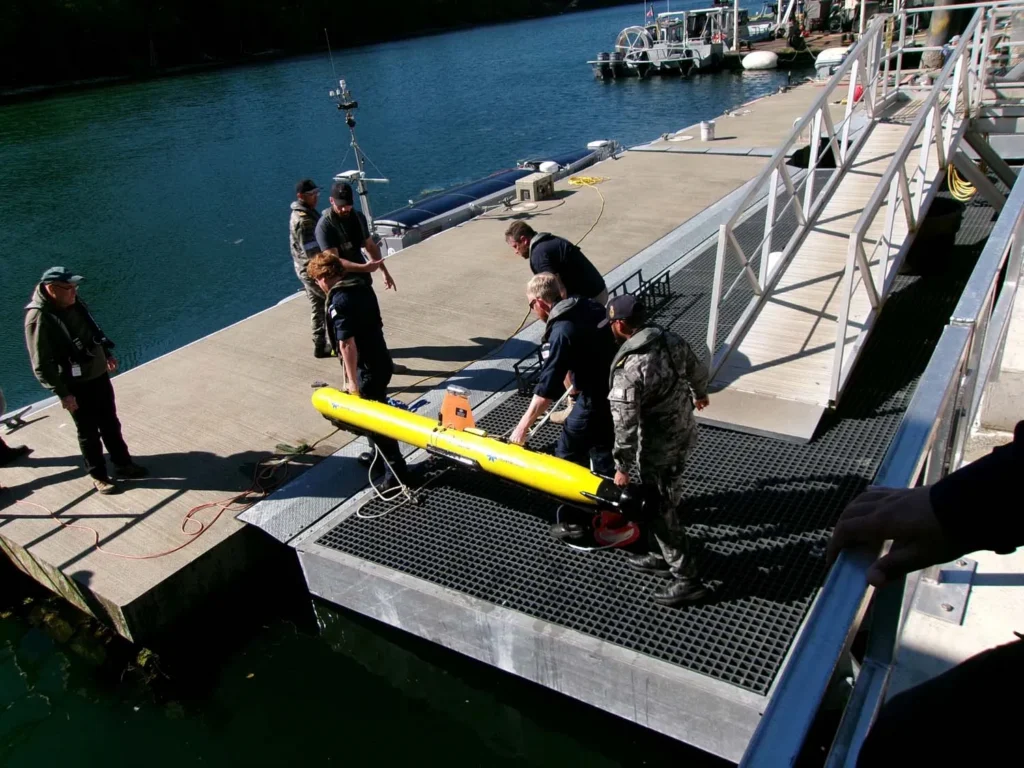
The Hydrographic eXploitation Group (HXG) simultaneously operated the Teledyne Gavia autonomous underwater vehicle, whose modular design allows different sensor payloads to be configured for a wide range of missions.
Rather than evaluating individual platforms, the exercise focused on how autonomous vehicles, sensors and operators from the three navies could function as a single surveillance network.
The objective was to improve the ability of allied forces to detect, monitor and respond to underwater threats while refining common operating procedures for future coalition missions.
Growing concerns over threats to seabed infrastructure are driving closer allied cooperation
The emphasis on underwater surveillance reflects increasing concern among Western navies over the vulnerability of critical seabed infrastructure, including fibre-optic communications cables, offshore energy installations and subsea pipelines.
Those networks have become central to both military operations and national economies, making persistent underwater monitoring an increasingly important defence requirement.
The Royal Navy said the systems tested during Lanternfish were used to conduct surveillance of critical undersea infrastructure while rehearsing responses to potential hostile activity as part of a wider network of underwater sensors and autonomous vehicles.
Lt Cdr Mark Wilton of the Royal Navy’s Hydrographic eXploitation Group said the exercise highlighted the level of interoperability already being achieved between the three partners.
“Our Seabed Warfare team worked extremely closely with our AUKUS partners, demonstrating true integration through the seamless use of Royal Australian Navy equipment when required,” Lt Cdr Wilton said.
“We completed a number of Gavia missions on the exercise – acoustic calibration, night-time and independent, unaided. The team really delivered and their qualified and experienced personnel have grown exponentially,” he added.
Shared autonomous technologies are expected to strengthen future AUKUS naval operations
The programme announced in May is intended to deliver interoperable payloads, including advanced sensors and, in future, weapons systems that can be integrated across British, Australian and US uncrewed underwater fleets.
By developing common technologies instead of separate national solutions, AUKUS aims to improve interoperability and enable allied forces to deploy more rapidly during coalition operations across both the Indo-Pacific and Euro-Atlantic regions.
The underwater initiative also complements broader AUKUS milestones.
Defence ministers confirmed in May that Submarine Rotational Force-West will begin with the first rotational deployment of a US nuclear-powered submarine to HMAS Stirling in 2027, followed by a Royal Navy Astute-class submarine.
Earlier this year, the United Kingdom also completed the first maintenance period for an Astute-class submarine in Australia, another important step towards establishing the rotational force.
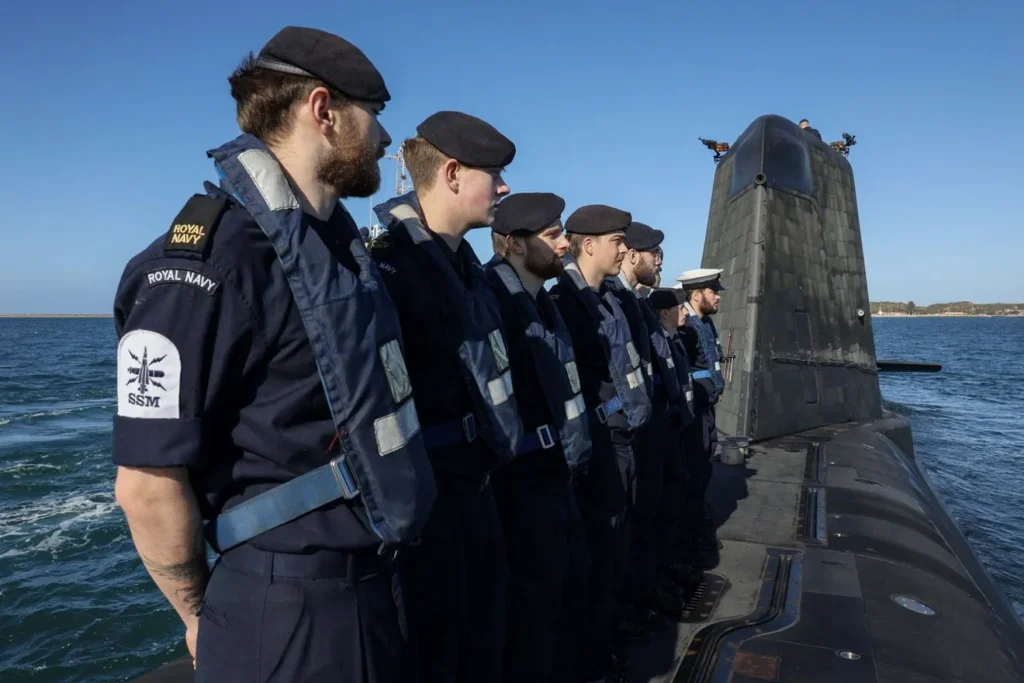
Commodore Marcus Rose, Deputy Director Defence Underwater, said exercises such as Lanternfish allow the three navies to rapidly refine emerging capabilities under realistic operational conditions.
“These events provide a fantastic opportunity to test our interoperability in a real world setting and allow us to iterate our capabilities at pace,” Commodore Rose said.
For AUKUS, Exercise Lanternfish is more than a multinational training event. It signals that Pillar 2 is entering a more operational phase, where autonomous underwater systems are no longer being developed solely in laboratories but are beginning to be integrated into coalition maritime operations.
As the first common capabilities move towards service from 2027, undersea surveillance is set to become one of the partnership’s most tangible demonstrations of allied technological integration.
Sign up for our newsletter and get our latest content in your inbox.
Similar Reads



Sign up for our newsletter. Select all sectors relevant to you.
Related