

Field Army’s quay agreement with ABP drives deployment efficiencies

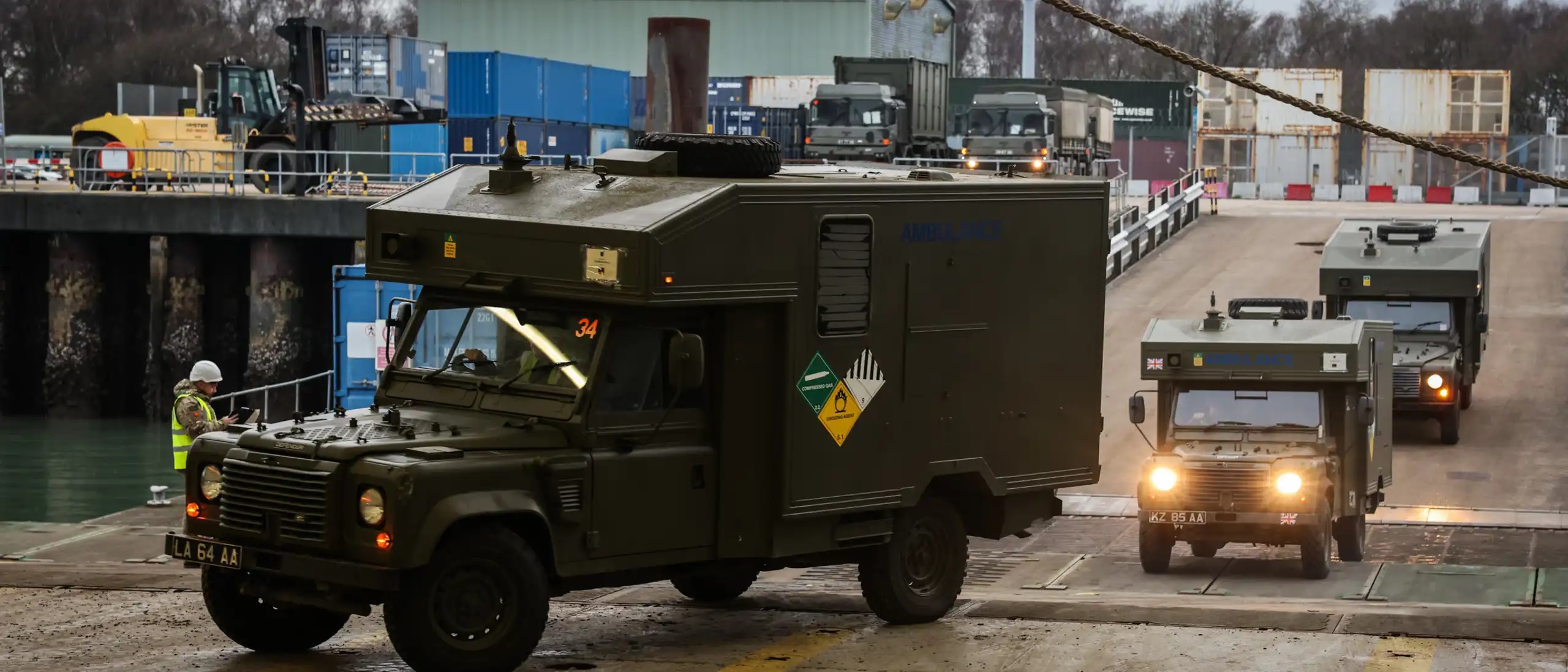
Above: The Sea Mounting Centre in Marchwood, Hampshire.
Courtesy British Army
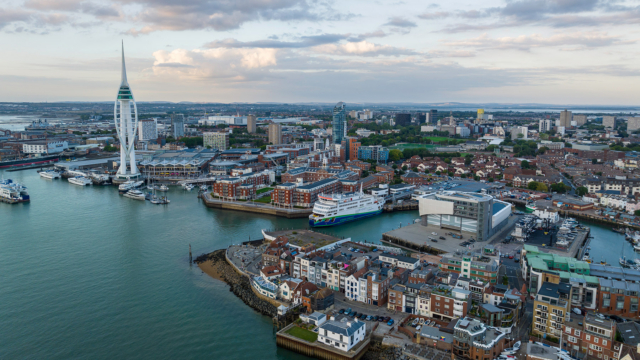
Since the Second World War, the vast majority of Britain’s land forces have embarked on their worldwide deployments and exercises through the Sea Mounting Centre (SMC) based at Marchwood situated across the River Test from Southampton.
Originally conceived back in 1943 as a base to aid the vast build-up for the D-Day landings, Marchwood Military Port as it was known, has remained pivotal as a launch pad for the UK’s overseas operations among which it can count: 1982 – Op Corporate (the Falklands Conflict), 1991 – Op Granby (the first Gulf War), 1992 – Op Grapple (Former Yugoslavia conflict) and more recently, 2002 – Op Herrick (Afghanistan) and 2003 – Op Telic (Iraq War) to name but a few.
Back in 2016, a 35-year lease was signed with Solent Gateway Ltd allowing this commercial operator to develop and use the port facilities in harmony with the military’s requirements. This lease allowed the SMC to further flourish and for the MoD to not only retain its strategic sealift capabilities, but also benefit from a share in the revenues generated by the port’s commercial activities.
In October of last year, a revised strategic relationship agreement was reached between the current commercial operator at the SMC, Associated British Ports (who had subsequently acquired Solent Gateway Ltd) and the Field Army.

This landmark deal is in addition to the £100 million of investment in Marchwood’s infrastructure, which includes the creation of more operating space within the port and improvement of its jetties to allow for some of the world’s largest car transporting vessels to dock. The improvement and maintenance works means that the Sea Mounting Centre will continue to serve the Field Army and MoD’s requirements well into the future. However, perhaps it is away from Marchwood where the new agreement’s benefits will be mostly felt.
In the new deal, provisions have been made to allow the Field Army and MoD to access Associated British Ports’ many other ports up and down the country utilising their facilities and workforce, so essentially the Army will have assured use of suitable ports across the whole of ABPs’ estate, access to its workforce at agreed rates including an annual pre-paid allocation with an option to purchase additional take-up at the agreed rates when required.
Henrik L. Pedersen, Chief Executive Officer of Associated British Ports, said: “As part of our strategic commitment to supporting the Defence sector, ABP is proud to provide the MoD access to our network of ports across Britain for both national emergencies and routine business. We look forward to deepening our relationship with the Armed Forces and the strategic defence sector across the UK.”
The benefits and efficiencies resulting from this aspect of the new strategic relationship agreement are manifest, not least a huge reduction on the current environmental impact. Now that the Army can utilise ports around the country, it eradicates the need to transport thousands of tons of military hardware down to the south coast. Brigades and battlegroups located in the north of the country will be able to use the ports at ABP Humber, whilst the Royal Marines could use Plymouth. Less military vehicles on the roads, budgetary savings and, of course, a massive carbon emission reduction in not having all those military convoys pounding the UK’s highways and byways.
Major General Jo Chestnutt, the Field Army’s Deputy Chief of Staff and co-signatory to the agreement said: “This new landmark strategic relationship with ABP is the exemplar of what MoD and Industry can achieve. Working together, we have increased access to the full port network across Britain, increasing the resilience and capacity of the MoD’s Sea Mounting capabilities, both in routine and in support of Operations overseas."
There are also several knock-on benefits and savings to be made from a maritime perspective. Last year saw the deployment and retrieval of thousands of vehicles including heavy armour and main battle tanks to northwest Europe under NATO’s Steadfast Defender series of exercises. The bulk of all that equipment went through Marchwood en-route to the German port of Emden. Those strategic sealift RO-RO vessels packed to the gunwales sailed up through the English Channel and around the Dutch coast to reach their destination. Now they will be able to make the far shorter transit straight across the North Sea from Hull or Immingham reducing their passage by hundreds of nautical miles.
Later this year, elements of 7 Brigade are expected to make full use of the new arrangements in place and return to their bases in the north of England and Scotland from NATO manoeuvres in Eastern Europe via the port of Hull – shortening the sea passage and eliminating that long road haul the length of the UK.
The new agreement has a strategic significance in that it means there is no longer a single port through which the UK’s military machine passes lessening the risk of it being a single point of failure. In today’s unfolding geopolitical scene, the threat from aggressive states and actors is very real. NATO and the UK’s partner nations demand the ability for UK forces to be able to rapidly deploy to deter, assure and, when the need arises, react to any player who would wish to undermine the security of Europe.
The Field Army’s newly signed off agreement with Associated British Ports will play an important role in bringing about increased speed and capacity with greatly reduced risk when deploying overseas that will certainly contribute to the lethality of Britain’s land forces.
Sign up for our newsletter and get our latest content in your inbox.
Similar Reads


Sign up for our newsletter. Select all sectors relevant to you.
Related