
General Atomics

GA-ASI flies US Government autonomy software on MQ-20 Avenger

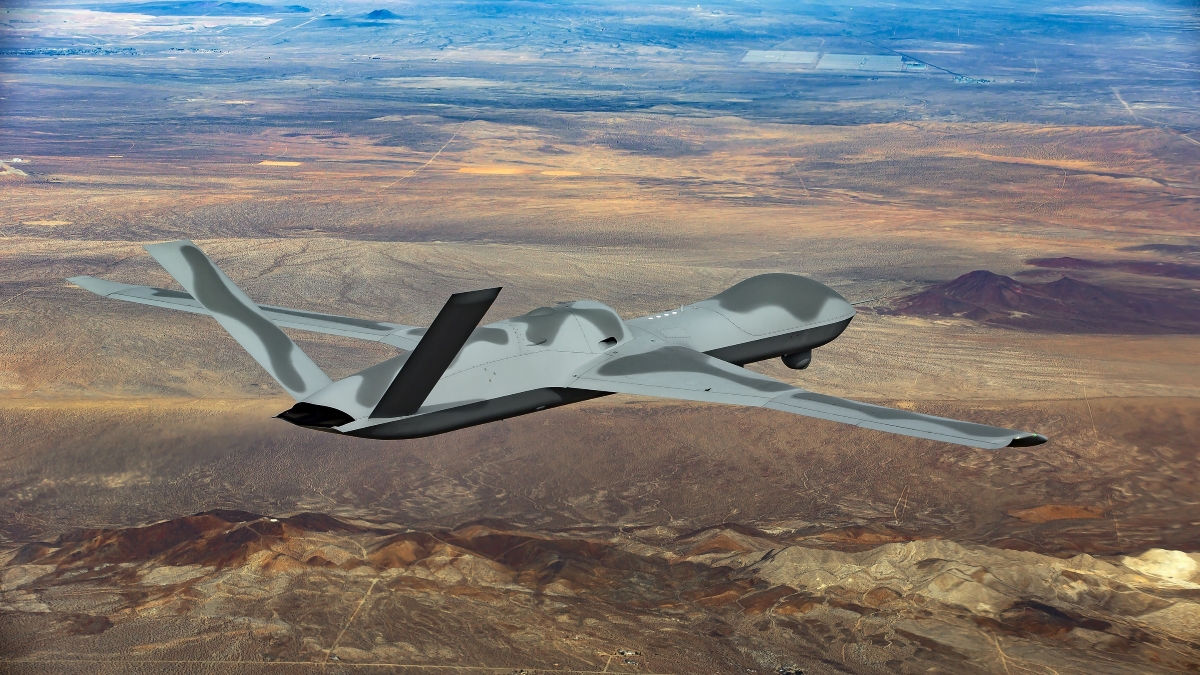
General Atomics Aeronautical Systems, Inc. (GA-ASI) achieved another major milestone in the development of Unmanned Combat Air Vehicles (UCAVs) by flying US government-provided autonomy software aboard a company-owned MQ-20 Avenger.


Image courtesy GA

The demonstration was part of the Air Force Test Center’s all-domain test series called Orange Flag 25-1, which took place 19th-21st February at Edwards Air Force Base, California.

The demonstration included the use of a government-provided Pilot Vehicle Interface (PVI), showcasing GA-ASI’s commitment to advancing its UCAV ecosystem through collaboration with partners and government entities and integrating advanced technologies. Avenger is a jet-powered UAS used extensively by GA-ASI as a test bed for future Autonomous Collaborative Platforms.

GA-ASI also demonstrated the ability to rapidly swap between autonomy systems midflight over Proliferated Low Earth Orbit (PLEO) satellites utilising an autonomy product from Shield AI.

Orange Flag 25-1 is part of the larger Orange Flag Evaluation and Demonstration Event series. This event brought together various stakeholders to test and validate advanced aerospace technologies in realistic operational scenarios.

The government-provided autonomy software – known as a reference autonomy stack – was integrated into the GA-ASI Avenger and demonstrated autonomous flight operation capabilities focused on conducting air-to-air engagements. The government-provided PVI enabled seamless control and monitoring of the autonomy stack, highlighting the interoperability and flexibility of GA-ASI’s UCAV ecosystem. The Shield AI stack demonstrated autonomy skills for safe administrative phases of flight.

What the flights proved was that GA-ASI aircraft can quickly go from company-written software, to government-provided, to other vendors’ software as needed. This reinforces that the new generations of GA-ASI’s UCAVs can seamlessly get upgrades as fast as developers finish them. Just as a mobile phone can get new and better features with each update, so too can new UCAVs get more capable and more versatile.

GA-ASI Vice President of Advanced Programs Michael Atwood, said: "This demonstration marks a significant achievement in our ongoing efforts to operationalise autonomy for UCAVs.

"Flying the government reference autonomy stack at Orange Flag 25-1 and utilising the government-provided PVI underscores our commitment to delivering robust and adaptable autonomy solutions for the warfighter. We especially appreciate and salute the support we received from the 309th Software Engineering Group."

The successful flight at Orange Flag 25-1 further validates GA-ASI’s dedication to maturing its open standards-based autonomy software ecosystem. By adhering to government-owned and maintained standards, GA-ASI ensures rapid integration of best-of-breed capabilities from third-party providers, enhancing the overall operational effectiveness of UCAV platforms.

GA-ASI continues to demonstrate its commitment to advancing autonomy for UCAVs through a series of flight tests and collaborations with government and industry partners. These efforts are aimed at developing an autonomy infrastructure that enables rapid integration and validation of tactical software applications while maintaining safety of flight and providing warfighters with the most advanced capabilities possible. GA-ASI has been selected by the US Air Force to build and fly the Collaborative Combat Aircraft (CCA).

Related

CAA reveals participants in next round of Hydrogen Sandbox
CAA Aviation House, Crawley, Gatwick.
CAA reveals participants in next round of Hydrogen Sandbox
Three organisations have been chosen to take part in the third round of the Civil Aviation Authority’s Hydrogen Challenge, which over the past three years has supported projects developing solutions to transform flight through the safe introduction of hydrogen to fuel manned and unmanned aircraft.
Aerospace

5 Sep 2026

Skyports partners with Oita Prefecture to develop Advanced Air Mobility network
Skyports Oita MoU signing September 2026
Skyports partners with Oita Prefecture to develop Advanced Air Mobility network
Skyports Infrastructure has partnered with Oita Prefectural Government to explore routes, vertiport locations and future air taxi services ahead of a planned 2028 launch.
Aerospace Member News

4 Sep 2026

Wales aerospace, defence, security and space sectors add £2bn to economy
Welsh flag
Wales aerospace, defence, security and space sectors add £2bn to economy
According to new ADS data, Wales’ aerospace, defence, security and space industries contributed £2 billion to the economy in 2025, and supported more than 18,500 highly skilled jobs.
SubSea Craft unveils MARS USV modular payload cassette system
SSC MARS USV
SubSea Craft unveils MARS USV modular payload cassette system
The new payload cassette system for SubSea Craft's MARS USV is set to transforms payload integration for maritime operations.
Supacat begins building HMT Extenda vehicles for Czechia’s special forces
HMT
Supacat begins building HMT Extenda vehicles for Czechia’s special forces
Supacat has started production of 18 HMT Extenda vehicles for Czechia's special forces, with deliveries due to begin in 2027.
Defence Member News

4 Sep 2026

GM Defence appoints Simon Gray as its UK Director of Business Development
Simon Gray
GM Defence appoints Simon Gray as its UK Director of Business Development
GM Defence has appointed Simon Gray as Director of Business Development as it expands its UK presence and strengthens engagement with the MoD, Armed Forces and industry partners.
Defence Member News

4 Sep 2026

Wales aerospace, defence, security and space sectors add £2bn to economy
Welsh flag
Wales aerospace, defence, security and space sectors add £2bn to economy
According to new ADS data, Wales’ aerospace, defence, security and space industries contributed £2 billion to the economy in 2025, and supported more than 18,500 highly skilled jobs.
Open Cosmos selected for UK satellite communications framework
Earth from space.
Open Cosmos selected for UK satellite communications framework
Open Cosmos is to provide secure communications to the UK Government’s Tactical Communications (TacSys) framework, with the company’s LEO constellation supporting UK ambitions to build a resilient sovereign network to avoid reliance on mega-constellations.
Serco awarded RAF Fylingdales early warning radar contract
RAF Fylingdales
Serco awarded RAF Fylingdales early warning radar contract
As part of the contract, a new software analytical tool developed by Serco - with the RAF and UK Space Command - is set to enhance RAF Fylingdales' detection and tracking system.
SubSea Craft unveils MARS USV modular payload cassette system
SSC MARS USV
SubSea Craft unveils MARS USV modular payload cassette system
The new payload cassette system for SubSea Craft's MARS USV is set to transforms payload integration for maritime operations.
BMT launches Maritime Autonomous Systems e-learning course
eFleet
BMT launches Maritime Autonomous Systems e-learning course
As autonomous technologies rapidly evolve and the autonomy skills gap widens, BMT's maritime autonomy specialists have developed a new e-learning course to cultivate broader understanding of autonomy beyond specialist engineering teams.
Open Cosmos selected for UK satellite communications framework
Earth from space.
Open Cosmos selected for UK satellite communications framework
Open Cosmos is to provide secure communications to the UK Government’s Tactical Communications (TacSys) framework, with the company’s LEO constellation supporting UK ambitions to build a resilient sovereign network to avoid reliance on mega-constellations.