GKN Aerospace and IAAPS demo aircraft fuel cell

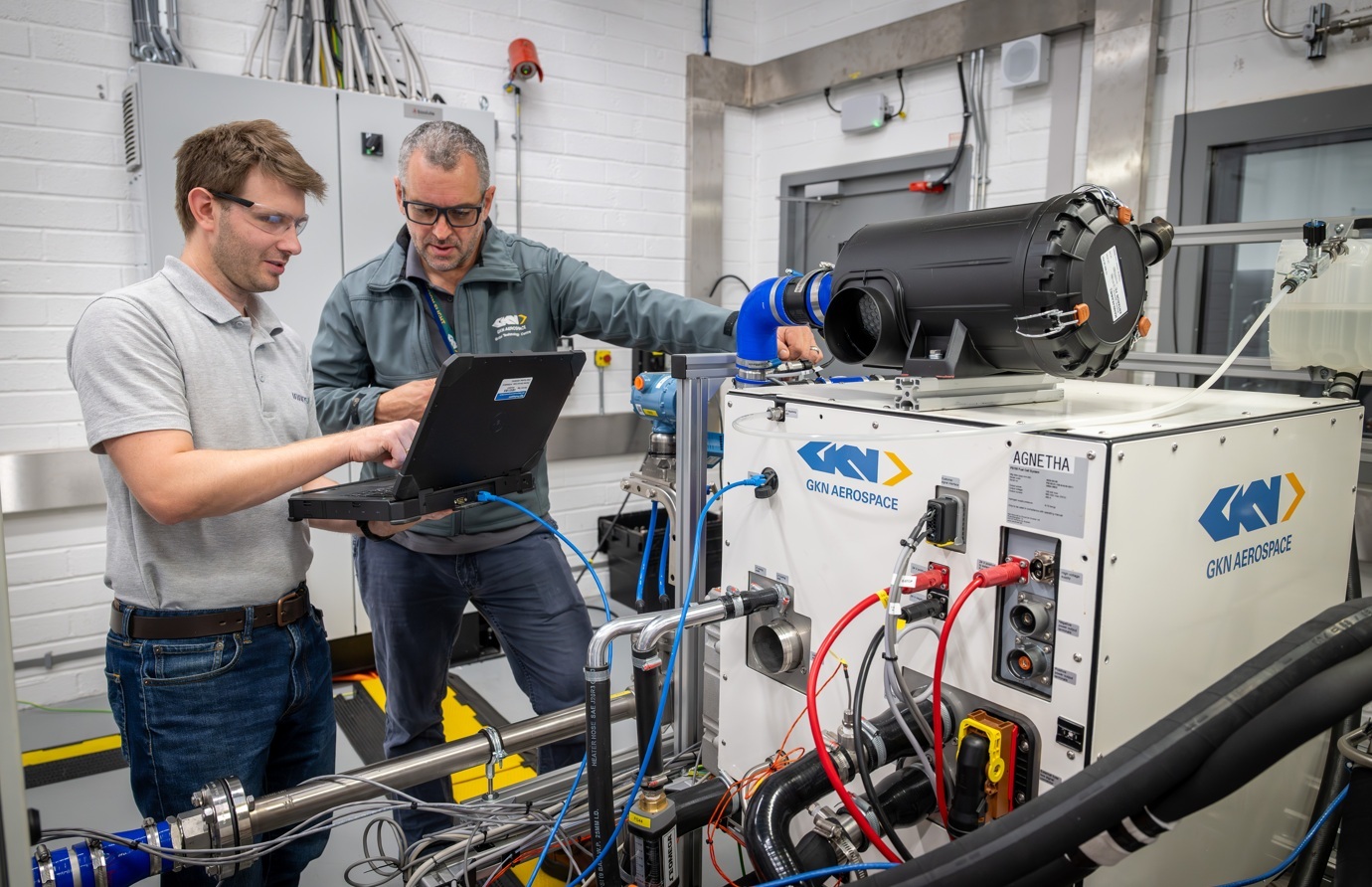
IAAPS and GKN Aerospace are working together to validate hydrogen-electric propulsion technologies within the H2GEAR programme. By combining their facilities and expertise, both companies are hoping to accelerate progress toward a net-zero future in flight.
GKN Aerospace specialises in aerospace structures and systems, spanning engines, airframes, landing gear, transparencies and electrical systems for both commercial and military platforms. It has a significant focus on sustainable flight advancing technologies that will enable a net-zero future for aviation.
As part of this mission, GKN Aerospace has partnered with IAAPS to test and validate a Hydrogen Electric Propulsion (HEP) system within the H2GEAR programme, funded by the UK Aerospace Technology Institute (ATI). This complex test campaign is led by Andrew McKeever, Principal Test Engineer at GKN and brings together hydrogen fuel, cryogenics and electric propulsion technologies.
Why limited capabilities have hindered development of hydrogen propulsion in the UK
Hydrogen propulsion, particularly liquid hydrogen (LH₂), demands highly specialised test infrastructure. In the UK, facilities capable of combining hydrogen handling, high-voltage electrical systems and advanced dynamometer capability are limited.
After an extensive down-selection process, GKN chose IAAPS for its ability to rapidly adapt the new Bristol & Bath Science Park facility to accommodate these requirements.
The demonstrator developed through this collaboration is a critical step toward proving hydrogen-electric propulsion as a viable solution for future zero-carbon aircraft.
Creating new capabilities to advance future-ready development
IAAPS’ adaptability, engineering depth and willingness to push into new technical domains beyond its combustion heritage, enabled GKN to develop a team that established several new capabilities, including:
- Gaseous hydrogen supply systems
- High-power battery emulation
- Cryogenic helium cooling infrastructure
Senior IAAPS engineers and University of Bath experts were closely involved throughout, ensuring safe, rigorous and future-ready development.
Technical responsiveness and open collaboration vital for programme success
The teams worked side-by-side in a co-located model described as open, collaborative and highly effective. Engineers from both organisations were able to share insights rapidly, adapt plans as technical requirements evolved and tackle emerging challenges together.
As Charlie Gaylard, Engineer at IAAPS, reflects: “What stood out was the openness across both teams. It allowed us to share information quickly, adjust our approach when needed and work through complex technical issues effectively. That kind of collaboration is vital for the success of large-scale programmes like H2GEAR.”
This approach allowed IAAPS to demonstrate agility and technical responsiveness, essential qualities when working with disruptive propulsion technologies.
Pushing through to the next phase of testing at pace
The partnership has already delivered successful testing of a Technology Readiness Level 4 (TRL4) Energy Storage System and an integrated fuel-cell Power Generation System (PGS). The next phase will advance into cryogenically cooled power-distribution conduits and high-power drive systems.
This work has enabled:
- Credible demonstration of novel hydrogen-electric technologies
- High-value validation data for future system design
- Strengthened UK capability in hydrogen propulsion
Andrew McKeever said: “Hydrogen technology demands unique test capabilities and a strong safety culture. IAAPS brought both, enabling us to move at the pace required for disruptive programmes like H2GEAR.”
Sign up for our newsletter and get our latest content in your inbox.
Similar Reads




Sign up for our newsletter. Select all sectors relevant to you.
Related