HMS Somerset emerges from refit
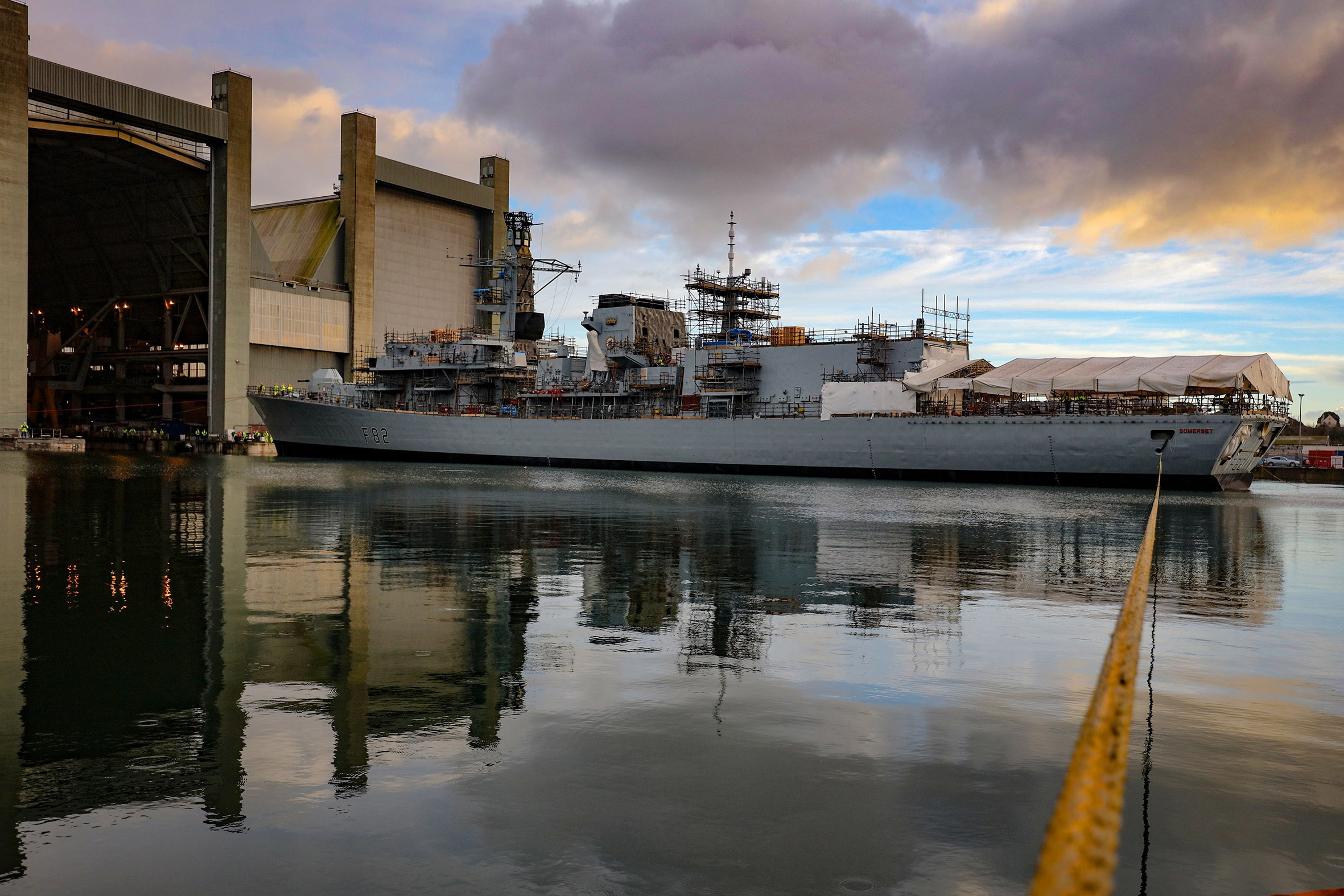
Above:
HMS Somerset emerges from Devonport's frigate shed.
Courtesy Royal Navy
The warship has been moved from Devonport’s landmark Frigate Support Centre into the neighbouring basin, as her sister HMS Sutherland
prepares to take her place in the covered dry dock.
Five Type 23s are currently in various stages of the LIFEX refit/revamp, a massive joint undertaking by the Royal Navy and defence firm Babcock to add an extra decade’s life to the workhorses of the Fleet.

Beginning with HMS Montrose back in 2014, the programme is reaching its climax, helping to allow the 23s to serve until their successors (Type 26 and Type 31 frigates) enter service.
Although some changes and improvements – such as replacing the Sea Wolf air defence missile system with Sea Ceptor, engine, software and sensor upgrades – are pretty much identical across the flotilla, other work, including strengthening the hull, improvements to living spaces and general maintenance, depends on the state and age of the ship.
The class traces its history back to the late 1970s, was designed in the early 1980s (taking into account lessons of the Falklands conflict), with the oldest frigate still in Royal Navy service, HMS Argyll , 30 years old in May 2021 and the youngest, HMS St Albans , 18 – the original lifespan planned for the Type 23s.
The latter is in the shed, roughly one third of the way through her life extension, with her older sister HMS Iron Duke.
“The capability sustainment for the Type 23s is putting a lot more modern technology on to the platforms,” said Commander Jim Ellis from the Surface Flotilla’s Devonport Refit Support Programme.
“It’s upgrading their equipment and the fabric of the ship as well. It’s improving their life span, so basically putting the teeth and the legs back into the Type 23s, to bridge the gap until the Type 26 enters service from 2025 onwards.”
Work in the frigate shed has continued throughout the pandemic, but Babcock has found new ways of operating inside the cramped confines of a frigate while keeping staff safe.
“COVID has been a challenge,” explained Will Erith, managing director warships at Babcock who have some 1,100 people working on the programme.
“But we put mitigations in place. Safety is our number one priority and it has been a team effort. We are really proud of what we have achieved in 2020.”
HMS Lancaster was returned to the Fleet at the end of 2019 (and is now fully operational), followed shortly afterwards by HMS Richmond . HMS Portland has been handed back to the Royal Navy ready for trials by Easter – her first time at sea since 2017 – and HMS Somerset will continue fitting out in No.2 Basin before being returned to the Royal Navy in 2021.