Isotropic Systems and SES GS set to unlock US Military next-gen connectivity
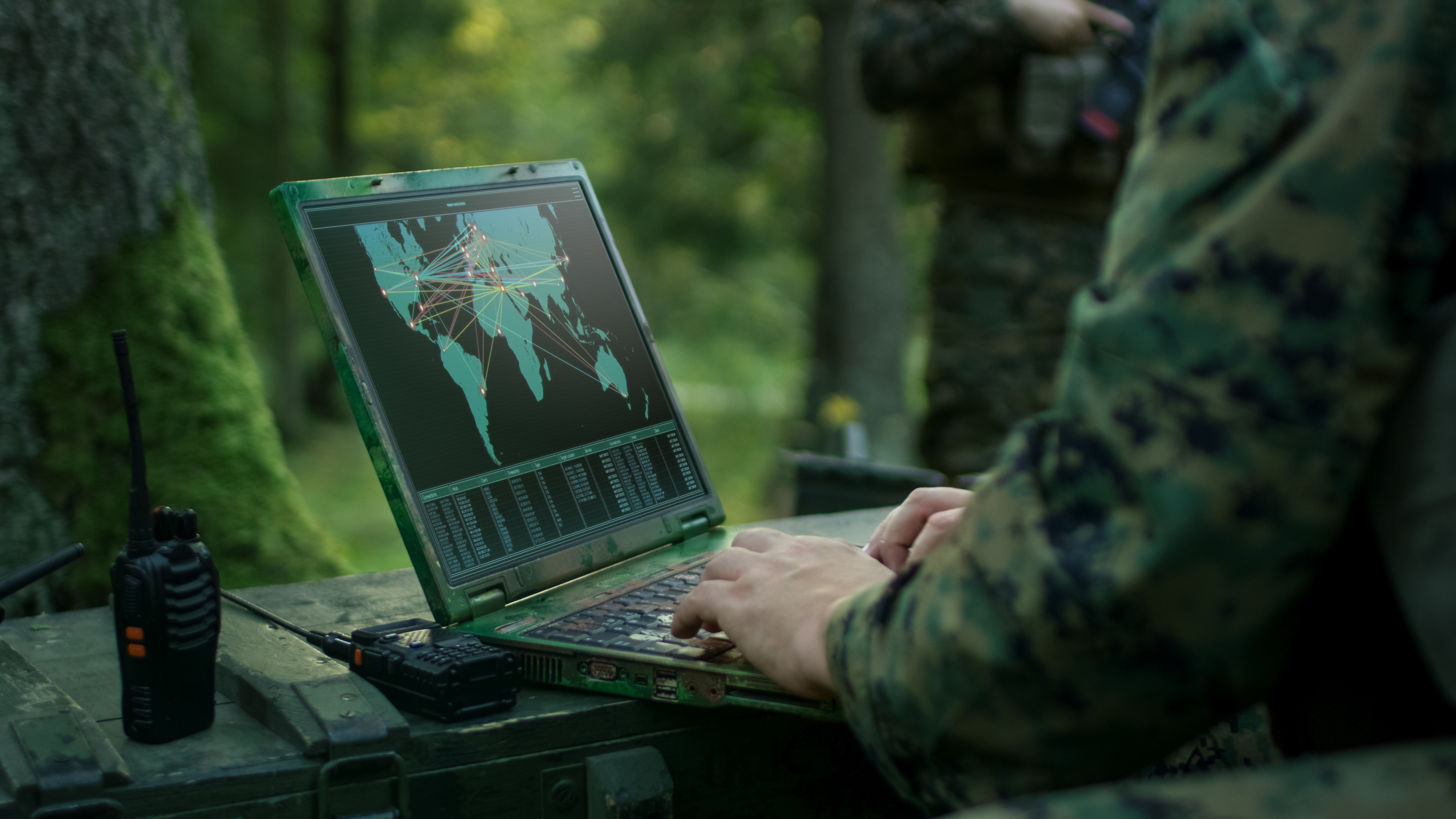
Image courtesy Isotropic Systems
The US Air Force and US Army, through the innovative Defense Experimentation Using Commercial Space Internet (DEUCSI) programme, are evaluating the ability of Isotropic Systems’ optical beamforming antenna to enable frontline armed forces to access high-speed, real-time data simultaneously over multiple commercial and military satellites.

First phase dual-beam tests conducted at the Harwell Science, Technology and Innovation Campus near Oxford, UK, have successfully demonstrated transformational optics at the core of Isotropic Systems’ multi-beam terminal that are fully capable of linking with multiple satellites at the same time.
Over-the-air (OTA) trials conducted at an SES teleport in Port St. Lucie, Florida, also part of phase one, have verified the Isotropic Systems’ high-performance multi-beam platform meets military requirements to acquire and track SES’ O3b MEO satellites.
Phase two trials will test Isotropic Systems’ latest antenna prototype over links with SES satellites in geostationary orbit (GEO) and medium earth orbit (MEO), demonstrating seamless satellite-to-satellite transitions and a redundant, resilient leap in wartime communications.
The DEUCSI trials will wrap up in 2021, ahead of the commercial launch of Isotropic Systems’ optical multi-beam antenna production scheduled for 2022, and in time to support SES’ new high-throughput MEO constellation satellites coming online, the groundbreaking O3b mPOWER system.
“The armed forces and defence agencies are incredibly good at acquiring actionable information, but they run into bottlenecks when they try to distribute that mission-critical data over single beam parabolic antennas and other outdated infrastructure,” said Scott Sprague, Isotropic Systems CCO. “These milestone trials with the US Army and Air Force are successfully demonstrating the multi-beam, multi-orbit connectivity and capabilities our high-performance terminals will put in the hands of frontline warfighters and decision makers across the government sector and battlespace.”
“Next-gen satellites and constellations need equally robust and resilient terminals and ground infrastructure to meet the government’s ’Fighting SATCOM’ vision,” said Pete Hoene, President and CEO of SES Government Solutions, Brigadier General, USAF (Ret.). “Interoperability and multi-orbit capabilities are essential to achieving this vision, and these collaborative trials with the armed forces demonstrate how Isotropic Systems’ multi-beam antenna can successfully deliver robust connectivity across our vast MEO and GEO fleet. Each successful phase is a prime example of how the government and commercial partners can develop capabilities in parallel, which is especially important to us as we ready to launch our O3b mPOWER constellation and SES-17 satellite this year.
“Without affecting the main communications link, the Isotropic Systems multi-beam terminal can use a second or third link to evaluate the environment to preemptively decide the best routing option at any given time to maximise performance,” explained Brian Billman, Vice President of Product Management for Isotropic Systems. “That’s the level of differentiating capabilities our terminal roadmap leads to as a result of these important trials with the US military.”