Advancing UK Aerospace, Defence, Security & Space Solutions Worldwide
  • Home
  • /
  • Space
  • /
  • Isotropic Systems completes pivotal LEO test ahead of launch

Space

Isotropic Systems completes pivotal LEO test ahead of launch
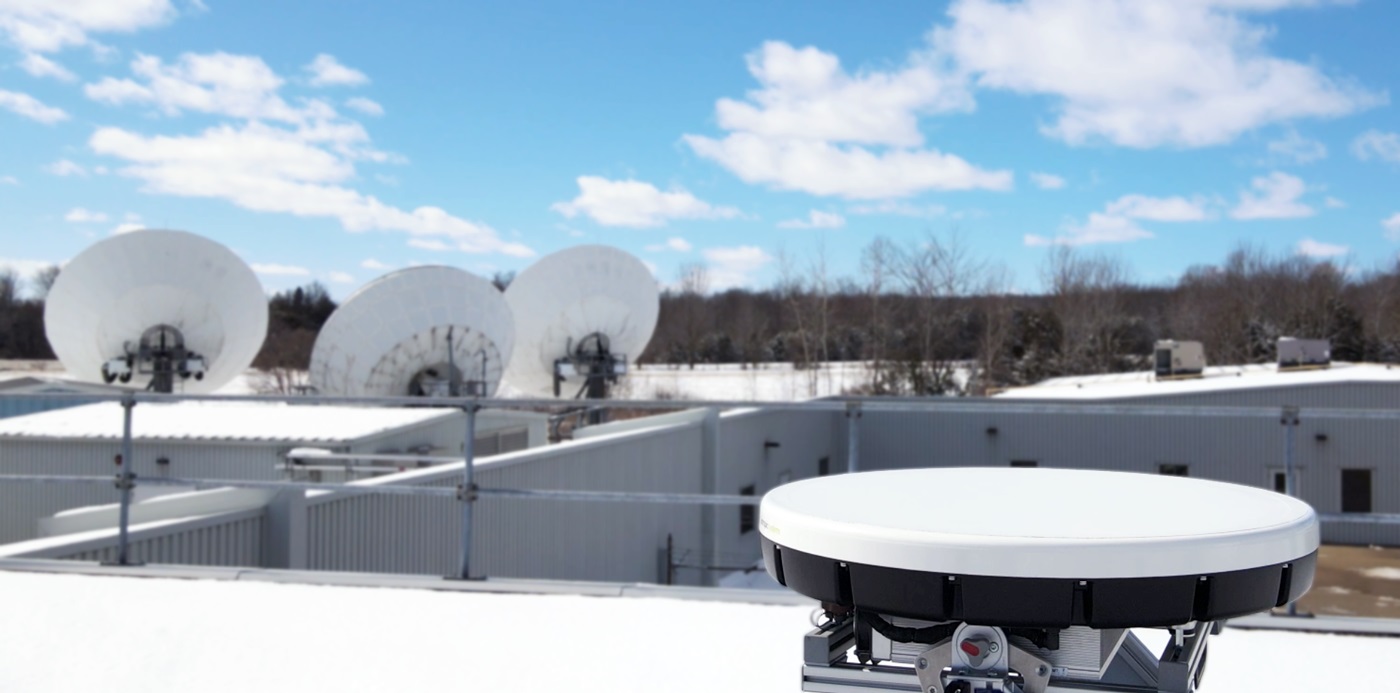
Developer of transformational multi-link satellite technology, Isotropic Systems, has completed field tests demonstrating its ground-breaking new terminal is capable of tracking and establishing a communications link with a Low Earth Orbit (LEO) satellite.

Image courtesy Isotropic Systems

The tests were conducted live, over-the-air, with Telesat at its Allan Park Teleport in Ontario, Canada. Isotropic's terminal tracked and passed bi-directional traffic to Telesat's Phase 1 LEO satellite whilst simultaneously connected to a Geostationary Earth Orbit (GEO) satellite link, demonstrating Isotropic's multi-orbit, multi-link Satcom terminal technology.

Advertisement
ODU RT

Isotropic’s cutting-edge antenna technology will allow full aperture performance across simultaneous connections to multiple satellites in any orbit. In addition to make-before-break handover support, the terminal unlocks multi-orbit communications to provide end-users with the increased flexibility for optimising their satellite capacity enabling ultra-high network uptime, quality of experience and service for a range of industry verticals.

With the initial testing completed, Isotropic Systems will officially launch later this year and unlock next-generation capabilities in connectivity for a range of sectors, including Aeronautical, Maritime, Enterprise, Government and Telecoms:

  • In the air, aircraft will access multiple satellites at once. Pilots will be able to connect to satellites for navigation and ground communications, while passengers can access high-speed broadband, live television, and enhanced entertainment options through entirely separate satellites.
  • On the ground, the land transport sector will unlock super-fast internet access enabling passengers to extend their office even if they are riding a bus or train.
  • At sea, fibre-like broadband will revamp the experience for cruise-ship passengers while ships can be tracked across the ocean, advancing digital transformation for the shipping industry.
  • Governments will be able to safeguard civilian and defence connectivity by accessing all available satellite bandwidth.
  • Businesses will unlock significant enterprise opportunities from the increase in global connectivity.

John Finney, Founder and CEO of Isotropic Systems, said: "This test shows the potential of our terminal to enable the full convergence of satellites systems from the ground across multiple-orbits and meshing networks together without compromising the user-end experience. We look forward to testing our products in preparation for our product launch this year. Isotropic Systems has exciting times ahead."

Advertisement
ODU RT

Erwin Hudson, Telesat's Vice President of Lightspeed System Development, said: "All of us at Telesat are excited to see this first step in Isotropic Systems' LEO testing campaign. Isotropic's multi-link antenna is a promising, innovative technology that can provide increased flexibility and freedom of choice for customers pursuing multi-orbit connectivity strategies."



Advertisement
Hexagon leaderboard
ADS appoints Andy Williams Director of ADS Scotland

Aerospace Defence Security Space

ADS appoints Andy Williams Director of ADS Scotland

22 May 2026

ADS, the trade association for the aerospace, defence, security and space industries, has announced the appointment of Andy Williams as Scotland Director.

King’s College London and Cranfield University propose merger

Aerospace Defence Security Space

King’s College London and Cranfield University propose merger

22 May 2026

King’s College London and Cranfield University have announced that the two universities have signed an agreement as the first step towards a merger, with the aim of bringing the two institutions together from August 2027, which will support UK national capability and resilience.

British defence unicorns awarded new MoD contracts

Defence Space

British defence unicorns awarded new MoD contracts

21 May 2026

Thirteen British businesses have been awarded contracts of up to £4 million to work with the UK Ministry of Defence (MoD) to boost rapid procurement, drive innovation and deliver advanced technology for UK Armed Forces.

Northumbria University looks at satellite collision avoidance using AI

Space

Northumbria University looks at satellite collision avoidance using AI

20 May 2026

Northumbria University is leading a new project to improve the AI systems at the heart of modern collision avoidance in space.

Advertisement
ODU RT
UK plays key role in SMILE mission launched to examine Earth’s magnetic shield

Space

UK plays key role in SMILE mission launched to examine Earth’s magnetic shield

19 May 2026

UK scientists and companies are at the heart of the pioneering Solar wind Magnetosphere Ionosphere Link Explorer (SMILE) mission - launched into orbit today - that will transform our understanding of how Earth is protected from the Sun.

BAE Systems delivers US Space Force missile warning sensor system

Defence Space

BAE Systems delivers US Space Force missile warning sensor system

18 May 2026

BAE Systems has delivered the sensor subassembly and sensor system controller components for the Next Generation Overhead Persistent Infrared Polar (NGP) programme, providing advanced missile warning, technical intelligence and battlespace characterisation mission capabilities, for the US Space Force.

Advertisement
ODU RT
Advertisement
General Atomics LB