Metalysis secures ESA funding for sustainable titanium production
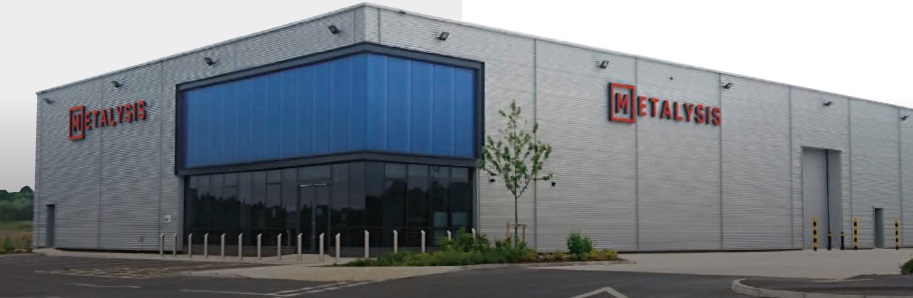
Image courtesy Metalysis
The 24-month project is a further endorsement of the scalability, sustainability, cost-effectiveness – and Western supply chain security – of the Metalysis FFC technology.
Metalysis will lead a consortium including the UK’s Lucideon Ltd, TTP Plc, NCHG Ltd and Austrian RHP-Technology GmbH, bringing together expertise across ceramics processing, materials science, electrochemistry, process development and powder metallurgy, covering all unit operations affiliated with the Metalysis FFC technology – and purposefully only from UK and EU partners.

The consortium will scale the Metalysis FFC process to support sustainable bulk titanium production. Titanium is a critical metal for space and aerospace applications, and ESA is actively supporting the development of a more sustainable, economically viable and secure production route. This project has both space and non-space applications, and will build on Metalysis’ patented FFC molten salt electrolysis batch process to a continuous or quasi-continuous operation. Currently, through its GEN-3 and GEN-4 reactors, Metalysis can service the Additive Manufacturing (AM) sector, however current volumes are insufficient for the wider bulk titanium market.
Titanium and its alloys are essential to the space and aerospace sectors due to its high strength-to-weight ratio, corrosion-resistance and performance at extreme temperatures. Prior to 2022, much of the Western aerospace titanium sponge supply was sourced from Russia, while today China supplies around 70 percent. This has driven urgent demand for alternative, secure supply routes which this project will deliver.
The traditional Kroll process used for titanium production has several significant drawbacks:
- High Cost: Titanium alloy production is expensive due to the multi-step nature of the Kroll process: melting, thermomechanical processing and the need for high-purity raw materials.
- Environmental Impact: The Kroll process involves the use of chlorine gas and produces large amounts of hazardous waste, making it environmentally unsustainable.
- Energy Consumption: The Kroll process based on melting and thermomechanical processing is all energy-intensive, contributing to a large carbon footprint.
The Metalysis FFC process addresses these challenges and offers several key advantages:
- Higher Purity and Efficiency: Molten salt electrolysis can produce titanium with higher purity and lower energy consumption compared to the Kroll process. The direct electrochemical reduction allows for more precise control over alloy composition.
- Reduced Environmental Footprint: This method significantly reduces the environmental impact of titanium production by minimising hazardous by-products.
- Scalability and Cost-Effectiveness: Molten salt electrolysis has the potential to be more scalable and cost-effective in the long run, especially when adapted into a continuous process.
- Fundamentally, the Metalysis FFC process enables the direct production of titanium alloys in the solid-state, bypassing the multiple melting stages required in the Kroll route. Combined with Powder Metallurgy (PM) for Near Net Shape (NNS) downstream consolidation, it circumvents thermomechanical processing steps associated with traditional routes. The Metalysis FFC process was originally developed at the University of Cambridge in 1997 to provide a more energy-efficient and lower-cost route to titanium alloy production.
Rt Hon. John Healey, MP for Rawmarsh and Conisbrough & UK Secretary of State for Defence said: “This is great news for South Yorkshire. Metalysis is a world-leading innovator and this investment from the European Space Agency is a strong vote of confidence in the cutting-edge advanced manufacturing taking place right here in our region.
"Projects like this support high-skilled jobs, drive sustainable growth and strengthen South Yorkshire’s reputation as a growing defence innovation and engineering leader. I look forward to seeing Metalysis continue to scale up and succeed.”
Matthew Cook, Head of Space Exploration at the UK Space Agency, said: “This funding for Metalysis and its partners demonstrates the strength of UK innovation in developing sustainable solutions for critical materials. Titanium is essential for space exploration and satellite manufacturing, and establishing a secure, environmentally responsible supply chain is vital for the long-term competitiveness of our space sector. It’s great to see British expertise leading the way in transforming how we produce the materials that will enable the next generation of space technology.”
Nitesh Shah, CEO Metalysis said: “The near €1 million from ESA to our consortia, led by Metalysis, is further endorsement in our technology and reflects the strategic need across the space, as well as aerospace, defence, hypersonics and wider advanced manufacturing sectors for industrial outputs of critical metals – in this case titanium. Scaling-up our technology to continuous or semi-continuous production will help drive the western supply of sustainable titanium – as the Metalysis FFC process is leaner, greener and cleaner than traditional titanium manufacturing processes.”
Tim Abbott, Director of Commerce, Lucideon said: “Lucideon is excited to support this project, leveraging our expertise, in combination with The AMRICC Centre’s facilities, to develop and optimise scalable feedstock production processes, enabling more efficient, sustainable solutions such as the Metalysis FFC. We pride ourselves on accelerating innovation and by combining our materials and processing expertise with state-of-the-art equipment, we look forward to enabling our partners as they achieve reliable, scalable results."
David Pooley, Project Leader at TTP plc, said: “This project is a major step towards securing a sustainable titanium supply chain for the UK and Europe. At TTP, we are translating cutting-edge electrochemistry into robust, scalable manufacturing solutions, using advanced modelling and pilot-scale data to de-risk the route to reliable, large-scale production.”
Erich Neubauer, General Manager at RHP said: “We are excited to support this joint effort towards establishing a sustainable and secure supply chain for titanium raw material on an industrial scale. At RHP, we are driving innovation in global industries through manufacturing of advanced, high-performance materials. We will contribute extensive know-how in materials consolidation to this ESA-funded project with the objective to optimise titanium powder and bulk component properties.”
Nick Weeks, Director, NCHG Limited said: “This ESA-backed programme is a strong validation of the need to rethink how critical materials are produced in the UK and Europe. For NCHG Limited, it aligns directly with our commitment to building resilient, lower-impact supply chains for British industry, underpinned by the principles of reduce, re-use and recycle. By supporting the development of a more sustainable and scalable route to titanium production, this project helps address both supply chain security and the long-term needs of the energy and mobility sectors.”