New strategy sets 2028 deadline for AM advances
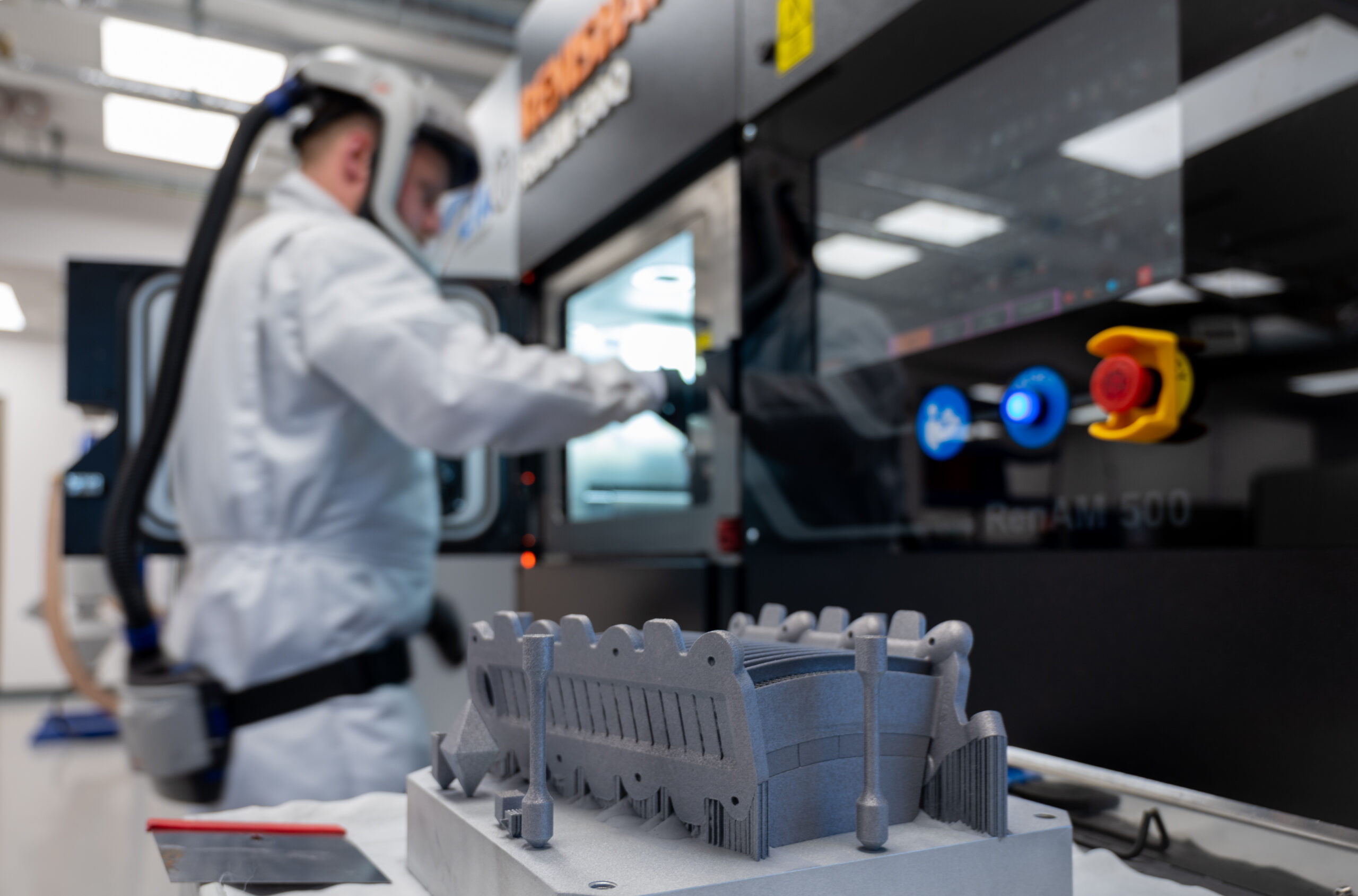
Image © Parker-Meggitt
The new additive manufacturing strategy and roadmap from the Aerospace Technology Institute (ATI) supported by the Manufacturing Technology Centre (MTC), which is the National Centre for Additive Manufacturing, offers a vision for unlocking the technology’s potential.
The vision for 2030 is an order of magnitude growth in the number of flying AM parts in civil aerospace, designed and delivered by a fully capable end to end UK supply chain.

To realise this, it is crucial to synchronise technology development with the product decisions that key industry stakeholders are expected to take in the 2028 timeframe in preparation for next generation commercial aircraft.
The roadmap notes: “The UK possesses all the necessary ingredients to embrace full scale aerospace AM production including a comprehensive AM network boasting machine OEMs, rapidly growing supply chains, and unparalleled academic prowess.”
“What is now required is a concerted effort – a collective leaning in - to change the focus from research & development towards the production of end use parts.”
Additive manufacturing is set to play a pivotal role in enabling aviation’s commitment to Net Zero 2050, while also bolstering the global competitiveness of the UK aerospace sector.
Alex Hickson, Head of Technology – Structures, Manufacturing & Materials, ATI and co-author of the roadmap said: “Advancing capabilities and getting additive manufactured parts onto aircraft is a key enabler on the journey to Destination Zero. This roadmap provides the strategic direction and key milestones which are key to delivering UK competitiveness in this area and securing the economic benefits on offer.”
Katy Milne, Future Mobility Associate Director at MTC, said: “The level of innovation in the aerospace sector is at its highest for decades, with companies developing new, more sustainable aircraft and driving more integrated supply chains. AM is a critical enabler.
“By sharing our knowledge via this roadmap, OEMs and Tier 1s can make better-informed decisions on where, when and how AM can be optimised for next generation aircrafts. In turn, supply chains can build the capability to manufacture the components needed as they come to market, and help to secure a bright future for UK aerospace manufacturing.”
AM has the potential to unlock products with improved fuel efficiency, enhanced thermal management and reduced mass. This is thanks to AM’s ability to consolidate complex part assemblies into a single part, drastically lowering overall manufacturing costs, reducing waste and assembly effort. It is also a key enabler in accelerating the time to market of complex, high-value products by substantially reducing the time and cost of development cycles.
Aerospace products from Airbus, Boeing, GE Aerospace, General Atomics Aeronautical Systems Inc and Rolls-Royce already employ the benefits of additive manufacturing including in UK manufacturing facilities but there remains untapped potential and uptake in the UK must accelerate to remain globally competitive.
The roadmap targets four key challenge areas: supply chain resilience, more efficient qualification, reducing part cost and increasing application opportunities. Overcoming these challenges will enhance confidence in AM, enabling decision makers to confidently integrate this technology into future programmes.
The ATI AM Strategy and Roadmap was developed following consultation with OEMs together more than 50 partners from across the aerospace supply chain. Featured case studies from Airbus, Eaton, GKN Aerospace and Rolls-Royce explore the benefits of AM across parts production, thermal management and MRO.
The ATI Additive Manufacturing Strategy and Roadmap is now available to download on the ATI website.
Cross-cutting enabling technologies and additive manufacturing will feature in expert panel session at ATI Conference 2024 on 8th & 9th October at the ICC Wales, Newport. The agenda is out now at www.ati.org.uk/conference where tickets can also be purchased.
The Aerospace Technology Institute (ATI) creates the technology strategy for the UK aerospace sector and funds world-class research and development. An independent organisation, the ATI works alongside government and industry to transform aerospace through technology and innovation. Since 2014, the ATI Programme has facilitated over £3.6bn of government-industry investment into R&D supporting over 400 projects at the forefront of aerospace technology securing economic benefit across the nations and regions of the UK.
MTC - part of the High Manufacturing Catapult, supported by Innovate UK - transforms how products are designed, made and built so that they can be produced on a commercial scale - more sustainably, effectively and safely. Since 2010, its independent research and technology organisation has delivered pioneering solutions to help overhaul industries such as aerospace, defence, security and space.