General Atomics

NMIS unveils second-stage vehicle demonstrator

A new demonstrator vehicle showcasing cutting-edge design and manufacturing innovation for space has been unveiled by the National Manufacturing Institute Scotland (NMIS).


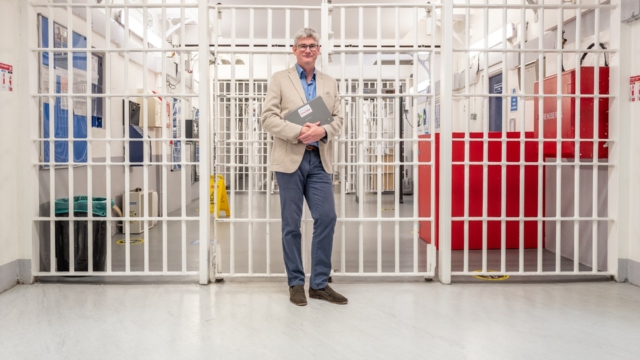
Above: LMC team with fuel tank demo.
Courtesy NMIS


Designed by the Lightweight Manufacturing Centre (LMC) at NMIS – which is operated by the University of Strathclyde and part of the High Value Manufacturing (HVM) Catapult – the space vehicle brings together bold ideas for future manufacturing, highlighting possibilities that could be used for future launches.

A concentric liquid oxygen (LOX) and fuel tank will be on display, which is just one part of the centre’s overall concept. Along with the use of lightweight advanced composite materials and digital and additive manufacturing techniques, a core component of the second-stage design is its recoverability, with technology to enable a controlled de-orbit and return to Earth.

The concept has been developed as part of the Stratelite Space and Photonics project, which is part-funded by the Glasgow City Region Innovation Accelerator programme led by Innovate UK on behalf of UK Research and Innovation.

Scotland is already at the forefront of space innovation, with Europe’s only fully licensed vertical launch spaceport, SaxaVord in Shetland, preparing for its inaugural orbital launch later this year. NMIS’s technical capabilities in next-generation manufacturing, materials and skills development mean the centre is well placed to support the growing sector with future developments.

The demonstrator builds on the work NMIS is already doing in the space market, supporting local companies and global players with solutions to some of their most complex manufacturing challenges. According to Space Scotland, the sector contributes more than £4 billion to the economy per year , with almost one-fifth of all UK jobs in the sector based in Scotland .

Professor Iain Bomphray, director of the LMC, said: “It is a particularly exciting time to be working in Scotland’s space sector, with the first launch on the horizon unlocking significant opportunities for the burgeoning ecosystem and space technology companies based here. NMIS has already been involved in a range of projects, but our new demonstrator brings all of that together, showcasing capabilities at full scale and taking a fresh approach to design and manufacturing for space with a specific focus on composites.

“The space sector here is still in its infancy, and we need to nurture the high-growth potential startups and spinouts that are paving the way. That is where NMIS comes in, we want to support businesses to succeed through collaboration and access to expertise, research, manufacturing facilities and testing capabilities. We intend to seed new companies and play a part in growing the ecosystem.

“An understanding of the industry and its challenges underpins our capabilities and the design for the concept. The economics of space are changing, and companies are placing a greater emphasis on sustainability than ever before. That starts on the ground, with reusable designs, efficient manufacturing, ways to reduce waste, eliminate space debris and build a greener space economy.”

In a typical multistage rocket, the first stage is designed to propel the vehicle upwards, while the second stage is responsible for accelerating the payload to its final orbital velocity. SpaceX was the first to successfully recover a first-stage space vehicle in 2015, rather than designing it to burn on re-entry. However, second stages are not yet recoverable in the same way, with the remains typically staying in orbit.

Extra elements required for re-entry and landing – such as heat shields, deceleration mechanisms and stability systems – can add significant weight to a space vehicle, but the design of the demonstrator is an example of how NMIS is challenging convention and pushing boundaries to showcase its capabilities as a research partner.

Iain added: “Using novel composite materials, we can aim to make space vehicles lighter to offset additional functionality and maintain payload capacity. Steel and aluminium have been the most widely used materials so far, but drawing upon techniques used in the construction of F1 cars, we have explored new ways to integrate composites into spacecraft design. A recoverable second stage could enable spacecraft to make better use of the energy expended in reaching orbit, allowing for additional functions such as satellite servicing before re-entry.”

Related

Extreme space weather could disrupt flights and damage aircraft systems, study warns
The sun earth connection
Extreme space weather could disrupt flights and damage aircraft systems, study warns
University of Surrey researchers warn that extreme space weather could increase radiation exposure and trigger faults in aircraft electronics.
Aerospace Most Read Space

12 Aug 2026

ADS Charity Cycle takes to the road for 350-mile Belfast to Bristol challenge
ADS Charity Cycle Ride group photo
ADS Charity Cycle takes to the road for 350-mile Belfast to Bristol challenge
ADS members are taking on a five-stage, 350-mile charity cycle from Belfast to Bristol, raising money for three causes while connecting colleagues and showcasing industry along the route.
London Stansted Airport enjoys its busiest month ever
Stansted
London Stansted Airport enjoys its busiest month ever
Last month Stansted Airport beat its previous monthly record, setting a new all time high of over 3.1 million passengers.
Aerospace

11 Aug 2026

Calian UK secures British Army training contract
Army training.
Calian UK secures British Army training contract
The 15-year contract agreement with RTX's Raytheon UK is set to start in October this year and will see Calian help modernise British Army training through the Army's Collective Training Service (ACTS) programme.
Defence Member News

12 Aug 2026

QinetiQ systems and services support Combat Archer 2026
QinetiQ's Banshee Jet 80+
QinetiQ systems and services support Combat Archer 2026
Advanced target systems, infrastructure and support services from QinetiQ helped deliver operational insights into the effectiveness of air-to-air weapons system at this year’s Combat Archer military exercise.
Defence Events Member News

12 Aug 2026

British Army trials ARX Robotics’ GEREON UGVs in US-led Project Convergence drill
Five of the eight ARX Robotics-made GEREON UGVs are seen on the ground at Fort Irwin, California, during the PC-C6 trial that was held in July 2026. Note that each of these UGVs is configured for a different mission set. Image: ARX Robotics
British Army trials ARX Robotics’ GEREON UGVs in US-led Project Convergence drill
British forces have tested ARX Robotics’ GEREON UGVs across ISR, C-UAS, CASEVAC and logistics resupply missions during the US Army’s latest Project Convergence trial in California.
Defence Most Read

12 Aug 2026

Extreme space weather could disrupt flights and damage aircraft systems, study warns
The sun earth connection
Extreme space weather could disrupt flights and damage aircraft systems, study warns
University of Surrey researchers warn that extreme space weather could increase radiation exposure and trigger faults in aircraft electronics.
Aerospace Most Read Space

12 Aug 2026

ADS Charity Cycle takes to the road for 350-mile Belfast to Bristol challenge
ADS Charity Cycle Ride group photo
ADS Charity Cycle takes to the road for 350-mile Belfast to Bristol challenge
ADS members are taking on a five-stage, 350-mile charity cycle from Belfast to Bristol, raising money for three causes while connecting colleagues and showcasing industry along the route.
HydroGNSS becomes first ESA Scout mission to complete in-orbit commissioning
HydroGNSS coherent channel detecting surface water at a high resolution, even when under a vegetation canopy.
HydroGNSS becomes first ESA Scout mission to complete in-orbit commissioning
Designed, built and operated by Surrey Satellite Technology (SSTL) for ESA, the HydroGNSS satellites are now able to provide data to researchers worldwide.
Member News Space

11 Aug 2026

UK manufacturers found to be facing extensive cyber threats
Manufacturing cyber security.
UK manufacturers found to be facing extensive cyber threats
A new report from Make UK outlines the true extent of the risks of cyber attacks faced by manufacturing businesses across Britain.
Security

12 Aug 2026

How the Royal Navy is developing its next-generation mine hunting capability
Mines float on the waves in the sea 3d illustration
How the Royal Navy is developing its next-generation mine hunting capability
A major collaborative effort to design and implement an innovative test of UK underwater mine countermeasures is set to inform and enhance future operations.
Defence Security

12 Aug 2026

AXA XL’s S-RM acquisition puts UK manufacturing cyber resilience in focus
IT technician checks cyber security in the office
AXA XL’s S-RM acquisition puts UK manufacturing cyber resilience in focus
AXA XL’s acquisition of UK cyber consultancy S-RM comes as manufacturers face growing pressure to strengthen prevention, incident response and supply chain resilience.
Security

11 Aug 2026