A landmark moment in the development of Northumbria University’s North East Space Skills and Technology Centre (NESST) has been celebrated as the facility reached a major construction milestone with a traditional topping out ceremony in Newcastle.
Attended by leaders from academia, industry, government, civic and construction partners, the ceremony marked the point at which the building reached its full height – a significant milestone in the delivery of a centre that will play a key role in training the UK’s future space workforce.
NESST is a strategic collaboration between Northumbria University, the UK Space Agency and Lockheed Martin, backed by £50 million of investment spanning the facility itself and the initial research programmes it will house.
It will provide state-of-the-art research facilities, satellite testing capabilities and dedicated skills programmes designed to develop the next generation of space professionals. When open, it is expected to become one of the most significant space education and research facilities in the UK, supporting government ambitions around the nation’s space priorities over the coming years.
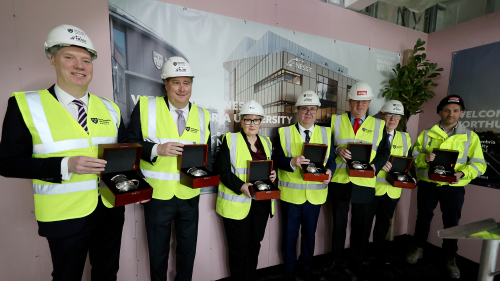
The ceremony, which was led by main contractor Sir Robert McAlpine, was held on the 6th floor of the building, with guests welcomed by the Master of Ceremonies and accompanied by a traditional piper. As part of the topping out ritual, Professor John Woodward, Pro Vice-Chancellor of International and Faculty of Science and Environment at Northumbria University, and Gary Tidyman, Works Manager at Sir Robert McAlpine, poured the final concrete before nailing the evergreen bough to the structure, a symbolic gesture of good fortune.
Speaking at the ceremony, Professor Andy Long, Vice-Chancellor and Chief Executive at Northumbria University, said: “The topping out of NESST is a major milestone for Northumbria, for our partners at the UK Space Agency and Lockheed Martin Space, and for the North East. NESST really embodies everything about the University’s strategy. It enables high quality research, which will have an impact on the North East and wider. It enables us to establish new taught programmes, which give opportunities to students from our region and lead to great jobs in the space sector. And it will inspire young people in the region, so that more of them will go on to further and higher education, helping us with our ambitions around driving social mobility.”
The North East is home to a growing cluster of space sector activity, the region’s established industrial heritage, research excellence and emerging skills infrastructure. NESST builds on this foundation, with research capabilities spanning satellite technology, space medicine and mission-critical systems.
The centre is the latest recognition of the North East’s strategic importance to the UK space economy. Earlier this year, NESST was named sixth in its category in the inaugural fDi Intelligence Investment Impact Awards, ranking among the most transformative foreign direct investment projects in Europe.
Robert Lightfoot, President of Lockheed Martin Space, talked about creating a hub for innovation and inspiration for the UK, in the UK: “When we first announced our intent to support NESST, our goal was clear: to create a permanent pipeline of talent, innovation and applied research right here in the UK. Today, that vision is taking shape. NESST is just one part of Lockheed Martin Space’s planned investment in this area – we also have plans for a space manufacturing facility at NETPark in County Durham. By joining these ecosystems together, the North East can become an exporter of space technology long-term, continuing the proud legacy of innovation from this region."
The ceremony concluded with the exchange of engraved tankards and a celebratory toast, honouring the teams who brought NESST to this milestone.
Mark Gardham, Sector Director at Sir Robert McAlpine, said: "NESST is a project of remarkable ambition, and reaching this milestone is a testament to professionalism, teamwork and collaboration at every level. When NESST opens later this year, it will be a national space asset. It is an honour to play our part in shaping a facility that will have a lasting impact on this region and on the UK’s place in the global space sector."
NESST is expected to open in late 2026. For more information about NESST please visit: www.northumbria.ac.uk/nesst
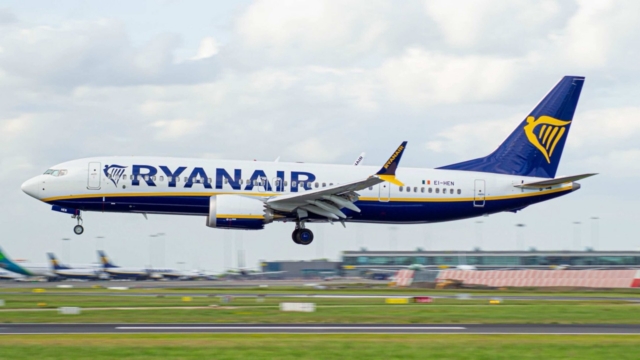
Ryanair came within 120,000 passengers of overtaking easyJet at UK airports this summer, while British Airways, Virgin Atlantic and several major overseas carriers saw traffic fall.
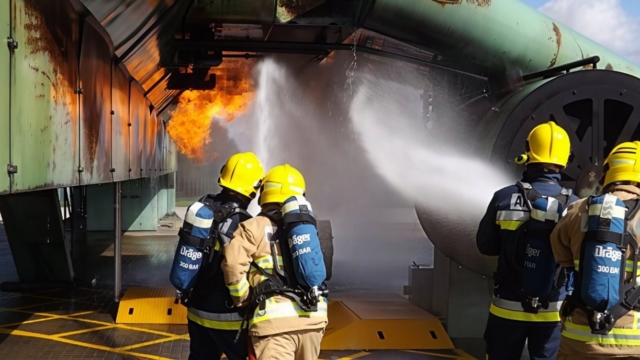
Tomorrow, London Stansted Airport will simulate an aircraft accident as part of an emergency exercise required under CAA regulations, which will involve emergency response service vehicles and personnel, bringing together airport teams, emergency services and partner organisations from across the region.
A new technology facility in Derby that will address complex nuclear, aerospace and defence programmes, by providing access to advanced systems to research, develop and manufacture large components, is being supported through a new bilateral partnership between AtkinsRéalis and INFINITY.
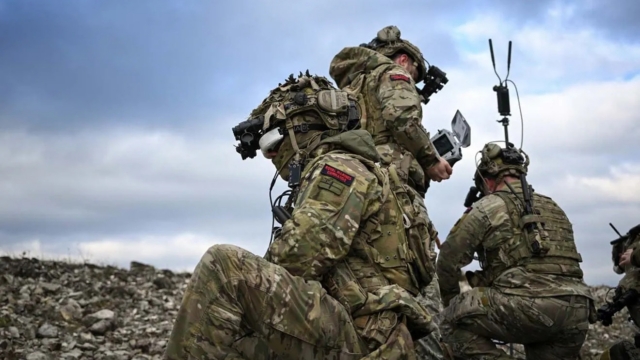
At the inaugural Special Operations Forces allied drone combat competition, known as Drone Crucible, the Royal Marines competed against teams from the US, Germany, Latvia and Ukraine, to become overall champions.
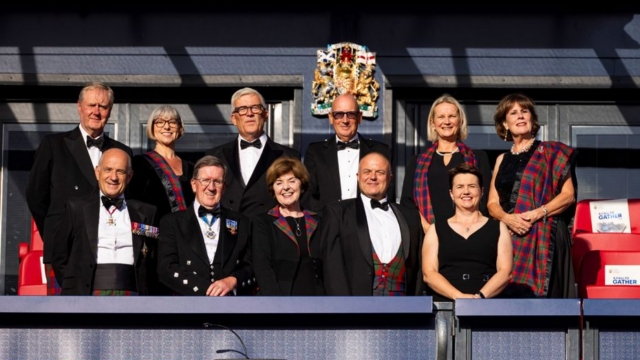
The strategic leadership team of the Royal Edinburgh Military Tattoo has been enhanced, with Sir Stuart Atha KBE CB DSO MA BSc and Malcolm Leask MBA MRICS FCIM being appointed to the Tattoo Board, alongside the recent appointment of Chris Edmonds as Chair.
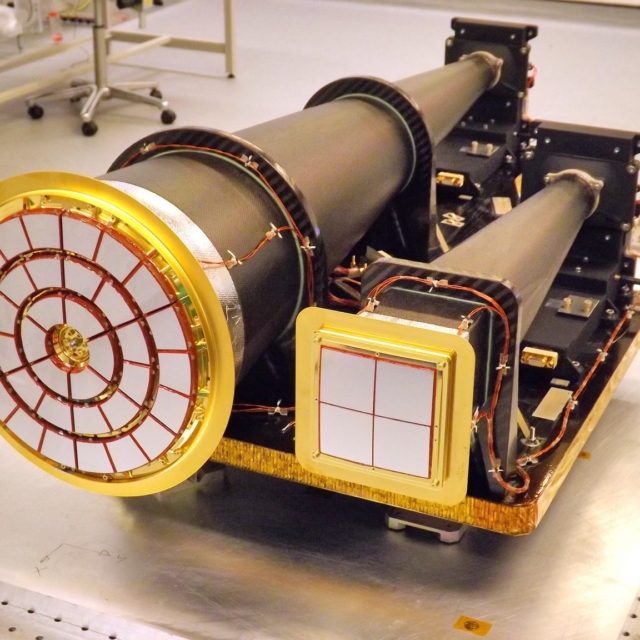
Following an eight-year journey, the joint ESA-JAXA BepiColombo spacecraft has entered orbit around Mercury, preparing the UK-led MIXS X-ray instrument to map the planet's surface composition.
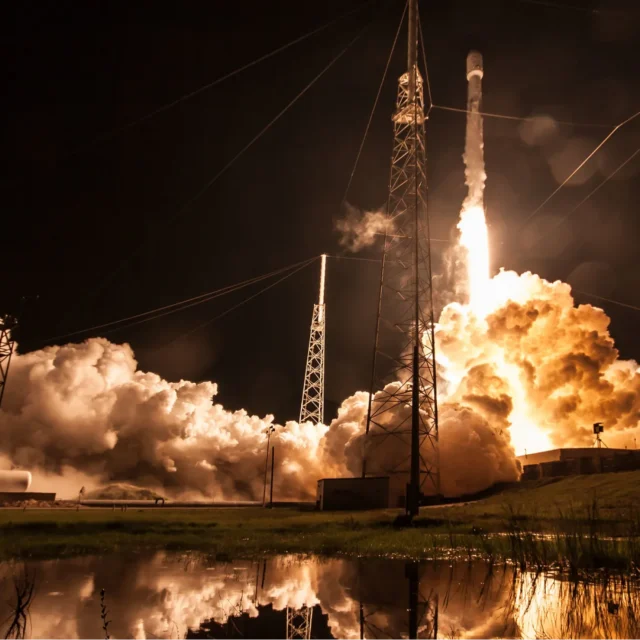
While the UK is often described as a poor location for rocket launches, the reality is more complicated. Its geography creates challenges for some missions, but also gives emerging spaceports in Scotland and Shetland a valuable niche in the fast-growing small-satellite market.
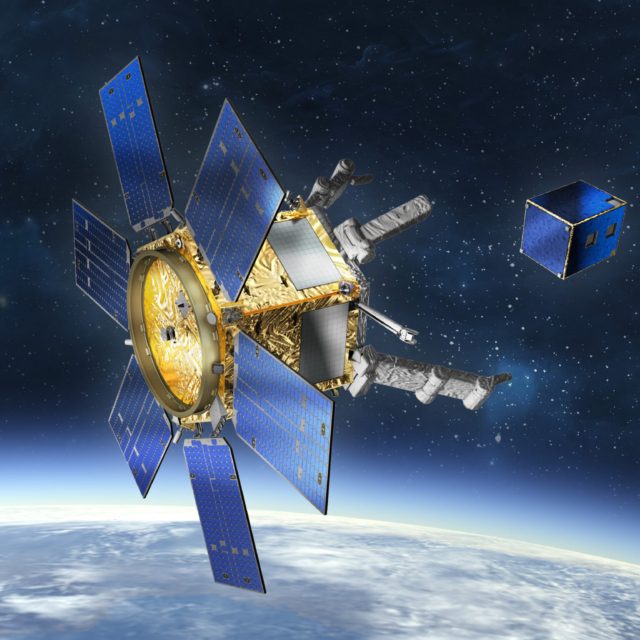
Following the selection of OHB as the prime contractor for the European Space Agency's ClearSpace-1 programme, Europe has moved a step closer to realising Europe’s first active space debris removal mission.
A new national resilience forum will test how businesses, infrastructure operators and government respond together to cyber attacks, power failures and supply chain disruption.
Tomorrow, London Stansted Airport will simulate an aircraft accident as part of an emergency exercise required under CAA regulations, which will involve emergency response service vehicles and personnel, bringing together airport teams, emergency services and partner organisations from across the region.
The Metropolitan Police have launched a six-month trial of a new handheld facial recognition tool that allows officers to verify a person's identity without their consent by comparing a photograph taken on a police-issued mobile device against the force's custody image database.