Advancing UK Aerospace, Defence, Security & Space Solutions Worldwide
  • Home
  • /
  • Space
  • /
  • OMS selects AAC Clyde Space for in-orbit weather observation

Space

OMS selects AAC Clyde Space for in-orbit weather observation

Provider of advanced instrumentation for small satellite missions and analysis-ready earth data intelligence platforms, Orbital Micro Systems (OMS), announced it has selected Glasgow-based AAC Clyde Space to provide a 6U satellite bus for the UK Space Launch Programme (UK-SLP).

Courtesy Dotted Yeti / Shutterstock

The mission is planned for 2021, which will be the first launch from UK soil through the UK-SLP project that is managed by Lockheed Martin.

Under the terms of the contract, OMS and AAC Clyde Space will collaborate to integrate the instrumentation and bus for launch. The companies previously collaborated on the IOD-1 GEMS mission, which successfully deployed the first commercial microwave radiometer in space.

Advertisement
ODU RT

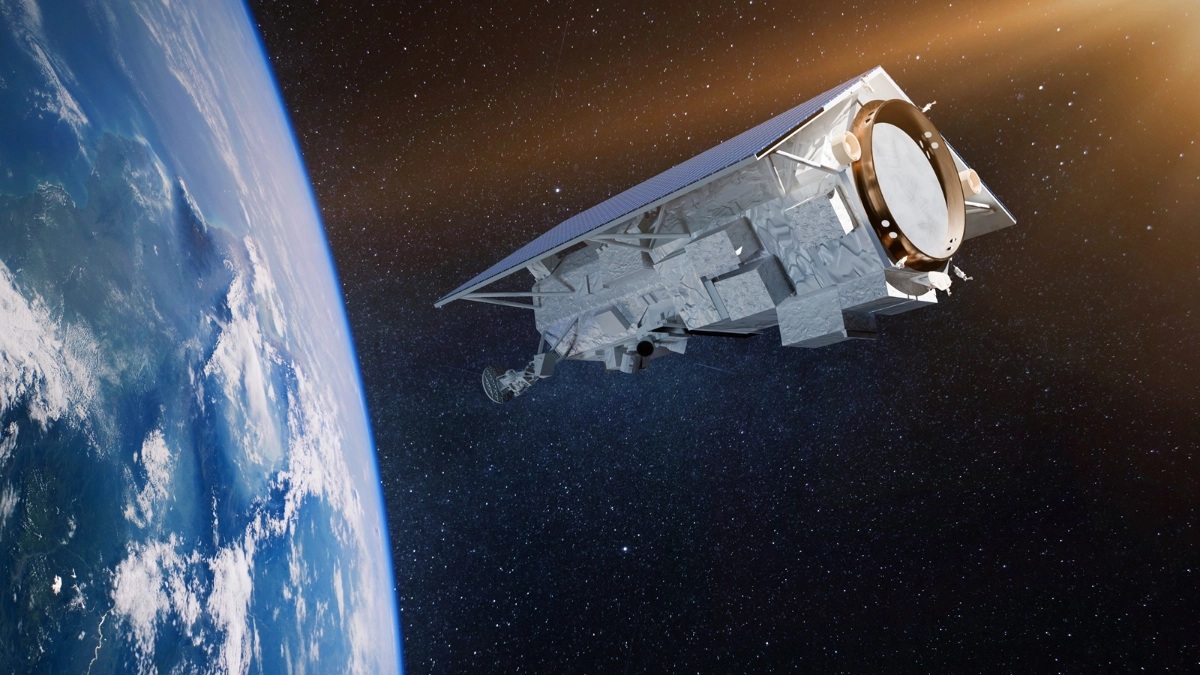
The new 6U satellite will carry OMS’s next generation miniaturised microwave radiometer as a part of the company’s Global Environmental Monitoring System (GEMS) constellation of satellites. The radiometer will monitor 118GHz and 183GHz frequency bands to gather temperature and humidity measurements at multiple altitudes as it orbits the earth.

“We’re delighted to once again work with Clyde Space, and leverage their expertise and commitment to engineering outstanding bus products,” said William Hosack, chief executive officer for OMS. “Clyde Space shares in OMS’s vision in leveraging space technology for improving weather observation capabilities on Earth. We look forward to working even closer with Clyde Space to deliver essential weather data to commercial and government organisations worldwide.”

Advertisement
ODU RT

GEMS is a groundbreaking Earth Observation solution which utilises passive microwave soundings to record temperature and humidity at multiple altitudes regardless of cloud cover. The measurements can provide identification of precipitation type and density at altitude as well. The data collected by GEMS satellites magnifies the volume of microwave soundings available from government satellites and improves the precision and clarity of weather forecasts across the globe.

Access to the unique GEMS data is available through OMS’ International Centre for Earth Data (ICED) located in Edinburgh, Scotland. Data from the IOD-1 GEMS satellite is currently provided to government and commercial entities, including the aviation and maritime sectors, as well as insurance and government organisations. When it achieves full deployment with some 50 satellites, the GEMS constellation will deliver near real-time data for any point on earth at approximately 15-minute intervals.


Advertisement
Gulfstream banner
BAE Systems introduces Ascent spacecraft

Defence Space

BAE Systems introduces Ascent spacecraft

15 April 2026

BAE Systems has introduced its Ascent spacecraft, a new addition to the company’s Elevation spacecraft line that supports superiority and exploration missions across the space domain.

Northumbria University researchers awarded £4m to solve space radiation mystery

Space

Northumbria University researchers awarded £4m to solve space radiation mystery

14 April 2026

Researchers at Northumbria University have been awarded £4 million to unlock the secrets of Earth's radiation belts and why they behave so unpredictably – information which is crucial for protecting satellites and forecasting space weather.

ALTEN opens office in Belfast

Aerospace Defence Security Space

ALTEN opens office in Belfast

14 April 2026

ALTEN has announced the opening of its newest UK office in Belfast, marking a significant strategic expansion into Northern Ireland.

Viasat AERA enters Boeing technical evaluation process

Aerospace Space Events

Viasat AERA enters Boeing technical evaluation process

14 April 2026

During the Aircraft Interior Expo (AIX) today, Viasat announced it has entered Boeing’s technical evaluation process to assess and qualify Viasat AERA, the company’s next-gen electronically steered antenna (ESA) terminal, across all current Boeing commercial airplane programmes.

Advertisement
ODU RT
Pulsar

Space

Pulsar's Sunbird set to reduce mission fuel requirements

14 April 2026

UK-based Pulsar Fusion, which is developing advanced propulsion technologies for satellite and deep-space markets, has revealed that its Sunbird fusion-powered space tug could reduce in-space propellant requirements for missions comparable to Artemis II by more than 90%, potentially reshaping the economics of deep-space exploration.

North East

Space

North East's landmark space centre reaches major construction milestone

9 April 2026

Topping out ceremony marks pivotal moment for centre backed by £50 million investment set to transform the region's space economy.

Advertisement
ODU RT
Advertisement
FIA2026 animated banner