Advancing UK Aerospace, Defence, Security & Space Solutions Worldwide

Space

Pléiades Neo 4 launched
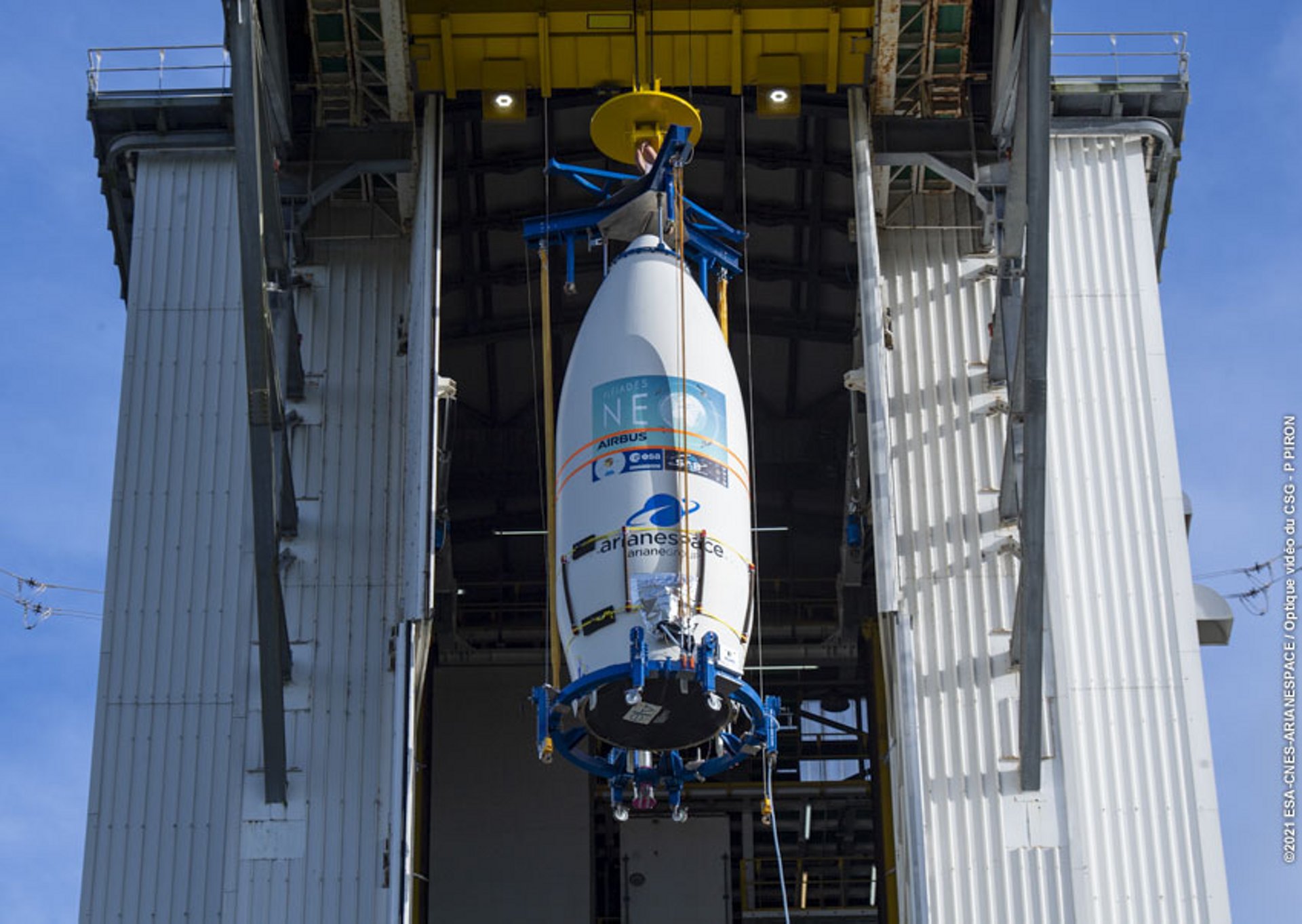
Pléiades Neo 4, the second satellite of the Pléiades Neo Earth observation constellation, was successfully launched by Arianespace’s European launcher Vega from French Guiana on Monday night.

Above: Pleiades Neo 4 launched by Arianespace European launcher Vega.
Copyright Airbus

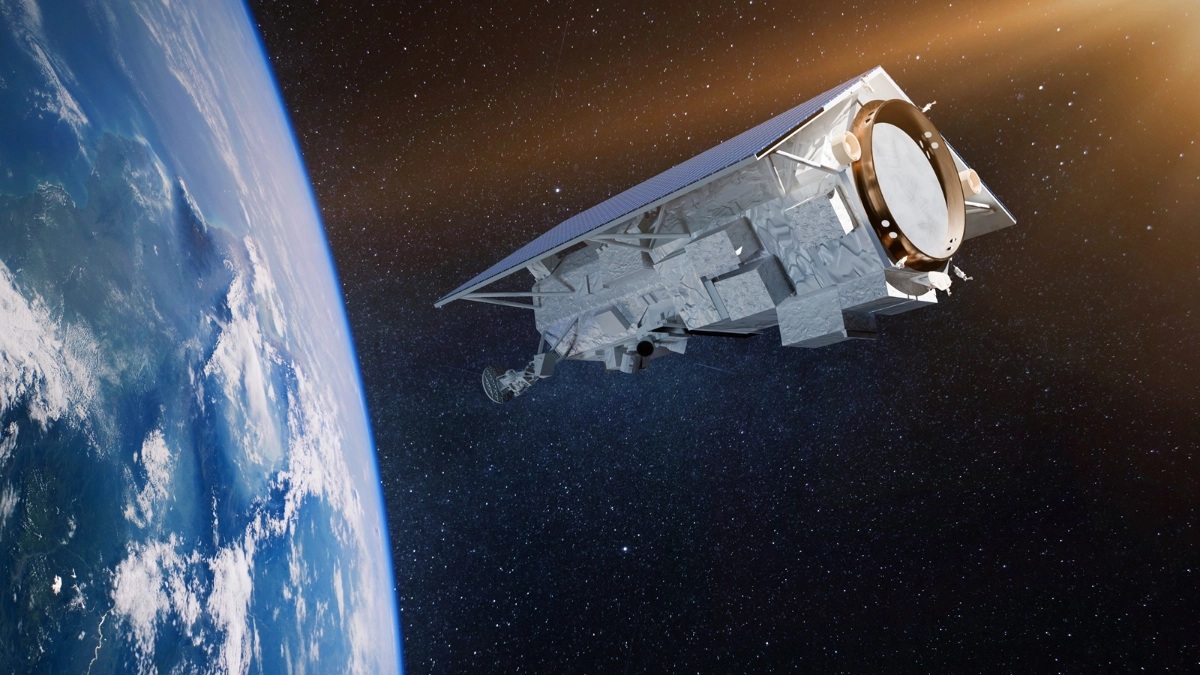
Pléiades Neo 4 was released from the launch vehicle, very close to its final 620-km sun-synchronous polar orbit, which it will reach within the next few days. The satellite will be phased 180° with Pléiades Neo 3 on the same orbit to start forming a constellation. This will enable daily imaging of any place on Earth at 30cm native resolution, and between two and four times a day when the four-satellite constellation is complete.

Advertisement
PTC rectangle

“Pléiades Neo will offer a truly best-in-class capability to our customers and will strongly enhance our position in the very high-resolution market” said François Lombard, Head of Intelligence at Airbus Defence and Space. “The first images from Pléiades Neo 3 are outstanding and confirm that we took the right decision in terms of design and performance to address the increasingly demanding requirements of the geospatial sector.”

Comprising four identical satellites, the 100% Airbus manufactured, owned and operated Pléiades Neo constellation offers a native resolution of 30cm with an imaging swath of 14km, the widest in its category. Thanks to their unmatched agility, the constellation will be able to cover the entire Earth landmass five times per year. The new satellites will work hand in hand with the existing Pléiades satellites and the rest of the Airbus dozen-strong Earth observation satellite fleet.

The highly innovative design of the Pléiades Neo spacecraft is equipped with the next generation silicon carbide optical instrument, building on the technology that Airbus first pioneered in the early 2000s. The Pléiades Neo constellation will also benefit from laser optical and Ka-band links with the Airbus SpaceDataHighway (EDRS) geostationary satellites to enable urgent acquisitions less than 40 minutes after tasking, to swiftly respond to the most critical situations.

Advertisement
ODU RT


Advertisement
FIA2026 animated banner
UK and Ukraine strengthen civil space cooperation

Space

UK and Ukraine strengthen civil space cooperation

18 March 2026

A landmark agreement between the UK Space Agency and State Space Agency of Ukraine (SSAU) will open a new chapter in civil and commercial space cooperation between the two countries.

Met Office launches MAVIS

Aerospace Security Space

Met Office launches MAVIS

18 March 2026

The Met Office have officially launched the Met Office Aeronautical Visualisation Service (MAVIS) - a next-generation aviation weather platform designed to support a rapidly evolving aviation landscape, from traditional crewed aircraft to emerging spaceport operations.

Viasat

Aerospace Space

Viasat's advanced in-flight connectivity selected by National Airlines

17 March 2026

Viasat today announced that its advanced in-flight connectivity has been selected by charter operator National Airlines to enhance the passenger experience onboard a new fleet of three Airbus A330 aircraft.

ODU joins the UN Global Compact

Aerospace Defence Security Space

ODU joins the UN Global Compact

17 March 2026

Manufacturer of connector systems, ODU, has joined the United Nations Global Compact (UNGC), the world’s largest sustainability and corporate responsibility initiative.

Advertisement
PTC rectangle
UK–South Africa partnership using AI to make telescopes smarter

Space

UK–South Africa partnership using AI to make telescopes smarter

16 March 2026

AI is set to transform how South Africa’s astronomical observatories operate, as the Science and Technology Facilities Council (STFC) Hartree Centre is working with the South African Astronomical Observatory (SAAO), a centre for optical and infrared astronomy, to deliver the ‘Intelligent Observatory’ programme.

Cranfield University unveils wind-powered WANDER-bot

Space

Cranfield University unveils wind-powered WANDER-bot

13 March 2026

Researchers at Cranfield University have created WANDER-bot, a low-cost, 3D-printed robot that is powered by wind energy.

Advertisement
ODU RT
Advertisement
Gulfstream banner