RAF uses SAF on routine ops
The RAF is ensuring Britain is secure while - for the first time - using sustainable aviation fuel (SAF), a move that will cut carbon emissions and bolster energy security.
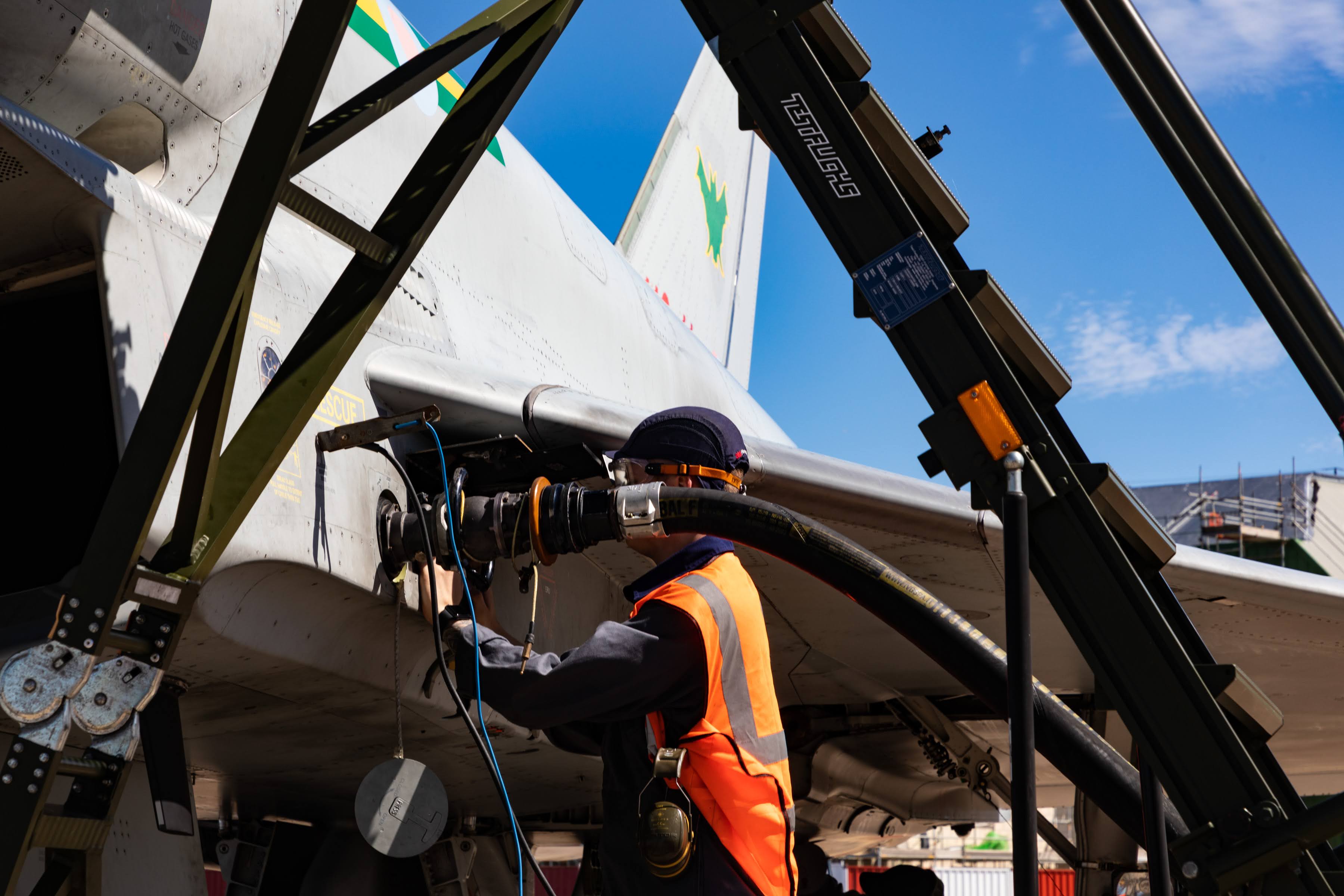
Above: Use of SAF at RAF Lossiemouth.
Courtesy RAF / MoD
Aircraft including Typhoon and Poseidon submarine hunters, operating from RAF Lossiemouth in Scotland, are using a blend of conventional and sustainable aviation fuels in a first for the air force as they take to the skies to defend the UK and allies.

Earlier this year, four million litres of blended sustainable aviation fuel were delivered to the Royal Air Force through a contract with World Fuel Services. A further five million litres of fuel will be delivered in the next few months.
The fuel is used to power aircraft operating from Lossiemouth in Morayshire, northern Scotland. RAF Lossiemouth is one of the UK’s busiest RAF stations and is home to Typhoon aircraft who are ready to deploy 24/7, 365 as part of the UK’s Quick Reaction Alert – keeping Britian secure.
Defence Minister Lord Vernon Coaker said: “The pioneering use of sustainable fuels on routine operations shows how we’re delivering on our first priority to keep Britain secure without compromise, while addressing our carbon footprint.”
Sustainable fuel sources include hydrogenated fats and oils, wood waste, alcohols, sugars, household waste, biomass and algae. As aviation currently accounts for nearly two thirds of fuel used across defence, this first for the RAF demonstrates the Ministry of Defence’s commitment to reduce carbon emissions with no compromise to national security.
In 2020, the Ministry of Defence updated aviation fuel standards to allow up to 50% sustainable sources to be used in fuel mixes for defence aircraft. Using SAF can cut aircraft carbon emissions by up to 70% and it is a significant step towards bolstering both operational capability and climate change and sustainability efforts, helping the RAF achieve its ambition to be net zero by 2040.
Director Support Air Vice-Marshal Shaun Harris said: “We remain at the forefront of this important work with industry partners, and introducing sustainable aviation fuel to one of our busiest stations demonstrates our commitment, bringing defence and industry together to reduce our carbon footprint.
“As well as contributing to reduced carbon emissions as part of the Defence Aviation Net Zero Strategy, our ability to use new fuels ensures that the Royal Air Force can continue to operate anywhere we are needed globally.
RAF Lossiemouth’s Station Commander Group Captain Sarah Brewin said: “The routine use of sustainable aviation fuel represents an important milestone in the RAF’s journey towards helping mitigate against climate change. By integrating sustainable practices into our operations, we are not only enhancing our ability to protect the nation and deliver excellence on operations, but also contributing to a more sustainable future for generations to come.”
The RAF has been trialling different types of fuel since the update to fuel standards. In November 2021, an RAF pilot flew a microlight aircraft powered by synthetic fuel created from air and water in a world-first. In Spring 2022, a drone was flown on synthetic kerosene made by genetically modified bacteria and the RAF has tested an electric aircraft flown at RAF Cranwell.
In November 2022, in a world first for a large aircraft, an RAF Voyager successfully trialled the use of 100% sustainable aviation fuel, flying for 90-minutes from RAF Brize Norton – a joint endeavour between the RAF, DE&S and industry partners Airbus, AirTanker and Rolls-Royce, with the fuel supplied by Air bp.
In 2023, the Royal Air Force successfully used SAF to achieve the first SAF blend air-to-air refuelling of a Typhoon and C-130 Hercules aircraft. During the Royal International Air Tattoo last month, Typhoon aircraft used a SAF fuel blend.