Report reveals UK military partnerships at risk

According to a new report from Adarga and the Tony Blair Institute for Global Change, the UK must level up its economic and technological influence to maintain its military relationships.


Image courtesy Adarga

According to a new report from Adarga and the Tony Blair Institute (TBI) for Global Change, the UK must level up its economic and technological influence to maintain its military relationships.

Co-authored by the Adarga Research Institute’s Sam Olsen and William Matthews and the Tony Blair Institute for Global Change’s Melanie Garson and Daniel Sleat, The Geopolitical Vulnerabilities of the UK’s International Military Partnerships – A Case Study Analysis goes beyond the traditional defence lens to understand how geopolitical, economic and technological pressures are affecting the UK’s military partnerships.

The report finds that these pressures are threatening to erode what in some cases are longstanding ties with partner countries, putting vital military support, including training facilities and strategic forward basing, at risk.

The indicative report considers factors including the economic and technological influences that are impacting the UK’s relationships with three countries – Brunei, Kenya and Oman – which were chosen because of their importance as global defence hubs (Kenya and Oman) or their strategic location (Brunei).

Sam Olsen, vice president of the Adarga Research Institute, said: “The research for this paper employed our unique Country Influence Index methodology, AI capabilities and unique data drawn from Adarga’s curated geopolitical dataset, one of the world’s largest. As economic and geopolitical power has shifted, the strength of the UK’s relationships – which were once much more than just military in nature – is being weakened by new dependencies and enablers from other powers, notably China and the US.”   

Adarga’s AI software underpinned the analysis which shows the extent to which wider Chinese or US influence is potentially undermining the UK’s military relationships, with the following results:

  • Brunei: substantial risk of the UK’s military relationship being compromised.
  • Kenya: moderate risk of the UK’s military relationship being compromised.
  • Oman: light risk of the UK’s military relationship being compromised.

The combination of Adarga’s proprietary GenAI and NLP capabilities with deep analytic expertise, enabled the report to take into consideration a breadth of global information that would not be possible via traditional research methods, therefore increasing the quality, speed and depth of insight.

The report makes a number of policy recommendations, which are focused on the UK taking a new approach to its defence partnerships that views its alliances holistically and with a greater understanding of the wider ecosystem in which they sit. These include an audit of the UK’s alliances as part of the ongoing Strategic Defence Review to identify which allies Britain should prioritise. As a result, the Government can unlock a strategy to increase the UK’s technological, economic and defence standing.

Melanie Garson from the Tony Blair Institute for Global Change, said: “The future of the UK’s defence strategy will heavily depend on our relationships, both longstanding, and new, strategic allies. To make the most of these opportunities, the UK should identify how and where it can draw on its strengths – whether it be financial services, or access to education – to translate its soft power into smart power.”

Read the full report here: https://info.adarga.ai/adarga-tbi-report

Related

What is flowdown in an aerospace contract?
Marshall Aerospace-C-130 people working
What is flowdown in an aerospace contract?
Aerospace manufacturing relies on a complex network of suppliers and subcontractors, all working to meet strict technical and quality requirements. Contractual flowdown plays a key role in communicating these obligations throughout the supply chain, supporting consistency, accountability and compliance at every stage of production.
Aerospace

21 Nov 2026

Frewer Engineering completes leadership succession with ownership transfer
Dr Richard Lock, MD at Frewer Engineering
Frewer Engineering completes leadership succession with ownership transfer
Surrey engineering consultancy Frewer Engineering has completed a planned ownership transition, with managing director Dr Richard Lock acquiring a majority stake from founder Peter Frewer.
Aerospace Member News

20 Nov 2026

First UK-built Islander from revived Isle of Wight production line delivered to Falklands
FIGAS Britten-Norman Islander
First UK-built Islander from revived Isle of Wight production line delivered to Falklands
Britten-Norman has delivered the first Islander aircraft built on its revived Isle of Wight production line to the Falkland Islands Government Air Service following a three-week ferry flight.
Aerospace

20 Nov 2026

UK manufacturing orders rebound, with aerospace and defence demand providing a boost
British Army
UK manufacturing orders rebound, with aerospace and defence demand providing a boost
British manufacturing output rose in November for the first time since May 2024, driven by strong aerospace and defence orders, CBI says.
Defence Uncategorized

20 Nov 2026

Aircraft return to RAF Brize Norton after runway reopened
RAF Brize Norton runway
Aircraft return to RAF Brize Norton after runway reopened
Aircraft returned to RAF Brize Norton after a 16-week dispersal while the runway was replaced, forming part of a £180 million programme to strengthen RAF Brize Norton’s airfield infrastructure for the future.
Defence Member News

20 Nov 2026

Kromek receives £2.5m radiation detectors order from MoD
Arnab Basu, CEO of Kromek
Kromek receives £2.5m radiation detectors order from MoD
The UK Ministry of Defence has placed a second order with Kromek for its wearable D5 RIID radiation detection device, valued at £2.5 million.
Defence Member News

20 Nov 2026

Why don’t rockets launch from the UK?
Starshield's proliferated low-Earth orbit architecture provides inherent resiliency and constant connectivity to on-orbit assets, while SpaceX's proven rapid launch capability provides expedient and economical access to space.
Why don’t rockets launch from the UK?
While the UK is often described as a poor location for rocket launches, the reality is more complicated. Its geography creates challenges for some missions, but also gives emerging spaceports in Scotland and Shetland a valuable niche in the fast-growing small-satellite market.
Space

21 Nov 2026

ESA awards OHB €102m ClearSpace-1 contract
ClearSpace Titel V2
ESA awards OHB €102m ClearSpace-1 contract
Following the selection of OHB as the prime contractor for the European Space Agency's ClearSpace-1 programme, Europe has moved a step closer to realising Europe’s first active space debris removal mission.
Member News Space

20 Nov 2026

Viasat launches VIA to work across all in-flight connectivity networks
A cloud-delivered media platform that runs on any in-flight connectivity network - including via satellite - has been launched by Viasat, which can enable airlines to deliver their own branded experience across their fleets.
Met launches handheld facial recognition pilot for frontline identity checks
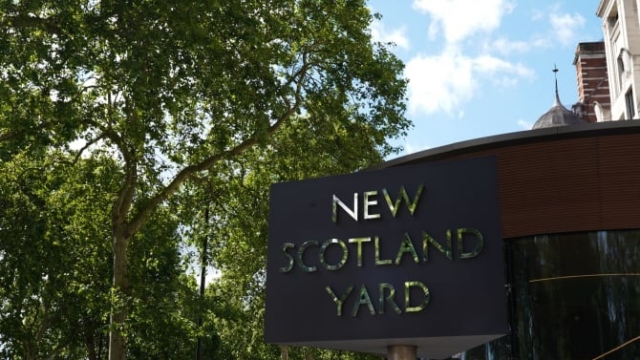
New Scotland Yard sign
Met launches handheld facial recognition pilot for frontline identity checks
The Metropolitan Police have launched a six-month trial of a new handheld facial recognition tool that allows officers to verify a person's identity without their consent by comparing a photograph taken on a police-issued mobile device against the force's custody image database.
Security

20 Nov 2026

Hexagon and Red Bull look beyond engineering degrees to find manufacturing’s future talent
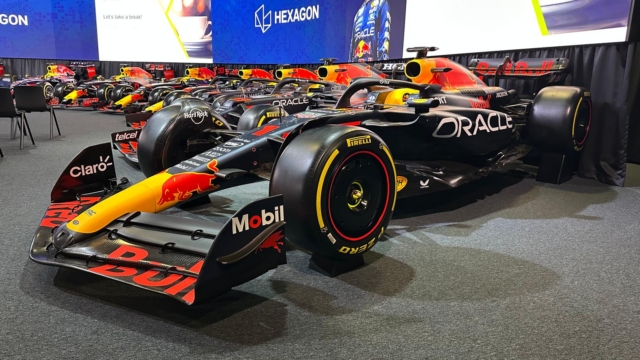
Formula 1 car at Red Bull's MK7 campus
Hexagon and Red Bull look beyond engineering degrees to find manufacturing’s future talent
At Red Bull’s Milton Keynes campus, Hexagon brought students and employers together to explore how interests in gaming, data and problem-solving could become a route into manufacturing — and what industry needs to do to open those doors.
Expert shares what SMEs should do in the first two hours of an energy or cyber disruption
Server racks creating data center corridor 3d
Expert shares what SMEs should do in the first two hours of an energy or cyber disruption
Cyber attacks, grid failures and rising electricity demand are creating new business risks. Dr Phil Wu explains the three actions SMEs should take in the first two hours of a disruption.
Security

19 Nov 2026