Rolls-Royce to develop aviation energy storage tech
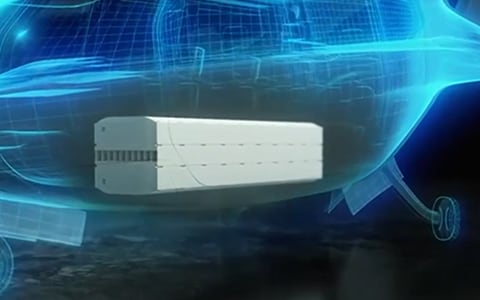
Image courtesy Rolls-Royce
In order to deliver this ground-breaking technology, we are planning an £80m investment in ESS over the next decade, that will create around 300 jobs by 2030 and strengthen our position as the leading supplier of all-electric and hybrid-electric power and propulsion systems for aviation.

Aerospace-certified ESS solutions from Rolls-Royce will power electric and hybrid-electric propulsion systems for eVTOLs (electric vertical takeoff and landing) in the Urban Air Mobility (UAM) market and fixed-wing aircraft, with up to 19 seats, in the commuter market. By 2035, Rolls-Royce is planning to integrate more than 5 million battery cells per annum into modular systems. These modules will deliver market-leading energy density levels.
Rob Watson, Director of Electrical, Rolls-Royce, said: “This multi-million-pound investment by Rolls-Royce over the next decade is another demonstration of our ambitions in electrification. We are developing a portfolio of energy storage solutions to complement our electrical propulsion systems. This will ensure that we can offer our customers a complete electric propulsion system for their platform, whether that is an eVTOL or a commuter aircraft. It will enable us to be a ‘one-stop shop’ for all-electric or hybrid-electric propulsion systems, which is incredibly exciting as these new markets develop and expand.”
Rolls-Royce has been delivering battery solutions for many years and we have designed 10 different aerospace battery systems, using state-of-the-art cell technology. Of these batteries, four designs have already flown in three aircraft, accumulating more than 250 hours of flight experience and another two designs will complete their first flight in aircraft in 2021. This includes a battery developed with Electroflight, our UK manufacturing partner in the ACCEL programme, in which we have built the Spirit of Innovation aircraft, that is aiming to be the world’s fastest all-electric plane. Both ACCEL and the initial research and technology we have undertaken to develop industry leading ESS are being supported by the UK Government through the Aerospace Technology Institute (ATI).
We are also working closely with WMG, University of Warwick through its High Value Manufacturing Catapult, an experienced research partner with extensive knowledge gained through supporting the automotive and other sectors, to develop our energy storage technology.
Battery pack design is a mechanical, thermal and containment design challenge and there has to be a strong focus on safety and low weight. These aspects are core to all the products that Rolls-Royce has a long history of producing in aerospace. This makes us ideally placed to deliver such industry-leading solutions.
Rolls-Royce and airframer Tecnam are currently working with Widerøe – the largest regional airline in Scandinavia – to deliver an all-electric passenger aircraft for the commuter market, which is planned to be ready for revenue service in 2026. Rolls-Royce will deliver the entire electrical propulsion system including an energy storage system for the new P-VOLT aircraft.