Royal Navy aims to create one of the world’s greenest fleets
Above:
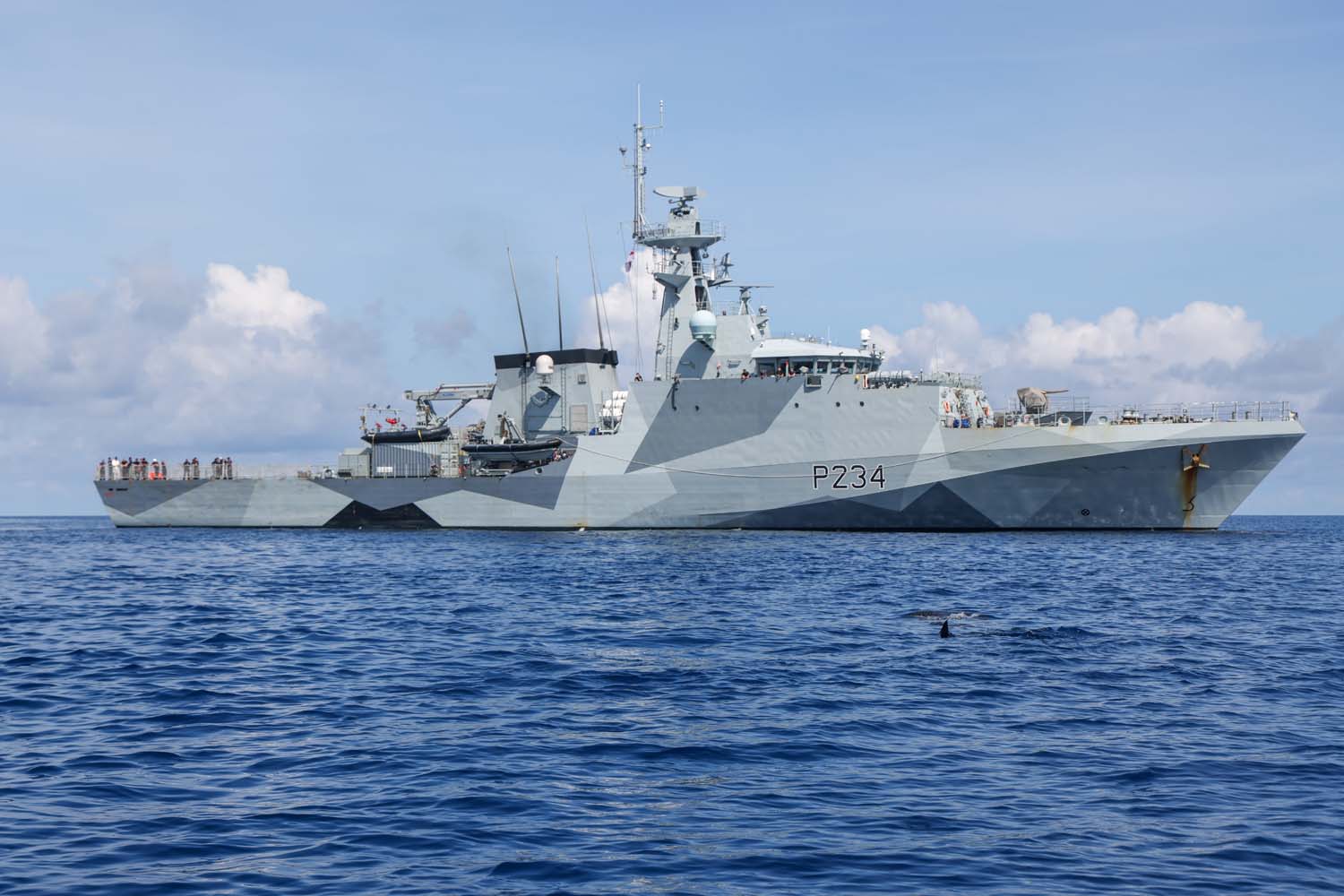
HMS Spey.
Courtesy Royal Navy / Picture: LPhot Unaisi Luke
The fleet of the future will be packed with the latest weaponry, sensors and technology but also built with the environment in mind – and so too will its logistical centres.
The Royal Navy’s eight new Type 26 frigates will be painted with environmentally friendly, anti-fouling paint to limit marine growth, while its design underwent a hydrodynamic redesign to add speed without the need for larger engines.

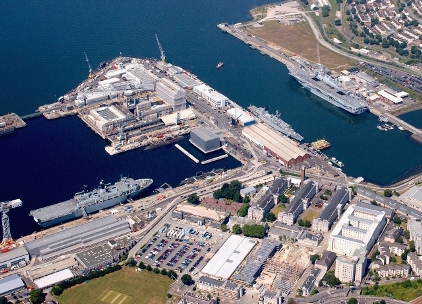
The Queen Elizabeth Carrier Forward Logistics Centre in Portsmouth Naval Base draws its power entirely from the sun, power which drives not just lighting, heating and computer systems, but even the forklift trucks moving around inside.
The centre – a sort of Amazon warehouse for HMS Queen Elizabeth and Prince of Wales berthed a few hundred metres away – is the first ‘net zero’ carbon building in the Navy.
The £7 million logistics hub contains the spare parts, tools and documentation the carriers need during maintenance periods.
New patrol ships HMS Spey and Tamar which are on long-term deployments to the Indo-Pacific, have catalytic reduction systems to reduce nitrous oxide emissions, while icebreaker HMS Protector supports international research into wildlife and climate change in Antarctica and Royal Navy patrol ships deployed across the globe regulate fishing stocks.
All of this helps boost green ambitions, following the UK’s Net Zero Week (2nd-8th July), which raised awareness about climate change, as the UK looks to reduce all greenhouse gas emissions to net zero by 2050.
Portsmouth Naval Base has already won three environmental awards. The base’s Commanding Officer, Commodore John Voyce, said: “Portsmouth Naval Base has established many low-carbon initiatives in order to achieve our target of being carbon-neutral.
“This includes electric vehicles and charging points, installation of wind turbines, and of course the construction and opening of our first carbon-neutral building in June this year - the first Royal Navy infrastructure construction to be Net Zero in operation.
“I am delighted to support and contribute to the government’s carbon reduction goals, and Team Portsmouth will continue to work on many more exciting actions to further improve our carbon footprint, not just for the Royal Navy and our base, but for the future of the city of Portsmouth as well.”
The Royal Navy is also setting a sustainability standard for its serving warships. Before deploying on operations, every crew and their ship must meet the exacting standards of the Fleet Operational Sea Training teams based in Plymouth.
Adding to their already rigorous testing, from next year ships will be recognised if they meet sustainability standards under what will be known as the Green Pennant scheme.
Meanwhile, at HMS Collingwood in Fareham, Hampshire, £2.4m has been invested in building management systems, which have been installed to monitor and control energy usage, while conservation projects are being undertaken across the Royal Navy’s bases and stations as part of the Queen’s Green Canopy project, which marks Her Majesty’s Platinum Jubilee.