Royal Navy proves quantum timing can sustain radar networks without GNSS


A Royal Navy trial has shown that two networked military radars can continue combining their observations into a single, accurate picture of the airspace even when satellite-based timing is unavailable or compromised.
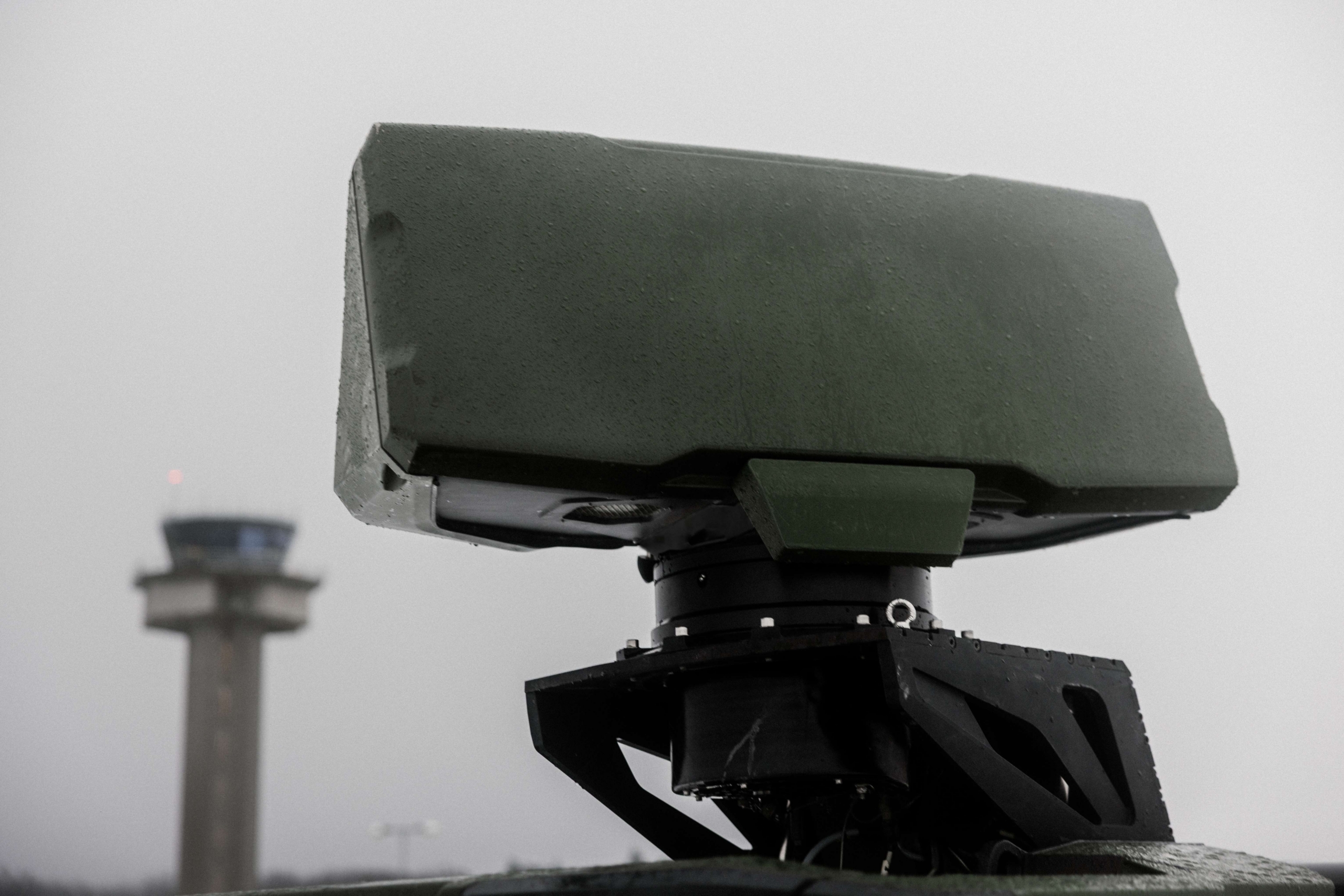
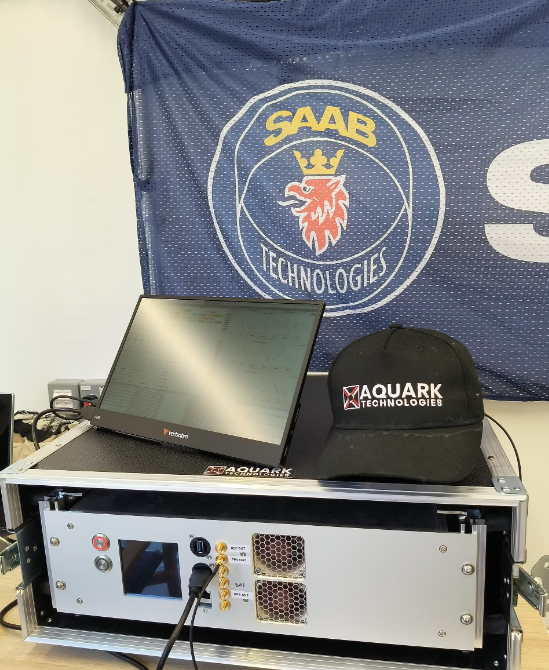
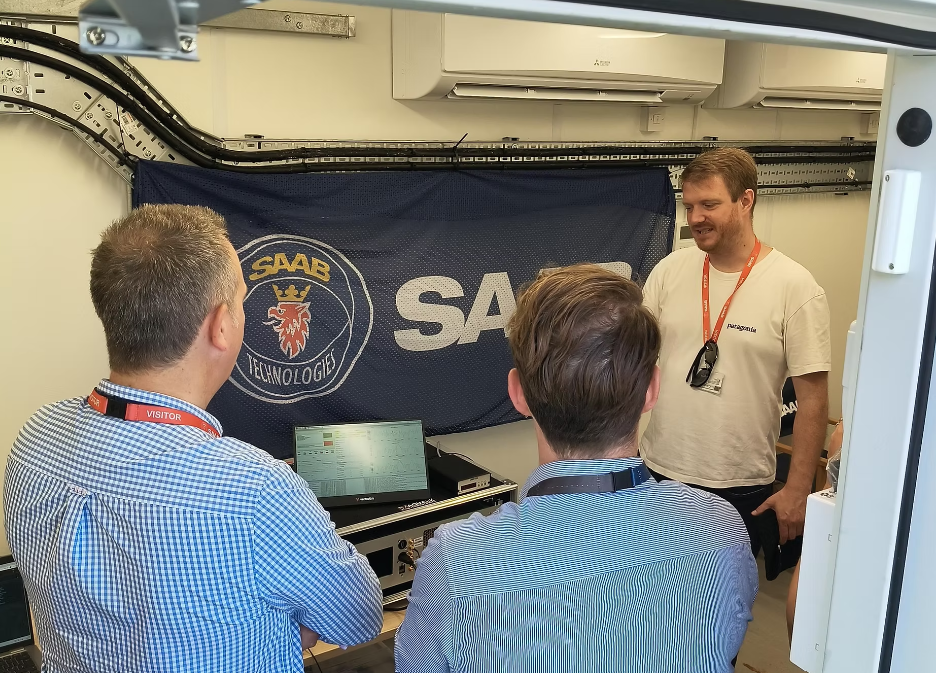
The demonstration brought together Saab UK, Aquark Technologies, the Royal Navy’s Disruptive Capabilities and Technologies Office (DCTO) and QinetiQ. It used Saab’s Giraffe 1X radars and Aquark’s AQlock 2.0 cold-atom technology to test a specific problem: whether a radar network can remain synchronised without relying on GNSS.
The answer from the trial was yes.
That matters because a radar does not only need to know where an aircraft is. In a network of sensors, it also needs to know precisely when each radar made its observation.
Two operational radars at geographically separate locations relied on AQlock for their timing while the teams simulated both GNSS denial and spoofing. The radars continued combining their tracking data into a single, accurate air picture.
If two radars see the same aircraft from different locations, the system has to be able to match those observations. A common and highly accurate time reference helps it do that.
GPS normally provides that reference. But satellite signals can be jammed or spoofed, creating a problem for systems that depend on them.
The Royal Navy trial was designed around that vulnerability.
What the quantum clock is actually doing
The easiest way to understand AQlock is to think of it as an extremely stable clock that gives a radar network another source of precise timing.
AQlock uses cold-atom technology to generate a highly stable timing reference. But the clock itself is only part of the arrangement.
Aquark describes the demonstration as an integration of its quantum-based time server with Saab’s Giraffe 1X radar. The time server turns the accurate timing produced by the AQlock technology into a reference that can be used by the networked radar systems.
So, in simple terms, the quantum clock provides the accurate time, the time server makes that reference available to the network, and the radars use it to stay synchronised.
This was not a quantum radar. The sensor remained the Giraffe 1X. The quantum technology was being used to solve a timing problem around the radar network.
The trial also went beyond simply switching GPS off. The teams introduced controlled timing errors to reproduce conditions similar to GNSS spoofing and denial. The network showed predictable degradation when synchronisation was disturbed and recovered rapidly when synchronisation was restored.
The UK government estimates that GNSS outages could cost the economy £1.42 billion in just 24 hours, rising to £7.64 billion over seven days. The disruption would extend across critical sectors including aviation, shipping, financial markets and civilian security.
At the same time, jamming and spoofing incidents are becoming increasingly common in regions close to conflict. A recent investigation, drawing on research from the University of Texas, linked years of unexplained GNSS blackouts across Europe to a constellation of Russian early-warning satellites.
Against that backdrop, defence and security companies increasingly need to demonstrate that their sensor systems can continue operating when GNSS signals are degraded, denied or unavailable.
Two quantum clocks were built for the trial
The AQlock systems used in the demonstration were not simply taken from a laboratory shelf.
Aquark built two AQlock 2.0 prototype systems under the Royal Navy’s Quantum Optimised Radar project, which began in December 2025. The company completed the two systems by the end of June 2026 before deploying them at geographically separate locations for the trial.
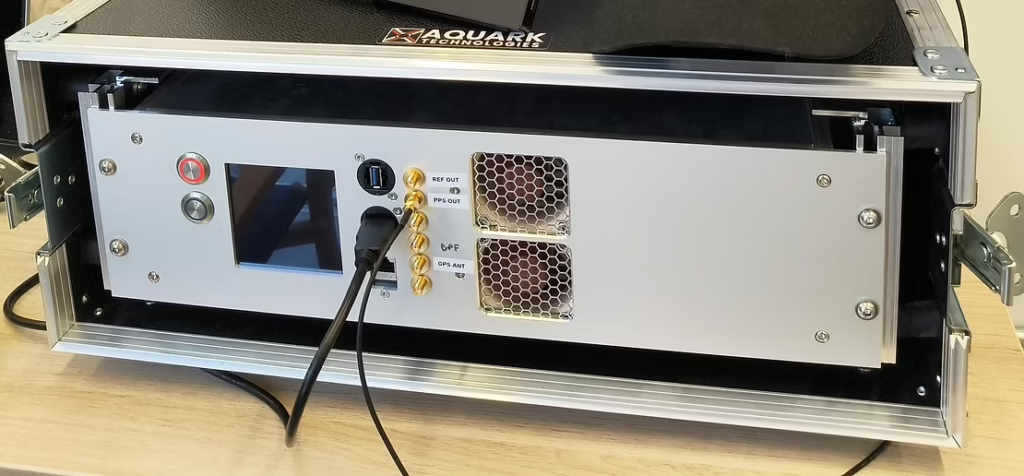
Both systems were started from a cold, powered-off state. Aquark says each reached an acceptable timing signal in less than 30 minutes.
That is a useful detail because military equipment cannot always be assumed to remain permanently powered and ready. The demonstration therefore tested more than timing accuracy in isolation.
Aquark’s AQlock uses what the company calls its Super-Molasses Trap, which traps atoms without a magnetic field. The approach is intended to support smaller, scalable cold-atom systems rather than keeping the technology confined to large laboratory equipment. Aquark says the technology has also been demonstrated on land platforms, naval surface vessels and an uncrewed air platform.
The company had previously tested AQlock at sea aboard HMS Pursuer.
Matthew Aldous, Aquark’s Timing Lead, described the latest demonstration as a milestone for the company’s UK-built cold-atom technology and its application to a defence problem.
“This trial is a milestone in the development of UK sovereign quantum technology and a first-of-its-kind application of a UK atomic clock. It’s the first known time that a pair of British built cold atom systems has been deployed in answer to a genuine defence challenge, and we’re very proud to work with Saab and the Royal Navy in this way,” Aldous said.
Where the wider timing network fits
A precision timing system is not just a clock connected to one piece of equipment.
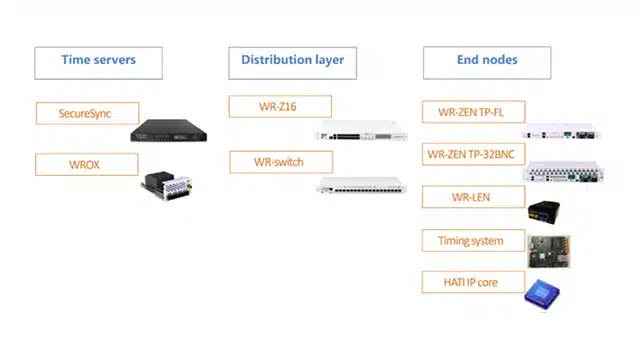
Safran’s material describes a wider architecture comprising a time server, a distribution layer and end nodes. The server provides the reference, the distribution network carries it to different locations and the end equipment uses it to maintain synchronisation.
Safran’s White Rabbit technology is designed for very precise time and frequency distribution, with the company citing sub-nanosecond timing and, in some applications, picosecond-level control. Its potential uses include radar and defence communications.
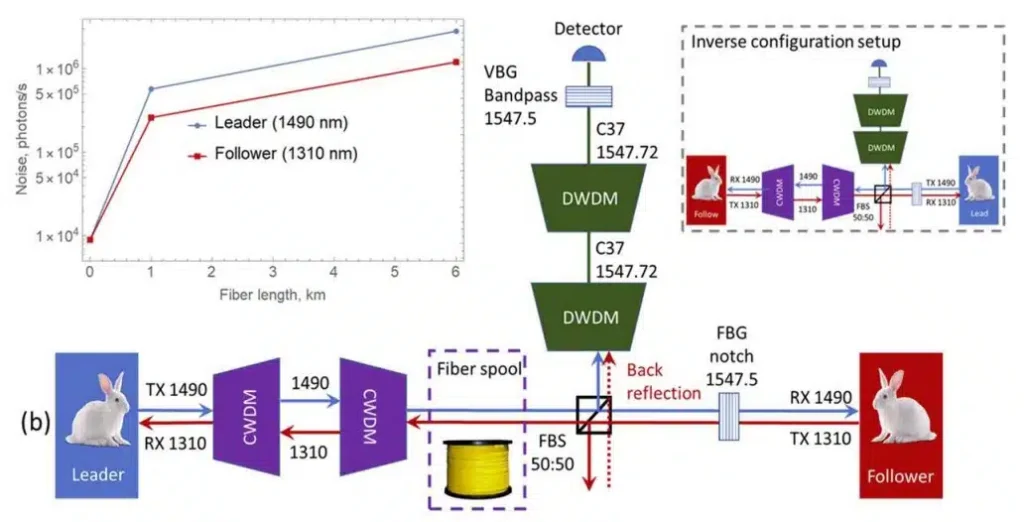
The Saab-Aquark trial applied the same basic principle of distributed precision timing to a specific military problem: keeping networked radars synchronised when GNSS cannot be relied upon.
Why the Navy is testing quantum technology now
The trial also illustrates how defence organisations can approach technologies that are still developing.
QinetiQ argues that defence should not necessarily wait until it has a perfectly defined requirement for quantum technology. Instead, it can start with a specific operational problem, test an emerging technology against it and use the results to guide future investment.
That is effectively what this demonstration did.
The Navy was not testing whether quantum technology could replace GPS across its forces. It was asking a narrower question: can an independent timing source keep networked radars working together when satellite timing is denied or spoofed?
The trial showed that it can. Also, the demonstration does not make the radar network immune to electronic warfare, nor does it remove the need for GNSS. It does give the network another option.
If satellite timing disappears, the radars can still have a highly accurate clock to work from and can continue turning separate observations into one picture of the airspace.
Sign up for our newsletter and get our latest content in your inbox.
Similar Reads