Royal Navy uses tech for operational edge in Information Warfare
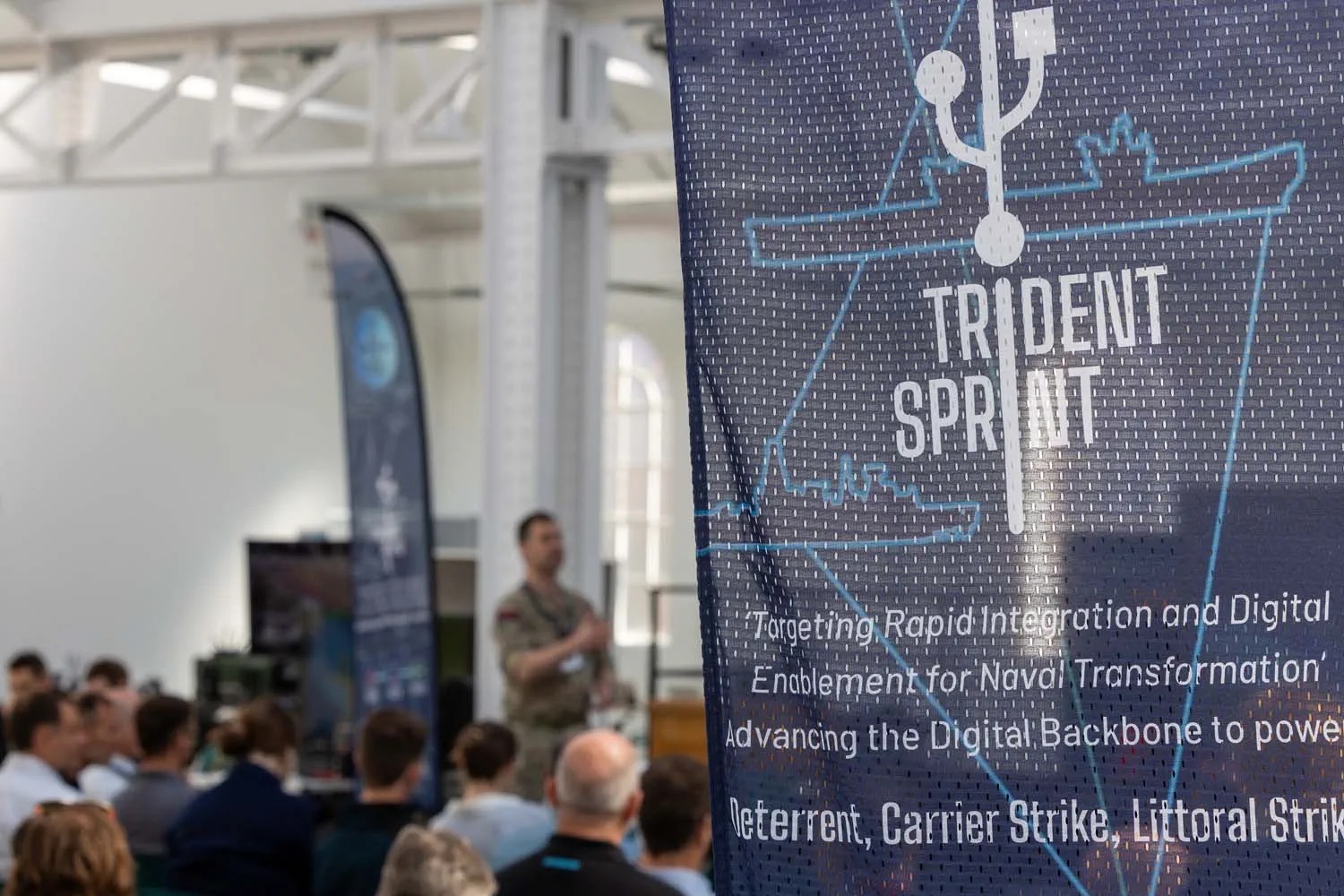
Above: The Royal Navy tested a range of equipment as part of its Trident Sprint series as it works toward becoming a hybrid navy.
Courtesy Royal Navy / Picture: LPhot Henry Parks
A mesh network allows ships, drones and uncrewed systems to share data directly with each other, rather than relying on a single hub or traditional satellite links.

This means information can still flow and be acted on even if parts of the network are disrupted, helping commanders maintain control and make decisions in contested or denied environments.
Two-week exercise Trident Sprint held at HMNB Portsmouth saw Kraken vessels and drones fed information to carry out simulated missions from surveillance and reconnaissance to launching payloads and gathering intelligence.
Fast patrol P2000 boats from the Coastal Forces Squadron were also deployed in the Solent to support capability experimentation at sea, testing the network’s ability to deal with the types and volumes of data that are critical to the Navy’s ability to fight and win using uncrewed systems.
The information gathered was then fed back to a command node ashore where decisions could be made and the data evaluated – giving an edge over potential adversaries.
As well as boats and drones, Trident Sprint also tested an array of systems, networks, Artificial Intelligence tools and data programmes to get all the technology talking to each other and working together seamlessly.
One of the exercise’s aims was to see the Royal Navy work more closely with industry experts to develop innovative ways of dealing with threats and producing results faster than traditional procurement timelines.
It comes as the Royal Navy continues to move towards becoming a hybrid navy, where uncrewed and crewed systems operate alongside each other.
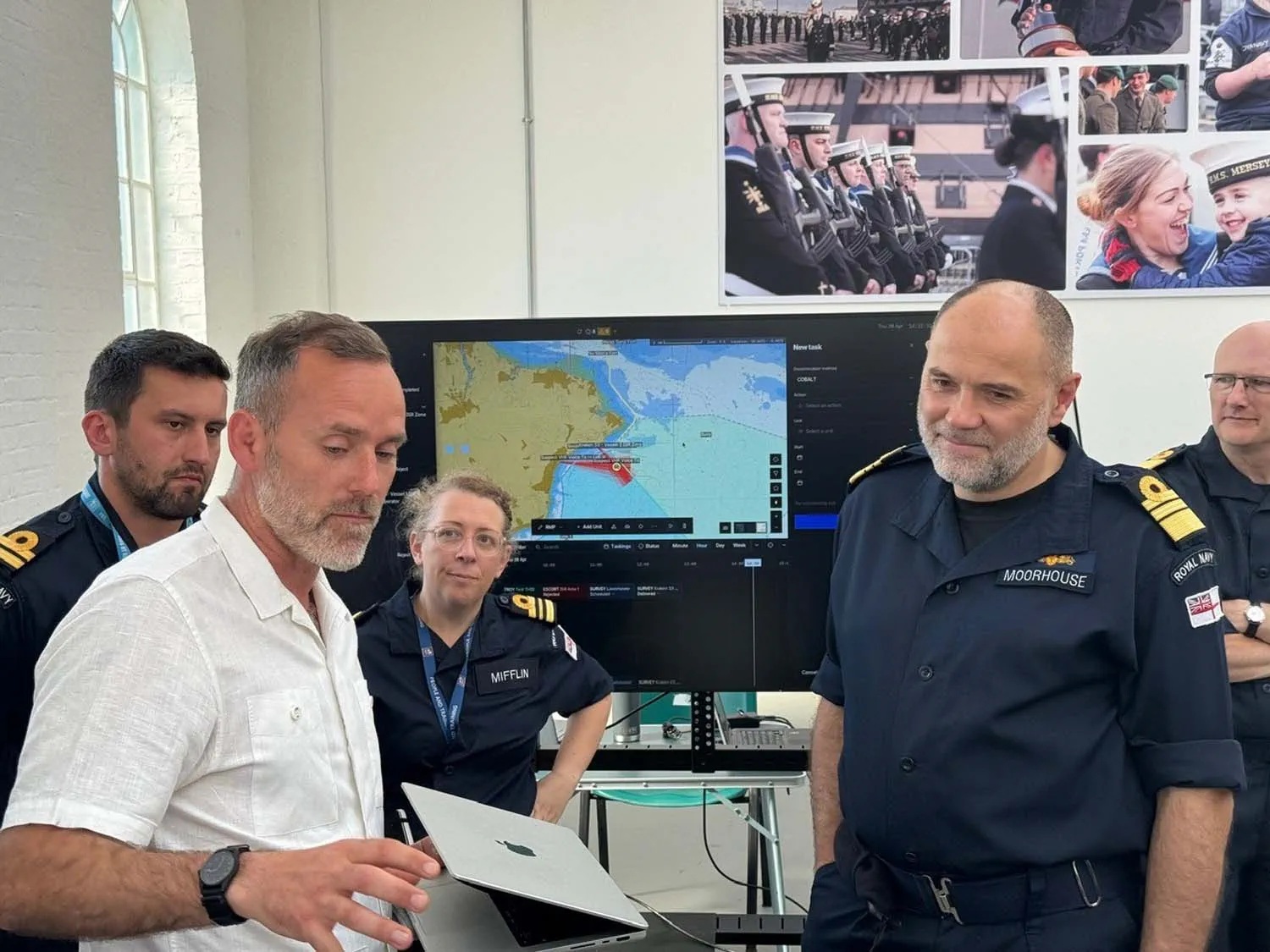
Seniors from across the navy were invited to see Trident Sprint in action, including Fleet Commander Vice Admiral Steve Moorhouse. He said: “The Trident Sprint series demonstrate how the Royal Navy is working differently to embrace technology and stay ahead of a constantly evolving threat picture.
“By bringing our operators together with industry partners to test cutting-edge systems in realistic conditions, we are learning faster, finding problems earlier and turning new technology into practical warfighting advantage.
“Embracing this style of rapid experimentation is essential in bringing to life the hybrid navy and ensuring the Royal Navy is warfighting ready.”
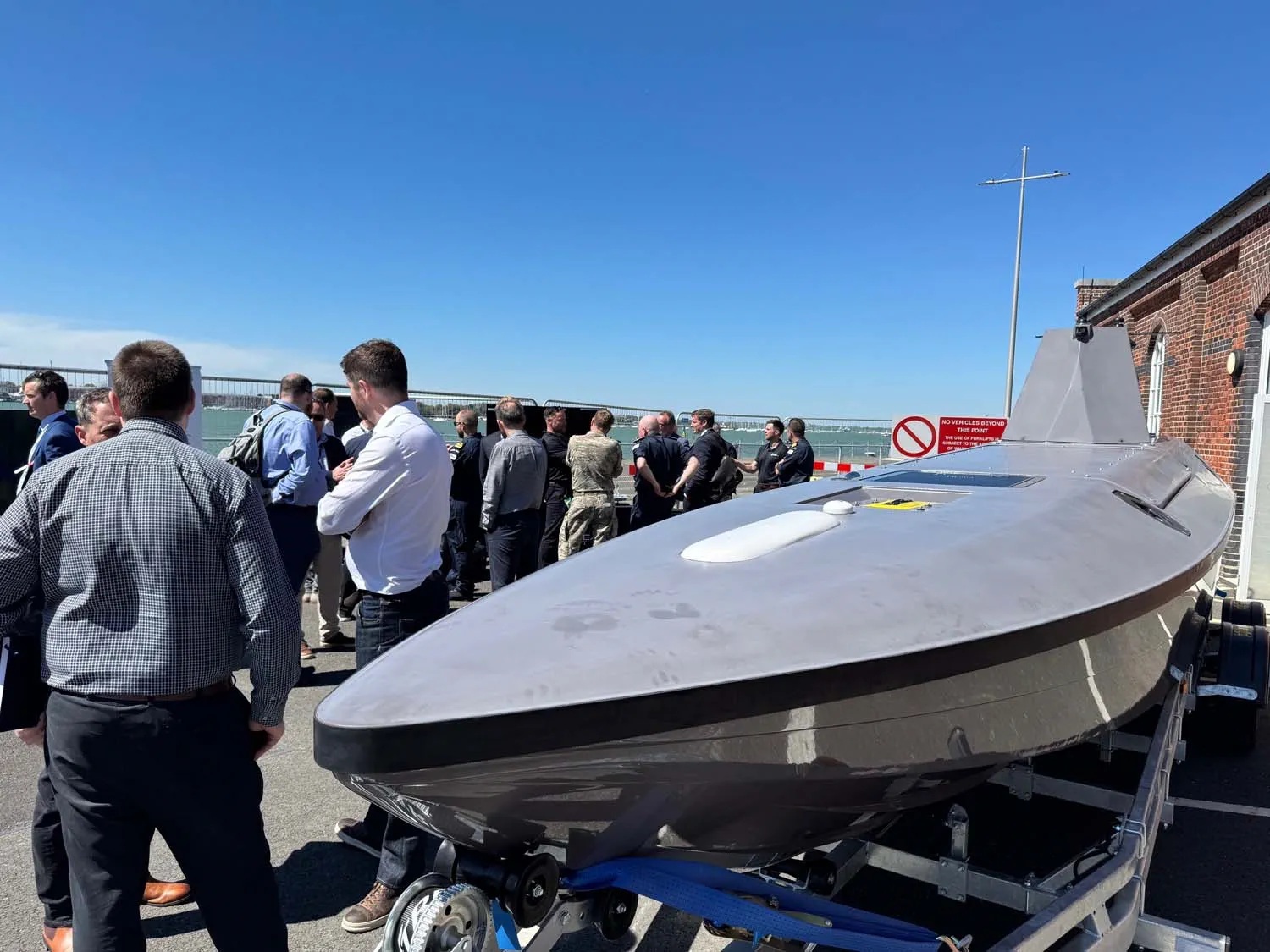
Around a dozen industry partners supported Trident Sprint including companies who are experts in drone technology, cloud computing, securely transmitting information without traditional SATCOM, alternative GPS feeds, Cyber security and more.
Rear Admiral Rachel Singleton, the Royal Navy’s first 2* Digital Director, said: “Trident Sprint has continued to push boundaries and deepen industry relationships, allowing us to test and integrate battle winning digital capabilities, directly supporting the front line and development of the Hybrid Navy.”
Beehive has progressed rapidly, with the Royal Navy already taking delivery of craft; Trident Sprint has allowed the navy to turn these craft from capable individual platforms into nodes in a far wider digital fighting network that is far greater than the sum of its parts.
The work over Trident Sprint means the Royal Navy can now declare these craft as integrated components of the Joint Force.