Scottish Airspace Modernisation consultation reaches halfway point
The Scottish Airspace Modernisation consultation, which launched on 20th October, has reached its midpoint, with the Coordinated Airspace Change Proposals (ACPs) - led jointly by NATS, Edinburgh Airport and Glasgow Airport - giving communities, political representatives and other stakeholders the opportunity to share their views.
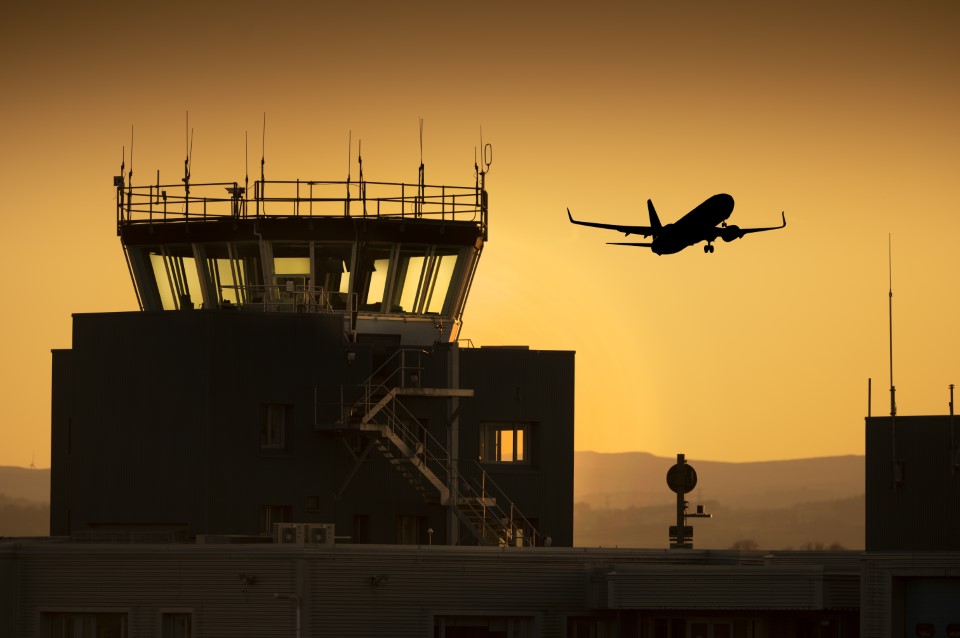
Above: NATS provides ATC services at Glasgow Airport (pictured) but not at Edinburgh Airport.
Courtesy NATS
The proposals plan to modernise an area of approximately 61,000 km² that handles more than 200,000 flights annually. Modernising this important part of UK airspace will enable a reduction of 18,000 tonnes of CO2e – the equivalent of the emissions from more than 5,000 households per year. More direct routing will save 79,000 nautical miles of flying per year – equivalent to flying 3.5 times around the world, or roughly 30 minutes of flight time saved each day.

Glasgow Airport and Edinburgh Airport are both responsible for the modernisation of their departure and arrival routes below 7,000ft and NATS is responsible for connecting these routes into the higher-level airspace network above. It is part of a nationwide programme, required by Government policy and the Civil Aviation Authority’s Airspace Modernisation Strategy, to enable airspace quicker, quieter and cleaner flights within the UK. ACOG has been working closely with the airports and NATS to coordinate the changes and support the development of their proposals.
Throughout the 14-week consultation, stakeholders are invited to provide feedback on the ACPs for Edinburgh Airport, Glasgow Airport and NATS via an online portal. Consultation responses will be reviewed by the change sponsors and will help shape Scotland’s future airspace. At the consultation’s halfway point, it has received over 1000 responses.
To date, the change sponsors have held 17 public events at locations across Edinburgh and Glasgow. These sessions provide a forum through which local stakeholders can speak to airport and NATS representatives and ask questions about the impact and benefits of the changes.
A further seven sessions are scheduled to take place in December and January. Edinburgh will host events in Musselburgh and Aberdour & Dalgety Bay. Glasgow has upcoming events in Bearsden, Brookfield, Paisley, Johnstone and Clydebank.
Sessions have also been held with MPs and MSPs in both Holyrood and Westminster on how the proposed changes may impact their constituencies, as well as with aviation stakeholders.
Lee Boulton, Head of Operations Development at NATS, said: “At this midway point, we’re encouraged by the number of consultation responses that NATS, Edinburgh Airport and Glasgow Airport have received so far. Consultation isn’t a tick-box exercise, it’s an opportunity for public and aviation stakeholders to provide feedback that can help to influence the final design of Scotland’s airspace. We urge anyone in the affected areas to attend upcoming information sessions and share their views via the online portal.”
Gordon Robertson, Chief Communications and Sustainability Officer at Edinburgh Airport said: “We’ve seen really good engagement with Edinburgh Airport’s proposals across in-person events, online webinars and the responses and queries we’ve received. This shows people are interested and keen to share their views on the modernisation plans across Edinburgh and Scotland. There are still a number of weeks to go, and we encourage everyone to get involved and have their say before the closing date.”
Mark Beveridge, Managing Director of Glasgow Airport, said: “Our proposals aim to reduce the total adverse effects of noise from aircraft, improve capacity by minimising delays and reduce carbon emissions per flight through more direct routing.
“We have been engaging with a wide range of stakeholders to shape our proposals, and we have been encouraged by the response so far. Input by our communities and their representatives is invaluable and we urge people to continue to engage with us through our in-person and online consultation events and to share their views through our formal feedback process. You can find all the information here.”
Mark Swan, Head of ACOG, said: “ACOG has teamed up with Edinburgh Airport, Glasgow Airport and NATS to deliver a unified plan that will make Scotland’s skies fit for the future. Airspace keeps Scotland – and the whole UK – connected, powering jobs, tourism and trade. Modernising it is vital to cutting delays, reducing emissions and giving passengers a smoother journey. We’d encourage everyone with an interest to share their views, so the final design reflects local priorities while strengthening the wider system.”
Consultation and engagement are key requirements of the Civil Aviation Authority’s (CAA) airspace change process. Changes to flight paths below 7,000ft are led by airports working closely with NATS, which manages the changes to the airspace network above this altitude.
With seven weeks to go until the consultation closes, stakeholders still have the opportunity to provide their feedback.
This consultation runs from 20th October 2025 until 23:59hrs on 25th January 2026.
Details of all upcoming public sessions can be found here.
For more details and to respond to the consultation, visit the sites linked below:
• Information about the proposed change: https://scottishairspacemodernisation.co.uk
• Respond to Edinburgh Airport’s ACP: https://corporate.edinburghairport.com/airspacechange
• Respond to Glasgow Airport’s ACP: https://glasgowairport.consultationonline.co.uk
• Respond to NATS’s ACP: https://consultations.airspacechange.co.uk/nats/sctma