Shell introduces first industry solution to meet SAP-free refuelling deadline
Shell Aviation, working with filtration experts FAUDI Aviation, has launched Shell Jet Protection, the only Superabsorbent Polymer (SAP)-free refuelling system available to the aviation industry today.
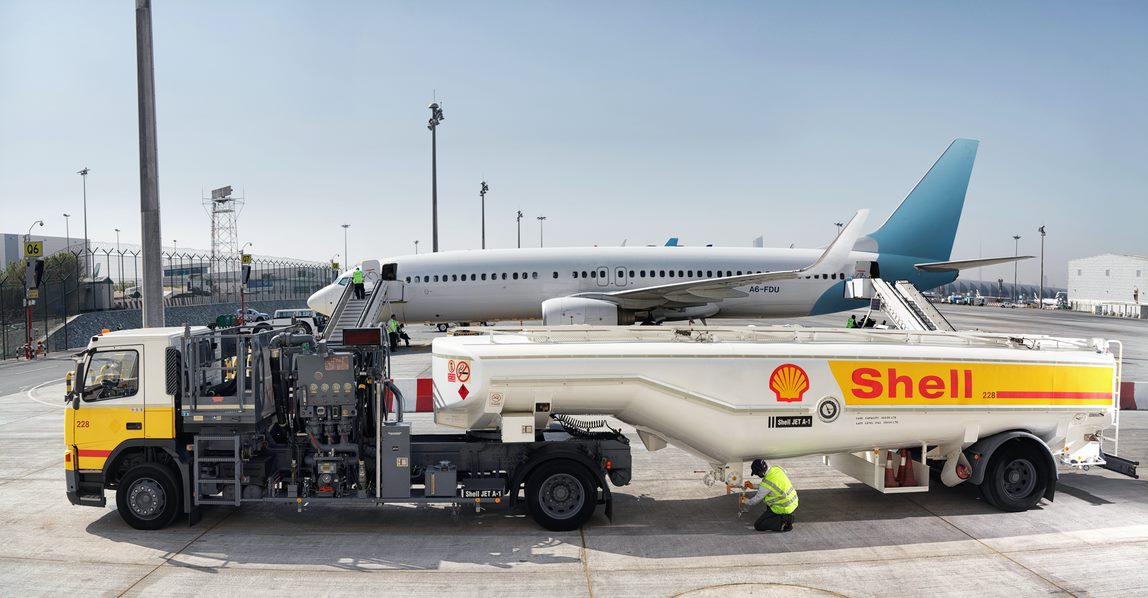
Image courtesy Shell [Photo taken pre-COVID-19 impact]
The technology is also the first SAP-free system capable of utilising existing filter monitor vessels to be adopted into standards by the Joint Inspection Group, the world-leading organisation for the development of aviation fuel supply standards.

From 31st December 2020, the industry standard controlling filtration systems containing SAP will be withdrawn, due to concerns about its suitability for use. In rare cases, SAP can leak from water filters into engines during refueling, causing operational issues. Shell Aviation will convert its entire fleet of refuelling trucks to Shell Jet Protection at all Shell-operated locations worldwide, with the aim of being SAP-free by the end of 2020.
Thomas de Boer, Head of Operations at Shell Aviation, stated: “At a time when aircraft operators are focused on the path to recovery, we are committed to supporting our customers and partners across aviation in preparing for the industry’s transition away from SAP-based water filters. Filtration experts at Shell and FAUDI Aviation have been working together to find alternatives to SAP since 2015, well before the Energy Institute’s mandated change in 2017. It is a real point of pride that we have been able to deliver a solution for the industry well ahead of this year’s deadline.”
Shell Jet Protection is specifically designed to protect aircraft and engines from the risk of SAP contamination. It replaces the SAP-based water filter with a separate AFGUARD Electronic Water Sensor (EWS) and uses it in combination with a Dirt Defence Filter. The AFGUARD EWS, extensively tested by Shell and qualified to the Energy Institute standard EI15983, continuously monitors the refuelling process and safely turns off the fuel flow to the aircraft, on the rare occasions when water is detected.
As well as safely turning off the fuel flow to the aircraft on the rare occasions when water is detected, Shell Jet Protection can be easily retrofitted into existing vessels and vehicles. In addition, while SAP filters are changed annually, Shell Jet Protection filters have a five-year service life, providing both financial savings in change-out costs and helping to reduce waste through less frequent filter replacements.
Marcus Wildschütz, President of FAUDI Aviation, stated: “With the deadline for moving away from SAP fuelling systems fast approaching, it is important that the aviation industry prepares for this change now. We’re proud to have worked with Shell Aviation on the only SAP-free drop in solution to protect aircraft engines from the very real risk that SAP migration poses to engine operations.”