Sixth-generation fighter jet programme gets funding boost

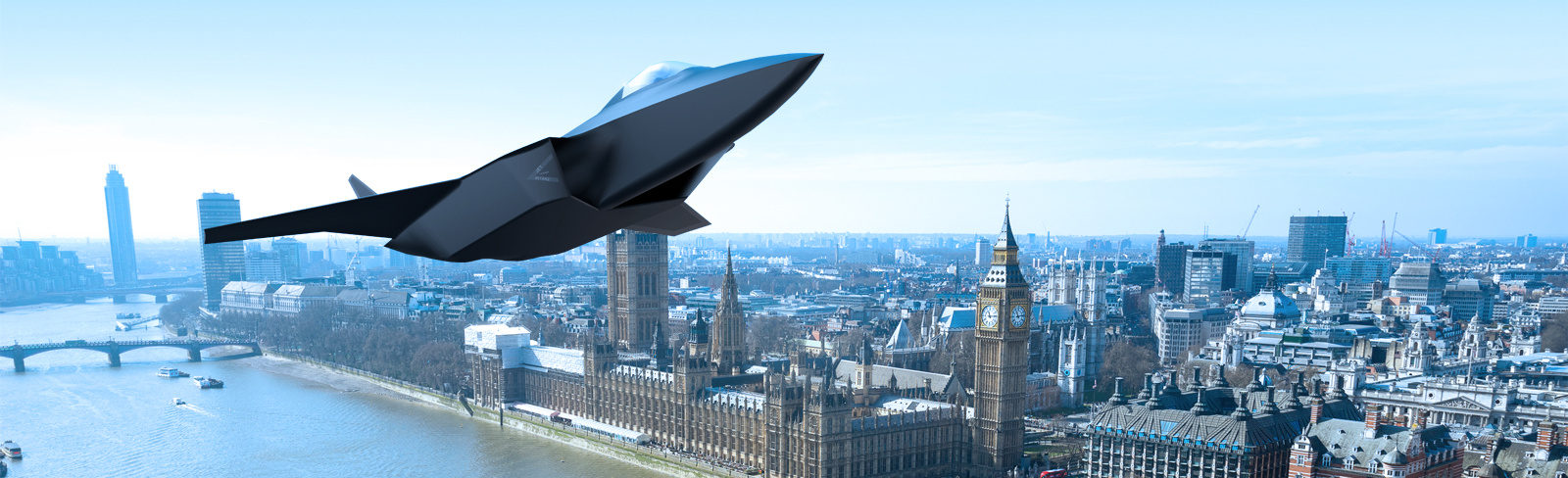
Above:
Next-generation Future Combat Air System.
Image courtesy BAE Systems
Tempest is the UK name for the aircraft in development under GCAP.
The contract will build on the ground-breaking science, research and engineering already completed. The UK MoD and its industry partners are working in close collaboration with GCAP partners Japan and Italy. Together, the partners will now progress the maturity of more than 60 cutting-edge technology demonstrations, digital concepts and new technologies.

These are critical to the UK’s sovereign defence capability and will help shape the final requirements with Japan and Italy for the combat air platform, due to enter service by 2035.
The aircraft is designed to be an innovative stealth fighter with supersonic capability and equipped with cutting edge technologies, including state-of-the-art sensing and protection capabilities. This will make the aircraft one of the world’s most advanced, interoperable, adaptable and connected fighter jets in service globally.
Defence Secretary, Ben Wallace said: "The next tranche of funding for future combat air will help fuse the combined technologies and expertise we have with our international partners – both in Europe and the Pacific - to deliver this world-leading fighter jet by 2035, protecting our skies for decades to come."
Herman Claesen, Managing Director, Future Combat Air Systems - BAE Systems Air, said: "This contract reflects the continued commitment by the UK Government and ensures we continue to mature this significant programme and the vital technology pipeline that will drive innovation into - and beyond - the combat air sector for decades to come.
"This important work is at the core of the newly created Global Combat Air Programme; a major international partnership and ambitious endeavour between the UK, Japan and Italy with the shared goal to deliver the next generation of combat air fighter jets by 2035."
This investment forms part of more than £2 billion worth of UK Government spending on the project up to May 2025, announced in the 2021 Defence Command Paper.
GCAP will span several decades, creating thousands of jobs and economic value to the UK. There are already more than 2,800 people working at the UK partners and wider industry, with almost 600 organisations on contract across the UK, including SMEs and academic institutions.
A 2021 report by PWC suggested the UK taking a core role in a combat air system could support an average of 21,000 jobs a year and contribute an estimated £26.2 billion to the economy by 2050.
Richard Berthon, MoD Director Future Combat Air, said: "Today, as planned, the UK MoD is releasing the next tranche of funding for future combat air. This shows that the UK is committed to working with international partners to deliver a next-generation fighter jet for 2035.
"We are facing a growing threat from our adversaries, who are investing in combat air and air defences of their own. By investing in GCAP, we will stay ahead of these intensifying and proliferating threats, and provide a highly credible deterrent capability for decades to come."
Across UK industry, work on this programme is driving investment in new digital technologies, tools and techniques, including model-based systems engineering with open architectures, digital twins and virtual environments. This will ensure the next generation combat aircraft will be delivered more rapidly and more cost-effectively than previous combat air programmes.
The announcement follows the UK, Japan and Italy joining forces at DSEI Japan to showcase GCAP publicly for the first time since it was announced by the Prime Ministers of the UK, Japan and Italy late last year. In March, the Defence Secretary visited Tokyo to view some of the leading technology that is driving this unique programme.
By combining forces, the UK and its partners will deliver the military capability required to overcome fast evolving threats, share costs and ensure the RAF remains interoperable with some of the UK's closest partners.