Advancing UK Aerospace, Defence, Security & Space Solutions Worldwide
  • Home
  • /
  • Aerospace
  • /
  • Solar powered aircraft soars to stratospheric success

Aerospace

Solar powered aircraft soars to stratospheric success
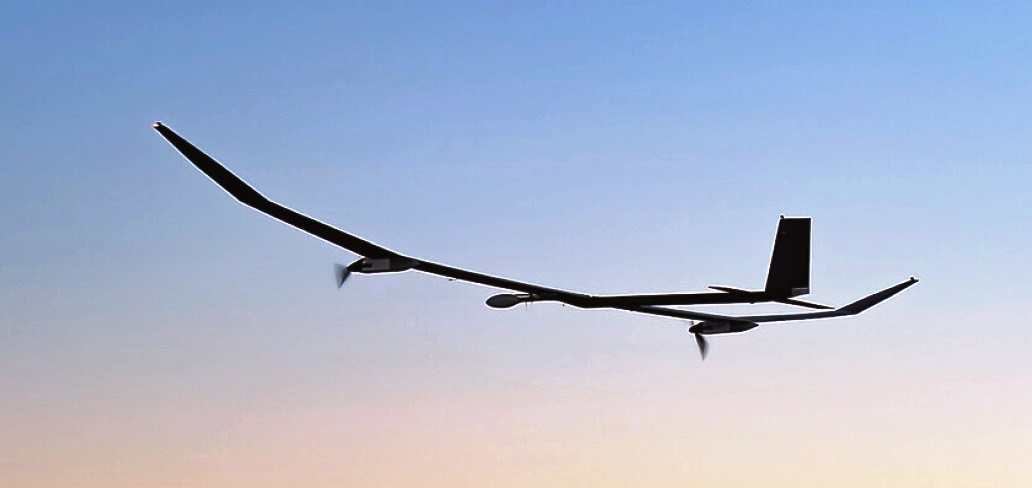
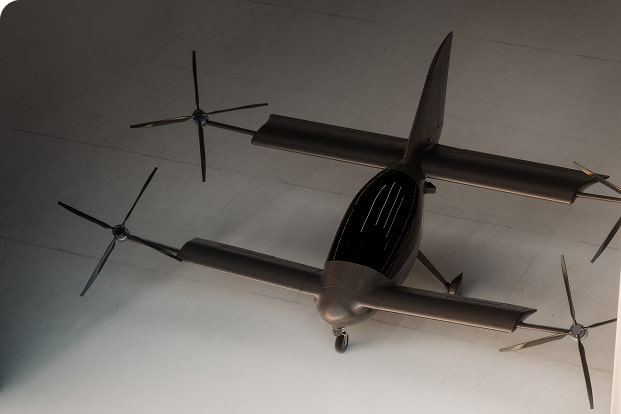
A British-led team of engineers has taken a leap forward in the race to harness the stratosphere for earth observation and communications, completing a new series of test flights of BAE Systems’ High Altitude Pseudo Satellite (HAPS) Uncrewed Aerial System (UAS), PHASA-35, in quick succession.

Above: PHASA-35 in flight.
Courtesy BAE Systems

 
During the first flight at Spaceport America in New Mexico, US, in recent weeks, the solar powered aircraft flew for 24 hours climbing to more than 66,000 feet and cruising in the stratosphere, before successfully landing in a serviceable condition, meaning it was ready to fly again just two days later.
 
This is a major milestone in the development of PHASA-35, named after its 35 metre wingspan, demonstrating its ability to be launched, flown, landed, potentially reconfigured and then relaunched again so quickly.

Advertisement
PTC rectangle

Designed by BAE Systems’ subsidiary Prismatic Ltd to operate above the weather and conventional air traffic, PHASA-35, has the potential to provide a persistent and stable platform for uses including ultra-long endurance intelligence, surveillance and reconnaissance. Prismatic sits within FalconWorks, the advanced research and development arm of BAE Systems' Air Sector.

Bob Davidson, Chief Executive Officer, BAE Systems’ Prismatic said: "These latest flight trials are a significant step forward in proving PHASA-35’s capability for operations, and a real moment of pride for our entire team. We’re committed to continuing to develop PHASA-35 at pace to make it available for operational activity as soon as 2026."

Advertisement
ODU RT

The latest trials also saw the aircraft carry an active intelligence, surveillance & reconnaissance sensor, known as a software defined radio, developed by BAE Systems’ Digital Intelligence business. This weighed more than twice as much as the previous payload it had flown to the stratosphere with.
 
At Prismatic’s site in Alton, Hampshire, UK the PHASA-35 team has now built the next iteration of PHASA-35. The new model has more than twice the onboard solar power generation and storage capacity than the current version. These modifications are expected to allow it to demonstrate stratospheric missions of increasing duration and complexity from next year onwards.
 
Dave Holmes, Managing Director, FalconWorks at BAE Systems said: "These latest trials draw on a huge amount of collaboration between Prismatic, the wider BAE Systems business and industry partners, including Honeywell and the UK Met Office. They demonstrate the credibility and capability of the system for operational use."
 
The PHASA-35 team will now use data from these most recent trials to further improve and mature this novel technology.

Advertisement
ECS leaderboard banner
Wales to be UK launchpad for advanced autonomous tech

Aerospace Defence Security

Wales to be UK launchpad for advanced autonomous tech

20 February 2026

Thousands of skilled workers in Wales will be involved in the design, testing and manufacture of advanced autonomous technologies and unmanned systems, as a landmark £50 million Defence Growth Deal positions the nation at the forefront of Britain’s defence future.

NPAS increases aircraft available for deployment

Aerospace Security

NPAS increases aircraft available for deployment

19 February 2026

In January this year, the National Police Air Service (NPAS) was able to increase the number of aircraft that were available for operational deployment.

Alloyed secures ATI Programme funding to develop ABD-1000AM

Aerospace

Alloyed secures ATI Programme funding to develop ABD-1000AM

19 February 2026

Developer and manufacturer of advanced metallic components, Alloyed Ltd, has secured funding from the ATI Programme for an ambitious £1 million project to accelerate the development of ABD-1000AM, a next-generation nickel-based superalloy designed for additive manufacturing.

Birmingham Airport publishes new sustainability strategy

Aerospace

Birmingham Airport publishes new sustainability strategy

19 February 2026

Birmingham Airport (BHX) has published its new sustainability strategy for 2026 to 2030, outlining the next strategic steps on its journey to becoming a more sustainable and socially responsible business.

Advertisement
Security & Policing Rectangle
UK hydrogen airport trial sets out roadmap for further studies

Aerospace

UK hydrogen airport trial sets out roadmap for further studies

18 February 2026

A new report into the UK’s first airside trial of multiple hydrogen-powered ground support equipment (GSE) has confirmed that hydrogen can be safely and effectively integrated into airport ground operations, whilst setting out a series of essential next steps needed to accelerate hydrogen adoption and decarbonisation across the aviation sector.

Kent collaborates on Pre-FEED study for Eq.flight SAF demo plant

Aerospace

Kent collaborates on Pre-FEED study for Eq.flight SAF demo plant

18 February 2026

Integrated energy services partner, Kent, has collaborated with Equilibrion during a successful bid for funding from the UK Department for Transport’s Advanced Fuels Fund (AFF) and with that funding for Equilibrion and its partners, Kent is delivering the Pre-Front-End Engineering Design (Pre-FEED) for Eq.flight, an advanced power-to-liquids ...

Advertisement
ODU RT
Advertisement
ECS leaderboard banner