Teledyne e2v, Wind River and CoreAVI provide processing tech for BAE Systems’ mission computer
Above:
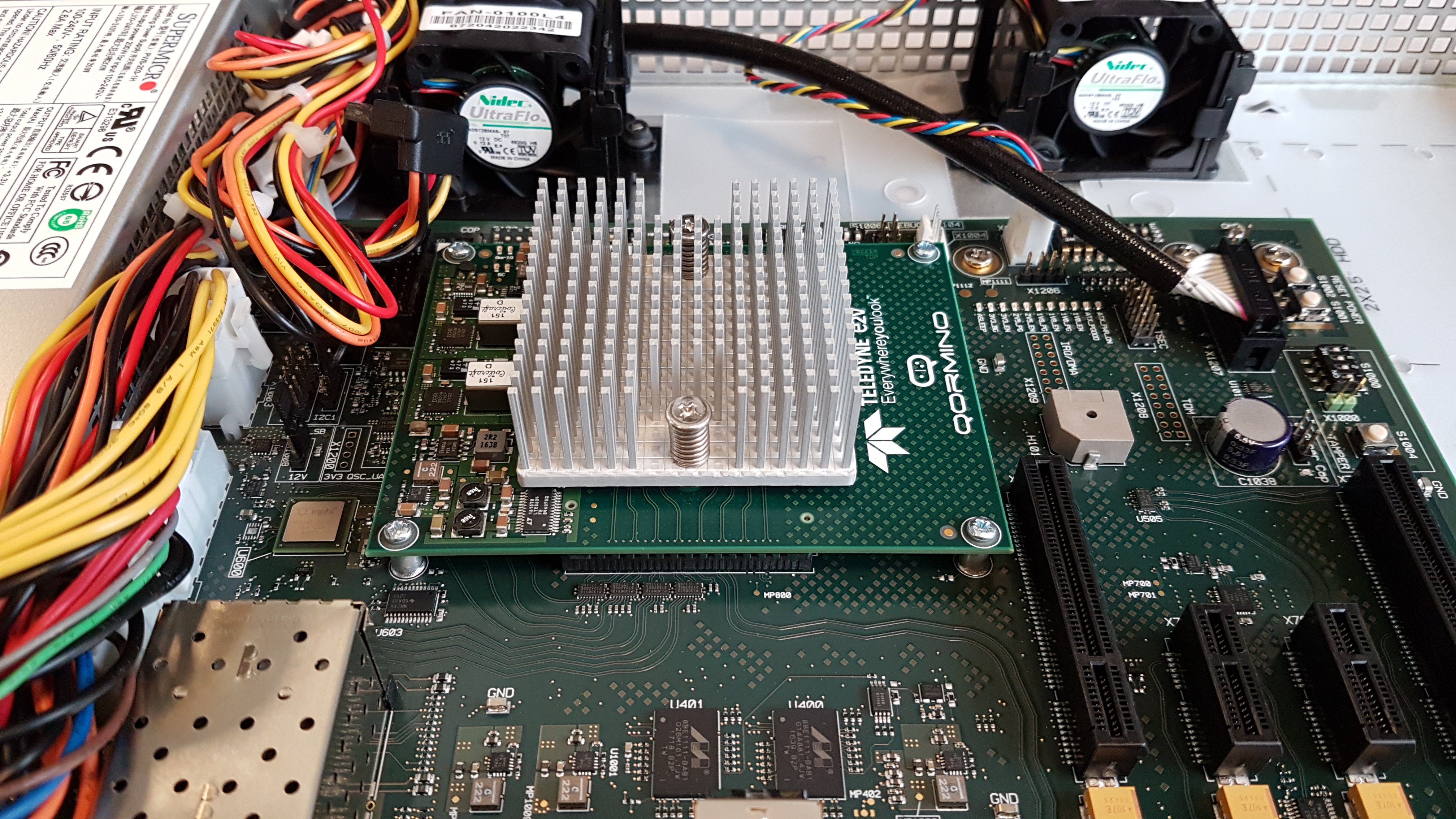
Qormino QT1040-4GB is a smart, small and powerful Common Computer Platform from Teledyne e2v designed to respond to SWaP constraints (Size, Weight and Power).
© Copyright 2022 Teledyne Defense Electronics
A mission computer is the central hub that processes all mission critical data on an aircraft. Receiving information from various external subsystems, the mission computer processes the data and presents it to the pilot on various displays in the cockpit.
The joint solution includes Wind River VxWorks industry-leading real time operating system running on Teledyne e2v Qormino Common Computer Platform and CoreAVI supplying its temperature-screened AMD Embedded Radeon E8860 GPUs as well as its safety critical ArgusCore SC1 OpenGL1.0.1 graphics drivers.
Qormino QT1040-4GB is a smart, small and powerful Common Computer Platform from Teledyne e2v designed to respond to SWaP constraints (Size, Weight and Power). It combines a T1040 Quad PowerArchitecture e5500 core running at 1.4GHz, 4GB of DDR4 memory, on a Custom Teledyne e2v substrate, with a 64-bit memory bus and 8 bits of ECC (Error Correction Code) and will run VxWorks on BAE Systems’ platform.
VxWorks provides the base platform that consolidates different applications meant to improve situational awareness for pilots. The real-time avionics system will gather and display information from multiple sources in order to create a comprehensive picture of the aircraft and airspace. The deterministic capabilities of the platform are crucial for the overall system on-board the aircraft that has to provide low-latency response to the pilot.
CoreAVI will supply their ArgusCore SC1 safety critical OpenGL scalable graphics driver in conjunction with their temperature-screened E8860 GPU from AMD’s family of Embedded Radeon GPUs. Available with complete DO-178C DAL A certification evidences, specialised GPU safety monitor and virtualised graphics manager for multicore systems, both the safety critical graphic drivers and temperature-screened GPUs are used today in a wide range of embedded commercial and military avionics platforms.
Wind River, Teledyne e2v, and CoreAVI technologies are designed to address the multiple challenges that Mission Computer designers are facing today. Together they have published a technical brief highlighting how the rapid insertion of emerging technologies and standards is achievable in a cost-effective way into Mission Computing products, thanks to complementary hardware and software solutions serving the Aerospace & Defence industry and other critical infrastructure sectors.
“To support the requirements of our customers, our mission computer needs to be capable of providing a high performing, multi-core processing platform while operating in a size, weight, and power-constrained space,” said Neale Osmond, Project Director at BAE Systems. “By utilising emerging technologies from Teledyne e2v, Wind River and CoreAVI, we were able to deliver a fully capable, modern mission computer within a challenging timescale, while meeting our customer’s reliability and safety requirements.”