General Atomics

Teledyne launches industrial image sensors tested for space

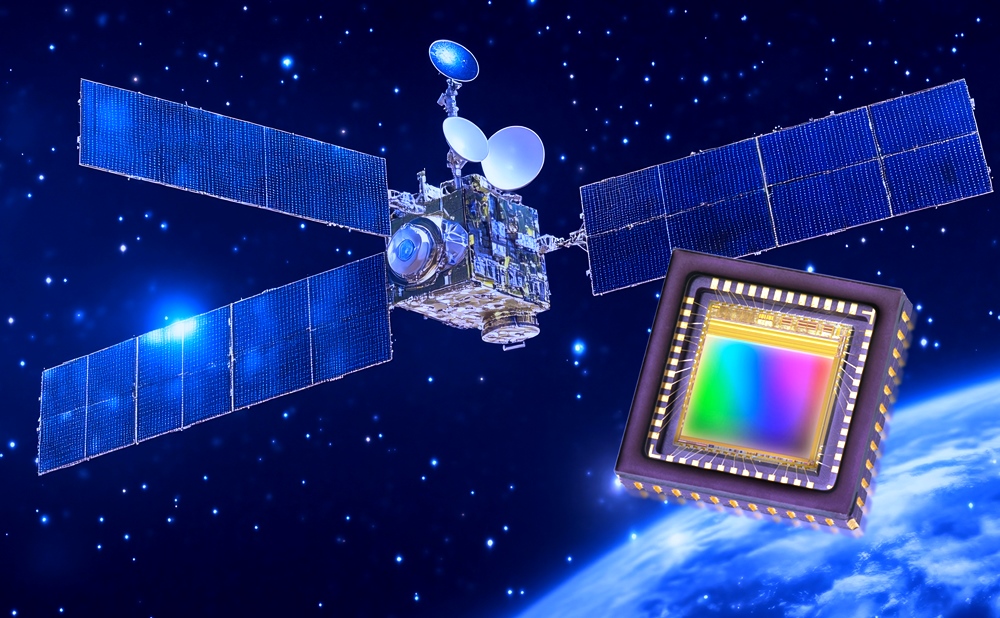
Teledyne Technologies has announced the release of three variants of industrial CMOS sensors, with resolutions ranging from 1.3MP up to 67MP, following a delta space qualification methodology and radiation testing.

Image courtesy Teledyne

Teledyne Technologies has announced the release of three variants of industrial CMOS sensors, with resolutions ranging from 1.3MP up to 67MP, following a delta space qualification methodology and radiation testing.

These industrial image sensors are designed, manufactured and tested in Grenoble-France and Seville-Spain and upscreened for space in the Grenoble facilities. The Upscreened Variants (USV) are intended to be suitable for new space applications such as Earth observation and remote sensing payloads, star trackers, monitoring cameras and cameras for space suits, rovers, moon landers, and space situational or domain awareness. These new products complement Teledyne’s ongoing offerings for demanding science and defence missions by providing options for the less rigorous New Space market.
 
“Within the New Space industry, some system designers may use COTS sensors and make them fly with no upscreening, which means that they take the risk of any malfunctions or errors further down the line,” explained Céline Semécas, Product Marketing Manager, Teledyne e2v. “Teledyne e2v’s industrial upscreened image sensors are tested for space and are delivered as flight models with lot validation test certificates and radiation test reports.”
 
The three CMOS sensors will undergo full screening, serialisation and lot validation tests. Depending on the mission profile, they are delivered as flight models with two levels of screening, according to U1 (ESCC9020-like) or U3 (NASA Class 3 tailored for image sensors). Devices were sampled and have been through radiation characterization in specialised facilities, including testing for Single Event Latch-up (SEL), Single Event Effect (SEE) and Single Event Functional Interrupt (SEFI) malfunctions or errors. The image sensors feature a broad range of embedded functions, including sub-sampling, multiregion of interest (ROI), defective pixel correction and high dynamic range capability.
 
For satellite star trackers and monitoring cameras, the Ruby 1.3M USV is a radiation tolerant 1.3MP (1280 x 1024) global shutter sensor optimised for space systems that are subject to constraints, such as size, weight and power (SWaP) and cost. Housed in a 12.7mm x 12.7mm CLCC packaging, this 5.3µm pixel pitch sensor can fit with cost-effective 1/1.8” lenses, consumes very low (≤200mW) power and is available in a monochrome or colour version.
 
The Emerald Gen2 12M USV is a compact 12MP (4096 x 3072) global shutter imaging sensor for monitoring cameras with a 2.8µm pitch, and available in monochrome and colour versions. It features a very low readout noise performance of less than three electrons, delivering excellent image quality and the ability to work in high-contrast scenes. It has ROI features, enabling Teledyne e2v to offer an 8.9MP ROI image sensor in the same packaging, allowing space engineers to make even smaller cameras because they can use smaller optics. This sensor also features both LVDS and MIPI outputs, which ease the integration.
 
The Emerald 67M USV is a 67MP (8192 x 8192) image sensor that features one of the smallest global shutter pixel pitches (2.5µm) on the market. This 8K high-resolution device can cover a large swath for Earth observation and is also suitable for space domain awareness applications, allowing them to cover a large field of view. Emerald 67M USV combines low noise (<3e- @ 12 bits), providing excellent image quality in low light conditions and up to 65 fps @10 bits, providing sharp images at very high speed. The image sensor can support monochrome or colour video and can be used for multispectral imaging.
 
Teledyne e2v provides a full range of tools to ease system integration of the CMOS sensors and accelerate time-to-market. These tools include evaluation kits, reference designs, radiation reports and space qualification reports. “With a dedicated support team and quick response times, Teledyne e2v in Grenoble supports space engineers from design concept to system launch,” added Céline Semécas. “Furthermore, Teledyne e2v is used to managing long-term supplies with applications that require long product life cycles and obsolescence management.”
 
During SmallSat Europe 2025, 27th-28th May at the RAI Convention Center in Amsterdam, visitors to the Teledyne stand can watch a live demo showcasing the performance characteristics of the new Emerald Gen2 12M USV upscreened image sensors.

Related

Can apprenticeships solve the aerospace skills shortage?
Employment skills recruitment shoot - Airfield Engineering Shoot with Airfield Duty Engineer & Engineering Apprentices - Heathrow Terminal 5 Photo credit -
Can apprenticeships solve the aerospace skills shortage?
The UK aerospace industry needs a new generation of skilled engineers and technicians. Apprenticeships can help deliver them, but only if businesses can afford to train people, attract candidates and give them reasons to stay.
Aerospace

18 Oct 2026

UK Finance Minister signals support for London Heathrow Airport’s £33 billion runway expansion
London Heathrow
UK Finance Minister signals support for London Heathrow Airport’s £33 billion runway expansion
In contrast to the cautious response of the UK Prime Minister, Chancellor John Healey has backed Heathrow's expansion plans.
Aerospace

17 Oct 2026

Marshall Aerospace outlines its next chapter following AURELIUS acquisition
Marshall Aerospace
Marshall Aerospace outlines its next chapter following AURELIUS acquisition
Speaking exclusively to Advance, Marshall Aerospace discusses its military aircraft contracts, manufacturing priorities and search for a new home following the takeover.
Aerospace Insights

17 Oct 2026

The need for speed: Why the English Electric Lightning was designed the way it was
English Electric Lightning
The need for speed: Why the English Electric Lightning was designed the way it was
With its unconventional design, the Lightning was designed to climb rapidly, reach great heights and intercept an enemy aircraft before it could approach its target.
Defence

18 Oct 2026

UK defence is moving faster. Can its legal frameworks keep pace?
As UK defence procurement accelerates, legal experts at Crowell & Moring explore how businesses can seize opportunities while managing legal risk.
Defence Insights

17 Oct 2026

From trials to frontline capability: Accelerating AI adoption in UK defence
Jack Maxton headshot
From trials to frontline capability: Accelerating AI adoption in UK defence
Jack Maxton, CEO of DIGI2AL, argues that faster experimentation, closer industry collaboration and a shift in mindset can help the MOD turn AI ambitions into operational advantage.
Viasat orders ALL.​SPACE Hydra MAX Terminals for Ka-band networks
ALL.SPACE Hydra
Viasat orders ALL.​SPACE Hydra MAX Terminals for Ka-band networks
Viasat has placed an order for multiple ALL.​SPACE Hydra MAX terminals approved to operate on Viasat's global NextGen Ka-band network, providing resilient SATCOM connectivity for defence and government users.
Defence Member News Space

15 Oct 2026

Cornwall Space Cluster launches £15k legal support programme for space SMEs
Goonhilly satellite near Cornwall Space Cluster
Cornwall Space Cluster launches £15k legal support programme for space SMEs
Cornwall Space Cluster has partnered with Stephens Scown to offer specialist legal advice to space businesses, helping them protect intellectual property, prepare for investment and support future growth.
Space

15 Oct 2026

ClearSpace selected to deliver UK’s first active debris removal mission
ClearSpace removing space debris
ClearSpace selected to deliver UK’s first active debris removal mission
The UK-led programme will remove two defunct satellites while creating specialist jobs, supporting supply chains and building capability in the growing in-orbit services sector.
Space

15 Oct 2026

Police officers risk accidental AI misconduct, watchdog warns
National Police Chiefs Council photo of police on duty
Police officers risk accidental AI misconduct, watchdog warns
The Independent Office for Police Conduct has warned that officers and staff risk misconduct investigations for inappropriate AI use.
Security

16 Oct 2026

NAD and CDS want accelerated capability as DSEI UK 27 launched
NAD and CDS launch DSEI UK 27
NAD and CDS want accelerated capability as DSEI UK 27 launched
As the National Armaments Director (NAD) and the Chief of the Defence Staff (CDS) launched DSEI UK 2027 yesterday, they said faster capability delivery, greater innovation and improved readiness are required to ensure the UK and its allies are suitably prepared for any future conflict.
Warwickshire Police turns to AI to review the quality of investigations
Chat with AI or Artificial Intelligence technology. Man touching chatting virtual with an intelligent artificial intelligence asks for the answers he wants. Smart assistant futuristic, Chatbot,
Warwickshire Police turns to AI to review the quality of investigations
An eight-agent system checks investigation records against policing standards, with officers retaining responsibility for decisions.
Security

14 Oct 2026