
UK launches new Military Intelligence Services

Today, the Ministry of Defence (MoD) launched the new Military Intelligence Services (MIS), designed to ensure UK military intelligence is more efficient and better able to anticipate future threats.


Image by eye matter / copyright Shutterstock

This major overhaul of Defence’s intelligence organisations comes amid increasing threats to the UK and will keep Britain ahead of hostile states and terrorists. 

Following the recommendations in the Strategic Defence Review, the reforms bring every intelligence unit and organisation within Defence under one organisation for the first time, including units from the Royal Navy, British Army and Royal Air Force – speeding up how information is gathered, analysed and shared across the Armed Forces. 

The announcement comes amid escalating threats to the UK, as adversaries intensify cyber-attacks, disrupt satellites, threaten global shipping lanes, and spread disinformation. These actions increasingly impact everyday life, driving up food prices, increasing economic uncertainty, and threatening energy security and national infrastructure. 

To boost Defence’s resilience further, today also sees the launch of the new Defence Counter-Intelligence Unit (DCIU). Over the past year, hostile intelligence activity against the MOD has risen by more than 50%, revealing just how quickly our adversaries are intensifying their efforts.  

The Minister for the Armed Forces Al Carns MP, and Minister for Veterans and People Louise Sandher-Jones MP, launched the MIS and DCIU at one of the UK’s key intelligence sites – Wyton in Cambridgeshire – which includes a football-pitch-sized intelligence fusion centre, bringing together top secret intelligence from across the Five Eyes partnership.  

Defence Secretary, John Healey MP, said: "As threats increase, we are making defence intelligence smarter.

"This Government is delivering the recommendations in the Strategic Defence Review, putting Britain at the leading edge of military innovation. For intelligence, this means cutting-edge technology, clearer structures and faster data flows. This gives us sharper insights into what our adversaries might do next, so we protect our forces, safeguard critical infrastructure, and deter changing threats.

"Our intelligence work is usually unseen but always essential. I am grateful to all our Military Intelligence Services personnel whose round-the-clock vigilance keeps the UK secure at home and strong abroad."

The Military Intelligence Services bring together intelligence units from the Royal Navy, British Army, Royal Air Force, UK Space Command, and Permanent Joint Headquarters, ensuring they operate as one system.  

Under the command of the Cyber and Specialist Operations Command, and the leadership of the Chief of Defence Intelligence, this will give Defence faster and clearer warnings of threats to our forces and the public, allowing the UK to use data from land, sea, air, space, and cyberspace in real time, sharpening the nation’s ability to deter adversaries before they act.  

It will be supported by the new Defence Intelligence Academy who offer world-class training in key intelligence disciplines such as cyber, space and geospatial analysis. 

General Sir Jim Hockenhull, Commander of the Cyber and Specialist Operations Command, said: "Intelligence sits at the heart of defence. Underpinning everything we do, it provides the insight and foresight we need and enables our operations.

"In an increasingly complex and volatile world where threats are always evolving, our intelligence operations are always on, 24 hours a day, seven days a week.

"The establishment of the Military Intelligence Services and the Defence Counter-Intelligence Unit are significant steps forward in strengthening the UK’s ability to anticipate threats, enabling faster and more precise action, supporting our Armed Forces, and protecting our citizens."

The Dawn Sturgess Inquiry, published last week, made clear that foreign intelligence services are now operating far beyond traditional espionage norms, targeting Defence personnel, technology programmes, supply chains, and wider defence industry both at home and overseas. 

The Defence Counter-Intelligence Unit will unify counter-intelligence professionals from across Defence, giving them the tools and structure needed to disrupt and deter hostile activity more effectively.  

Their work will protect the UK’s most sensitive capabilities – including the nuclear deterrent, high-tech industrial projects, and critical infrastructure – while strengthening cooperation with the UK intelligence agencies and NATO allies.

Earlier this year, the Prime Minister made a historic commitment to spend 5% of GDP on national security from 2035, alongside the largest sustained increase in defence spending since the end of the Cold War – hitting 2.6% of GDP by 2027 – and an extra £5 billion for defence this year alone.

Related

What is flowdown in an aerospace contract?
Marshall Aerospace-C-130 people working
What is flowdown in an aerospace contract?
Aerospace manufacturing relies on a complex network of suppliers and subcontractors, all working to meet strict technical and quality requirements. Contractual flowdown plays a key role in communicating these obligations throughout the supply chain, supporting consistency, accountability and compliance at every stage of production.
Aerospace

21 Nov 2026

Frewer Engineering completes leadership succession with ownership transfer
Dr Richard Lock, MD at Frewer Engineering
Frewer Engineering completes leadership succession with ownership transfer
Surrey engineering consultancy Frewer Engineering has completed a planned ownership transition, with managing director Dr Richard Lock acquiring a majority stake from founder Peter Frewer.
Aerospace Member News

20 Nov 2026

First UK-built Islander from revived Isle of Wight production line delivered to Falklands
FIGAS Britten-Norman Islander
First UK-built Islander from revived Isle of Wight production line delivered to Falklands
Britten-Norman has delivered the first Islander aircraft built on its revived Isle of Wight production line to the Falkland Islands Government Air Service following a three-week ferry flight.
Aerospace

20 Nov 2026

UK manufacturing orders rebound, with aerospace and defence demand providing a boost
British Army
UK manufacturing orders rebound, with aerospace and defence demand providing a boost
British manufacturing output rose in November for the first time since May 2024, driven by strong aerospace and defence orders, CBI says.
Defence Uncategorized

20 Nov 2026

Aircraft return to RAF Brize Norton after runway reopened
RAF Brize Norton runway
Aircraft return to RAF Brize Norton after runway reopened
Aircraft returned to RAF Brize Norton after a 16-week dispersal while the runway was replaced, forming part of a £180 million programme to strengthen RAF Brize Norton’s airfield infrastructure for the future.
Defence Member News

20 Nov 2026

Kromek receives £2.5m radiation detectors order from MoD
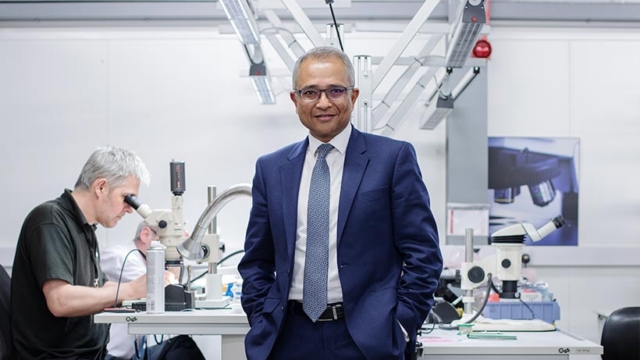
Arnab Basu, CEO of Kromek
Kromek receives £2.5m radiation detectors order from MoD
The UK Ministry of Defence has placed a second order with Kromek for its wearable D5 RIID radiation detection device, valued at £2.5 million.
Defence Member News

20 Nov 2026

Why don’t rockets launch from the UK?
Starshield's proliferated low-Earth orbit architecture provides inherent resiliency and constant connectivity to on-orbit assets, while SpaceX's proven rapid launch capability provides expedient and economical access to space.
Why don’t rockets launch from the UK?
While the UK is often described as a poor location for rocket launches, the reality is more complicated. Its geography creates challenges for some missions, but also gives emerging spaceports in Scotland and Shetland a valuable niche in the fast-growing small-satellite market.
Space

21 Nov 2026

ESA awards OHB €102m ClearSpace-1 contract
ClearSpace Titel V2
ESA awards OHB €102m ClearSpace-1 contract
Following the selection of OHB as the prime contractor for the European Space Agency's ClearSpace-1 programme, Europe has moved a step closer to realising Europe’s first active space debris removal mission.
Member News Space

20 Nov 2026

Viasat launches VIA to work across all in-flight connectivity networks
A cloud-delivered media platform that runs on any in-flight connectivity network - including via satellite - has been launched by Viasat, which can enable airlines to deliver their own branded experience across their fleets.
Met launches handheld facial recognition pilot for frontline identity checks
New Scotland Yard sign
Met launches handheld facial recognition pilot for frontline identity checks
The Metropolitan Police have launched a six-month trial of a new handheld facial recognition tool that allows officers to verify a person's identity without their consent by comparing a photograph taken on a police-issued mobile device against the force's custody image database.
Security

20 Nov 2026

Hexagon and Red Bull look beyond engineering degrees to find manufacturing’s future talent
Formula 1 car at Red Bull's MK7 campus
Hexagon and Red Bull look beyond engineering degrees to find manufacturing’s future talent
At Red Bull’s Milton Keynes campus, Hexagon brought students and employers together to explore how interests in gaming, data and problem-solving could become a route into manufacturing — and what industry needs to do to open those doors.
Expert shares what SMEs should do in the first two hours of an energy or cyber disruption
Server racks creating data center corridor 3d
Expert shares what SMEs should do in the first two hours of an energy or cyber disruption
Cyber attacks, grid failures and rising electricity demand are creating new business risks. Dr Phil Wu explains the three actions SMEs should take in the first two hours of a disruption.
Security

19 Nov 2026