UK-led satellite will identify natural resources from space
Images of terrain taken by the MANTIS satellite will allow prospectors to view Earth geology remotely, so reducing cost, removing risk and helping them to make better decisions.
Searching for natural resources is often an expensive and hazardous exercise, carried out in remote areas of the world. However, high resolution images of terrain taken by the MANTIS satellite and refined through novel data analysis will mean that prospectors can view Earth geology remotely, so reducing cost, removing risk and helping them to make better decisions.


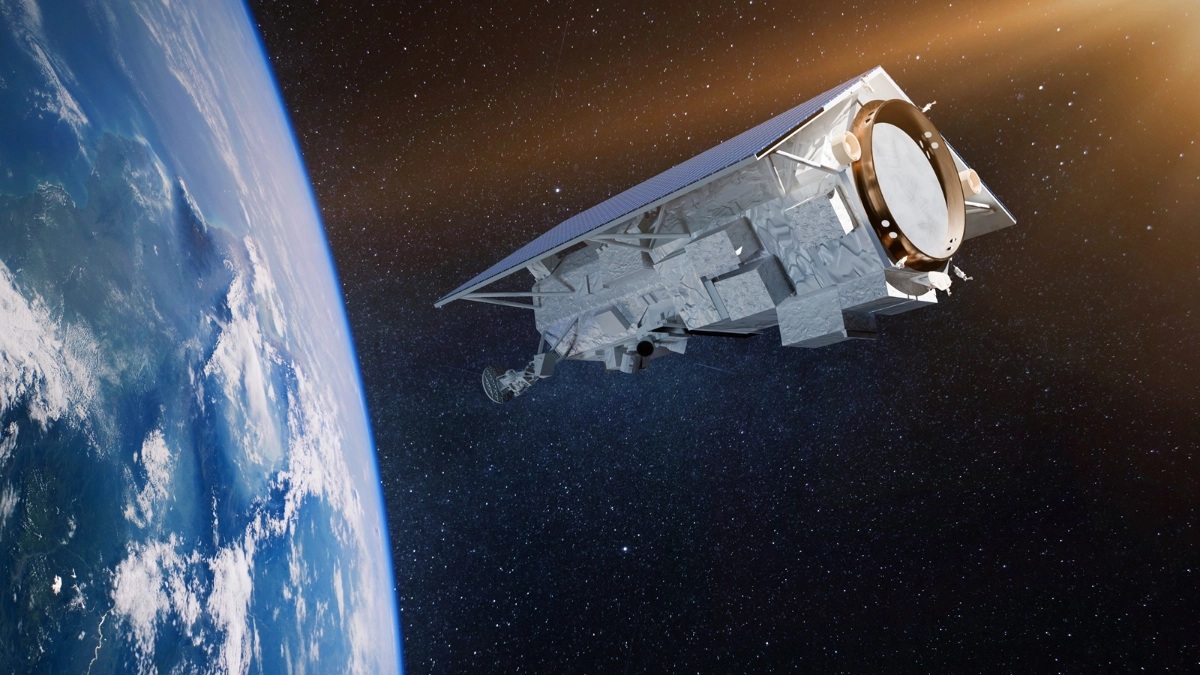
Above:
An artists impression of a MANTIS satellite.
Courtesy Open Cosmos
The demonstration project is co-funded by industry and the UK Space Agency through its investment in the ESA’s InCubed Programme, which aims to support innovative projects related to Earth Observation into the commercial market.
Beth Greenaway, Head of Earth Observation for the UK Space Agency said: "Observations of the Earth from space are central to modern day life in helping us to monitor climate change, map our environment, forecast the weather and now – finding new resources.
"The UK is a world leader in Earth observation technology and we hope to maintain momentum at the forthcoming European Space Agency Council of Ministers in November, where we will be reaffirming our ESA membership."
The InCubed funding will help bring this service from concept to a Minimum Viable Product stage, providing and demonstrating the first element of a potential satellite constellation, helping overcome the initial barrier to market and supporting the growth of the UK space sector.
UK space business Open Cosmos will provide the satellite platform and lead construction of the mission, Terrabotics will provide the data analytics service and the high resolution camera will be procured from Satlantis in Spain.
Rafel Jordá Siquier, founder and CEO of Open Cosmos said: "Open Cosmos is very excited to work on this next generation Earth Observation satellite. This project shows that bringing together the best specialists in their fields, in this case Open Cosmos, Satlantis and Terrabotics, leads to great technical performance improvements of Earth Observation platforms, while at the same time significantly reducing time to orbit, complexity and cost of these systems."
Investing in Industrial Innovation – InCubed – is a European Space Agency programme supporting innovative projects related to Earth Observation, with the focus of removing barriers to entry of the commercial marketplace. The UK, jointly with Spain, is a lead contributor to the programme, with the nations having contributed €10 million each to the total budget of €35 million. UK InCubed funding has been awarded through a process of competitive calls for proposals.

Courtesy Open Cosmos
The MANTIS contract was signed last week (11th September) at ESA’s ESRIN facility near Rome, Italy.
The UK’s investments in ESA are strengthening the UK’s national capability in space, which is fundamental to modern day life, from weather forecasting and satellite TV, to communications and monitoring climate change.
The UK will make ambitious new subscriptions to ESA programmes in November, which will strengthen capabilities further and ensure the UK plays a significant role in global efforts to return humans to the Moon, bring back the first samples from Mars and develop innovative new technologies for life on Earth.