British tech firms invited to shape £100 million military AI taskforce



The UK has opened its new £100 million military AI taskforce to ideas from industry, setting out how it plans to find, test and rapidly move promising technologies into operational use.
The Ministry of Defence on August 25 published new details of the Rapid AI Delivery Taskforce, or TF RAID, including an Industry Front Door through which companies can submit AI, autonomy and other technologies aimed at solving military problems. The submissions could feed into future experiments, competitions and technology challenges.
The move provides a clearer picture of how TF RAID will work with industry since former Prime Minister Keir Starmer and former Defence Secretary John Healey announced the unit in June.
Backed by £100 million through the Defence Investment Plan, the taskforce reports directly to the Chief of the Defence Staff and has been given a deliberately practical brief: identify an operational problem, find technology that could solve it and get successful systems into military use quickly.
Its stated measure of success is straightforward: “operational advantage delivered, not technology demonstrated.”
TF RAID is intended to get technology beyond the demonstration stage
TF RAID was announced on June 10 as part of a wider push to make artificial intelligence central to how the British military operates.
The government said at the time that it wanted AI-enabled tools to help service personnel make decisions more quickly, improve military planning and allow uncrewed systems to undertake dangerous tasks without putting people at the same level of risk.
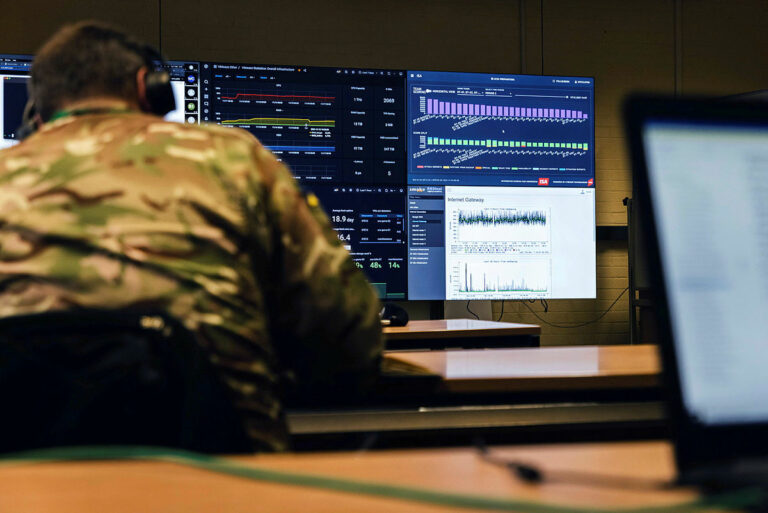
The difference with TF RAID is meant to be speed and a focus on the end user. Rather than existing simply to fund research or demonstrate emerging technology, the taskforce brings together military personnel with technical and commercial specialists who can take a problem from the Armed Forces and look for a workable solution.
Chief of the Defence Staff Air Chief Marshal Sir Richard Knighton made clear at its launch that he did not want the new organisation to become another innovation initiative that produced little operationally.
“I am determined that TF RAID is not just another piece of window dressing, set up to give us comfort that something is happening,” Knighton said. “The focus of Taskforce RAID is on delivering necessary operational capability, quickly.”
The taskforce has exemptions from some of the financial and procedural controls normally applied to defence programmes, while its military and technical specialists have been given authority to move quickly.
That is particularly relevant to AI, where commercial technology can change considerably during the time it takes a conventional defence procurement programme to move from requirement to contract and deployment.
Intelligence and autonomous systems among first targets
The MOD has now identified four areas where TF RAID will initially concentrate its work.
The first is what it calls “understanding and decision advantage”. AI will be used to process and analyse intelligence and help commanders make operational decisions.
A second strand covers the electromagnetic and information environment. The aim is to combine and exploit information from different sources to build a better picture of increasingly complicated operating environments.
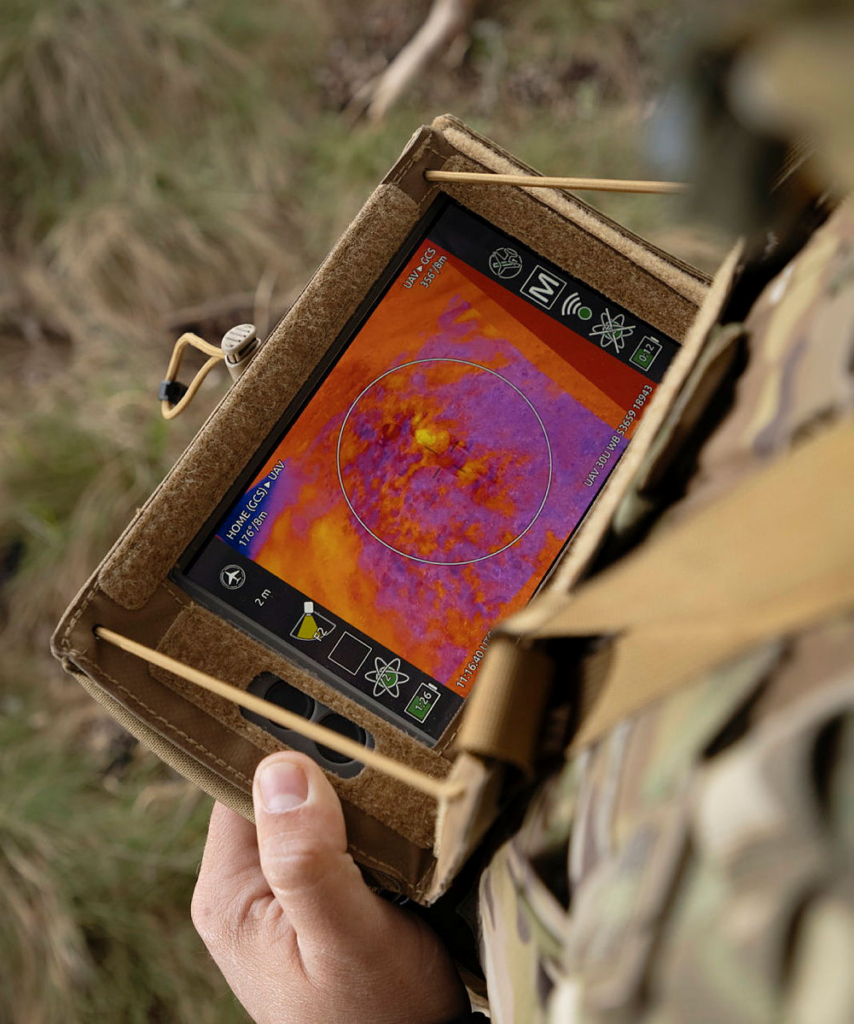
Military planning is another priority. AI-enabled tools will be examined for their ability to improve the speed and quality of planning and allow plans to be adapted as circumstances change.
The fourth area is autonomous systems, where the taskforce will explore how AI-enabled uncrewed capabilities can be used at greater scale and pace.
When TF RAID was launched, the MOD described one of its ambitions as using “AI-enabled swarms” of uncrewed systems to provide greater scale and agility in contested environments. It also envisaged AI helping British forces understand the electromagnetic environment in real time.
The focus reflects a broader change in the way the MOD views emerging technology. The AI plan pointed to the war in Ukraine as evidence that forces need to be able to adapt software, drones and electronic warfare capabilities far more quickly than traditional acquisition cycles have allowed.
New front door gives British tech companies a direct route into TF RAID
For industry, the latest announcement provides the first practical route into the taskforce.
Companies do not need to wait for a conventional tender before approaching TF RAID. The Industry Front Door allows an organisation with an idea, concept or existing technology relevant to a military problem to put it forward for consideration.
It is important, however, that the mechanism is not confused with a procurement competition. The MOD says the Front Door is intended for engagement, horizon scanning and the exchange of ideas. A submission could help shape later experimentation, challenge programmes, competitions or engagement with industry, but does not itself amount to a bid for a contract.
For smaller British technology businesses, the significance is access.
Defence procurement has traditionally favoured companies familiar with military requirements, contracting procedures and lengthy acquisition programmes. The government wants TF RAID to draw on a much wider technology market, including companies whose main business may not previously have been defence.
That intention was present from the taskforce’s launch. The MOD said TF RAID would work with the British technology sector to lower barriers to entry and boost UK SMEs. One of the first companies brought into the initiative was British engineering firm Rowden, which had received a £25 million investment from the National Wealth Fund to expand sovereign technology capabilities and create 500 jobs.
The wider Defence AI plan also calls for a fast, modular and open architecture procurement model. The aim is to make it easier to add technology from different suppliers, reduce dependence on a single company and remove some of the obstacles faced by sovereign SMEs trying to sell into Defence.
AI push extends beyond weapons and battlefield systems
TF RAID sits inside a much broader attempt to change the way the MOD uses artificial intelligence.
A Defence-wide directive issued alongside the taskforce’s launch in June told personnel to adopt a more urgent approach to AI. The MOD said every part of the organisation should identify where the technology could improve military effect, accelerate decisions and remove barriers to adoption.
That includes changes well beyond autonomous weapons.
The department plans to expand AI training for military and civilian personnel, incorporate the technology into professional military education and use it during major exercises. It also wants personnel to have greater access to secure AI sandbox environments in which applications can be developed and tested.
Another strand addresses the less visible problem of military data.
Modern AI systems depend on large quantities of usable information. The MOD plans an integrated Defence data mesh operating across different security classifications and wants major personnel, financial and other datasets made more accessible for approved AI applications.
The UK is also looking beyond its own technology base for advanced models. The Defence AI plan calls for work with the US government to improve access to leading American AI models, alongside arrangements with the UK’s AI Security Institute to assess models from different suppliers before they are adopted.
MOD says faster adoption will retain safeguards
Giving TF RAID greater freedom to move quickly does not remove existing controls over military AI.
The government says the unit will operate within Defence policies and assurance procedures, with oversight remaining part of its work. A new AI Expert Advisory Group is also planned, bringing together technical, ethical and operational specialists as the military expands its use of the technology.
Sign up for our newsletter and get our latest content in your inbox.
Similar Reads


Sign up for our newsletter. Select all sectors relevant to you.
Related