UK to host NATO Defence Innovation European HQ

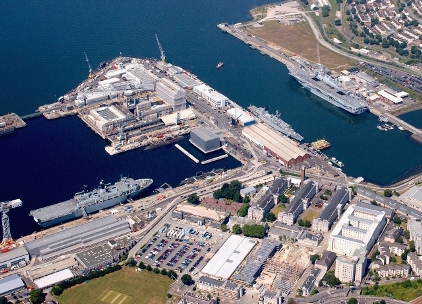
Image courtesy MoD
Announced today by the NATO Secretary General, Jens Stoltenberg, the Defence Innovation Accelerator for the North Atlantic (DIANA) will see transatlantic cooperation on critical technologies and help NATO work more closely with industry and academia.
The UK’s accelerator will be twinned with a new accelerator in Tallinn, Estonia to encourage the sharing of expertise, explore the use of virtual sites to trial vehicles, including autonomous ones, and test cyber innovations.

As hosts, the UK and Estonia will:
- Support start-up companies with funding, guidance and business expertise through twinned accelerator networks.
- Offer the use of ‘deep tech’ test centres to assess technological solutions to military problems, utilising the Defence BattleLab.
- Work with NATO to develop a virtual marketplace to connect start-ups with trusted investors, as well as a rapid acquisition service to connect products to buyers at pace.
UK Defence Secretary, Ben Wallace said: "The UK and Estonia are two of the most innovative countries in NATO and our hosting of DIANA will harness that innovation for the benefit of all Allies tackling future military threats.
"The UK has a vibrant tech community, combining the academia, financiers, and high-tech start-ups that make it an ideal place to develop the next generation of military technologies.
"Estonia was the natural partner for the UK given its international leadership in cyber, autonomy and AI and our close partnership forged through the Enhanced Forward Presence."
Ranked in the world’s top 10 innovative universities, Imperial College London will bring together academia, industry and government by hosting the headquarters of DIANA and a DIANA Accelerator at the Innovation Hub (IHUB) in the White City Innovation District, in a space shared with the UK’s Defence and Security Accelerator (DASA), Major Defence Contractors and The US Department of Defence’s Tri-Service Office.
Supported by DASA, the UK and Estonia DIANA HQ is expected to be operational from July 2022. DIANA is essential to delivering the NATO 2030 vision and ensuring that the Alliance develops the military capabilities needed to deter and defend against existing and future threats.
Estonian Defence Minister, Kalle Laanet said: "The goal of DIANA is to support deep technologies companies that contribute to defence. It will bring together talented innovators with new technologies end-users in the area of defence. We are very glad to see that the good cooperation we have with the UK will expand even further and also encompass our universities and private sector more.
"Cooperation between the UK and Estonia is working well on every level because we have a common understanding of defence policy. Good relations with Allies is a cornerstone of Estonian defence policy, and a successful start to this programme for us is a sign that this cornerstone is strong."
Co- Director, Institute for Security Science and Technology, Imperial College London, Professor Deeph Chana, said: "As one of the top STEM-B universities in the world, in one of the most diverse cities, Imperial College London is uniquely placed to power a progressive, responsible and holistic dual-use security and defence technology innovation program by hosting DIANA. Coordinated through our Institute for Security Science and Technology and Business School we’re committed to working on disruptive research and innovation to reduce insecurity and to deal with global threats and challenges."
DIANA will support all seven of the key emerging and disruptive technologies that NATO has identified as priorities: artificial intelligence, big-data processing, quantum-enabled technologies, autonomy, biotechnology, hypersonics and space.