

UKSA to join DSIT


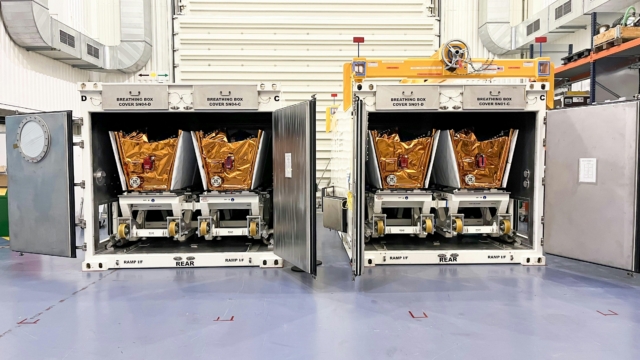
Image courtesy DSIT
People and businesses across the UK are set to benefit from new changes that will see the UK Space Agency (UKSA) become part of the Department for Science, Innovation and Technology (DSIT), aimed at cutting duplication, reducing bureaucracy and putting public accountability at the heart of decisionmaking.
In a major step to boost support for the UK’s space sector, the change will bring together the people who shape space policy and those who deliver it. This will cut any duplication that exists and ensure decisions are made with clear ministerial oversight.
Taking place by April 2026, the new unit will keep the UK Space Agency (UKSA) name and brand and will be staffed by experts from both organisations. This will drive up efficiency in line with the government’s Plan for Change, cutting red tape and making Whitehall more agile.
Today also sees the publication of over 60 recommendations from industry leaders on how to improve regulation for space missions, including Rendezvous and Proximity Operations (RPO) – where spacecraft work together in orbit. These missions are key to unlocking a future market worth £2.7 billion by 2031 (according to the UKspace IOSM Priorities Paper), and the UK is well placed to lead the way. It is a prime example of the joined-up working that will benefit from the merge of UKSA into DSIT.
With the right support, UK space firms could capture a quarter of the global market for in-orbit servicing, assembly and manufacturing. This will help to clean up space, extend the life of satellites, and build new infrastructure above Earth.
Every Arms Length Body across government is being reviewed with a view to rooting out unnecessary bureaucracy and duplication, and to put public accountability first. Ministers have already announced that NHS England, the largest quango in the world, will be abolished as part of this process.
Space Minister Sir Chris Bryant said: "You don’t need to be a rocket scientist to see the importance of space to the British economy. This is a sector that pulls investment into the UK, and supports tens of thousands of skilled jobs right across the country, while nearly a fifth of our GDP is dependent on satellites. The aims for growth and security at the heart of our Plan for Change can’t be met without a vibrant space sector.
"Bringing things in house means we can bring much greater integration and focus to everything we are doing while maintaining the scientific expertise and the immense ambition of the sector."
UK Space Agency CEO Dr Paul Bate said: "I strongly welcome this improved approach to achieving the government’s space ambitions. Having a single unit with a golden thread through strategy, policy and delivery will make it faster and easier to translate the nation’s space goals into reality.
"In coming together, the UK Space Agency and space policy colleagues are building on the firm foundations of economic growth and capability development laid in recent years, including cutting-edge missions, major national programmes, and the regulations that enable UK launch and leadership in space sustainability.
"We will continue to deliver, while reducing duplication and ensuring we work even more closely with Ministers to support the UK space sector, and the country."
The UK Space Agency was founded in 2010 and currently operates as an executive agency of DSIT. It catalysed investment and revenue of at least £2.2 billion for the UK space sector in 2024/25. DSIT and the Agency will continue to work closely together over the coming months to support the UK space sector and ensure a smooth transition to the new arrangements. Further practical details on the merger will be announced in due course.
This RPO Sandbox report has been delivered by three firms with leading expertise in the field: Astroscale, ClearSpace and D-Orbit, working in collaboration with the Civil Aviation Authority (CAA), the UK Space Agency (UKSA) and DSIT. Publishing the Stage 1 Report on the Regulatory Sandbox for Rendezvous and Proximity Operations (RPO) delivers a key recommendation from the Space Regulatory Review and further demonstrates the strength of the sandbox model to support wider innovation, taking advantage of these safe spaces for establishing ‘what works’ for regulating cutting-edge new technologies.
Through tackling bottlenecks and uncertainties that UK firms in this field and beyond currently face and ensuring regulation keeps up with the fast pace of innovation in this area, it will help encourage investment in nascent space activities like space junk removal, in-orbit refuelling and repair services that are expected to be highly lucrative in the decades ahead.
By stress-testing the regulatory framework for novel space missions, the report’s recommendations provide important clarity for the UK’s space industry, their clients and investors, which ultimately encourages the growth of and investment in British space businesses working on RPO missions. This work is supported by the Regulatory Innovation Office’s (RIO) mission to reform regulation across emerging technologies.
Delivery on these recommendations is already underway, as is Stage 2 of the Sandbox, which will examine issues unique to RPO missions in greater detail. The Stage 1 report sets a model for future sandboxes to follow. Its findings will support the delivery of the UK’s first ever active debris removal mission, planned to launch by 2028 to prove the tech needed to safely remove defunct satellites from orbit. This is technology that will protect the safe, secure and sustainable access to space upon which the UK’s economy and national security depend.
Nick Shave, Managing Director, Astroscale UK: "Astroscale UK is proud to have jointly led the industry delivery of Stage 1 of the RPO Regulatory Sandbox. Rendezvous and Proximity Operations are the foundation of all in-orbit servicing, from life-extension and refuelling to active debris removal – and with the right regulatory framework, the UK can be a global leader in this transformative sector.
"The recommendations in this report tackle the real bottlenecks industry faces today, providing clarity, proportionality and the confidence investors need. We look forward to working with government, regulators, and our fellow innovators to turn these proposals into action, ensuring the UK captures the economic and sustainability opportunities of a truly serviceable space sector."
Rory Holmes, ClearSpace COO and UK Managing Director, said: "Together with partners, ClearSpace has been at the forefront of delivering Stage 1 of the RPO Regulatory Sandbox, an important step towards a safe, sustainable, and commercially dynamic space sector. This stage has been pivotal in fostering collaboration between government, regulators, insurers, and operators, enabling stakeholders to address knowledge gaps and reduce uncertainty around licensing in-orbit servicing missions in the UK.
"Through the RPO Operators Consortium, we have contributed to comprehensive recommendations on safety, sustainability, security, and liability measures to strengthen the UK’s regulatory framework and benefit all satellite operators. By establishing a clear, transparent, proportionate, and predictable approach, these proposals position the UK to become a global leader in this strategically vital domain. We remain committed to turning this framework into action, supporting its implementation, and advancing the vision of secure, resilient, and sustainable space operations."
D-Orbit’s UK Legal Counsel, Lauren Payne, said: "Stage 1 successfully highlighted a range of challenges associated with the licensing of RPO missions under the current regulatory framework, allowing key stakeholders in licensing to work through these real-life challenges in a focussed, neutral forum. For Stage 2 we will build on the work in Stage 1 and zero in on implementation, where we hope to translate these issues into a better regulatory environment for RPO operators, customers, and regulators.
Colin Macleod, Head of the Space Regulator at the UK Civil Aviation Authority, said: "The regulatory sandbox on RPO allows us to work with industry and government on cutting edge ideas in a fast-paced, collaborative and safe environment.
"RPO is vital for sustainable space but operating satellites at thousands of miles per hour in close proximity brings big challenges. Getting this right unlocks new ways of operating in space, helping the UK space sector grow while operating safely and responsibly."
Scott Hammond, chief executive of SaxaVord Spaceport said: “This is a very welcome move by the Government.
“I have always argued that a streamlined approach to this new and rapidly growing sector by government, with a clear focus and joined-up delivery, is vital to ensure that everyone operating in it can make most of the opportunities opening up.
“Less red tape and more agility in Whitehall should make government more responsive to our needs and support the economic growth and security that the space industry brings. Perhaps the next step is to have a Minister with overall responsiblity for space who can liaise, co-ordinate and collaborate across government.
“Ministers must ensure that the UK is attractive to the numerous native and international businesses looking to launch from our soil. The rewards in terms of inward investment and jobs are huge, but to create and maintain a competitive advantage will take a concerted and cohesive effort from both government and the sector.”
Rachael O’Grady, Partner, Mayer Brown, said: “While media coverage has generally described the move as being to save costs or cut bureaucracy, the official messaging focuses more on efficiency, strategic alignment and reducing red tape, rather than explicitly stating job cuts or direct financial savings. The UK Space Agency’s name and branding will be retained and there are no immediate changes to ongoing grants or contracts – it will just become a unit of DSIT. Moreover, the move will not take place until April 2026.
“This is a key time for the UK space market with government attention and investment increasing sharply over the past few years. This move is likely to be part of the UK government’s ongoing space strategy and concerted attempts to position the UK as a serious operator on the international stage in this sector.”
There are no immediate changes to UK Space Agency grants or contracts and businesses and researchers currently working with the UK Space Agency do not need to take any action.
Sign up for our newsletter and get our latest content in your inbox.
Similar Reads





Sign up for our newsletter. Select all sectors relevant to you.
Related