VRCO partners with Silent Yachts
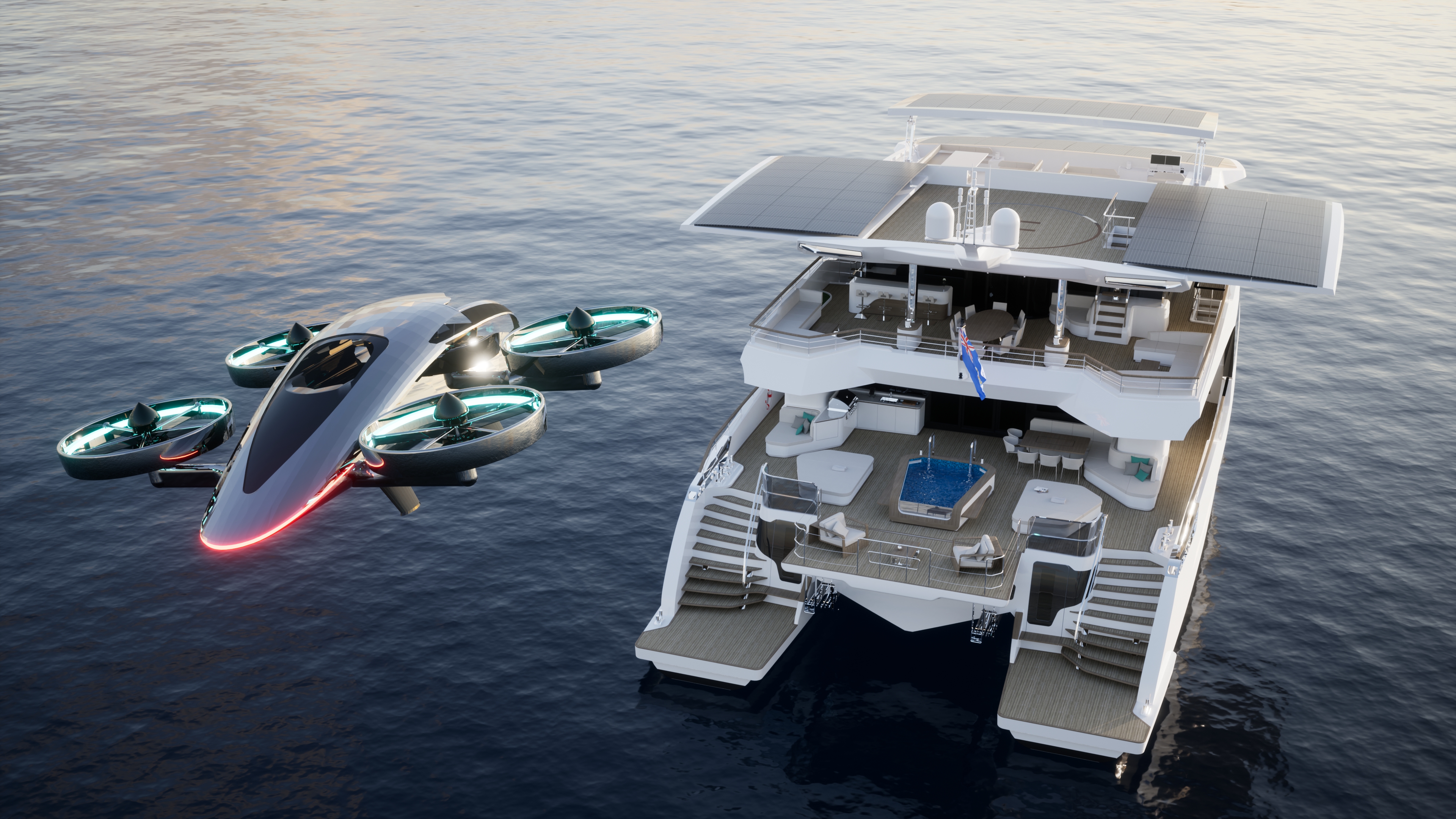
Above:
The partnership marks the first time a yacht company and an aircraft manufacturer have collaborated.
Courtesy Silent Yachts
VRCO has a vision for a flying car with a new form of personal aircraft as the initial phase. It is a showcase for British innovation with advanced lightweight composites enhanced with nanomaterials.

The vertical take-off and landing craft is designed to be capable of carrying four people. It features detection and avoidance technology with safety measures including a ballistic parachute and low altitude crash prevention systems. Working with key industry partners at the forefront of the UK’s power storage systems, the craft will be fast-charging and have enhanced range.
A full-size build should be completed later this year with operational testing in 2023 and certification beginning in 2024/25. The concept’s feasibility and power optimisation studies were undertaken by the University of Derby’s Institute for Innovation in Sustainable Engineering.
Solar catamaran builder Silent Yachts' new Silent 120 Explorer offers owners the chance to make the most of their adventure cruising itineraries with space for two of the latest must-have toys for remote voyaging – an electric vertical take-off and landing (eVTOL) aircraft from VRCO for heli-cruising and a submarine from U-Boat Worx for underwater exploration.
The 36.74-metre Silent 120, the first of which is currently in build and due for launch in 2024, features a 13.85-metre beam and an astonishing volume of 499 gross tonnes to offer extended cruising at six to eight knots in economical mode, or up to 16 knots at full power. The supercat also heralds the next step in solar-powered cruising, with 40kWp (kilowatt-peak) panels providing enough energy to cover the yacht’s hotel loads, as well as offering significant fossil-free cruising autonomy, with carefully selected range-extender generators in addition to the 800kW lithium-ion batteries driving efficient 340kW e-motors, giving unlimited-miles cruising potential.
The Silent 120 offers her future owners more than just a technologically and environmentally advanced luxury explorer platform with potentially unlimited range – the catamaran hull form combined with compact electric propulsion units offers significant space that enables the Silent 120 to carry both a revolutionary eVTOL aircraft and an all-electric two-person submarine, in addition to the usual tenders and toys demanded on a superyacht. It also features interior design by Marco Casali.
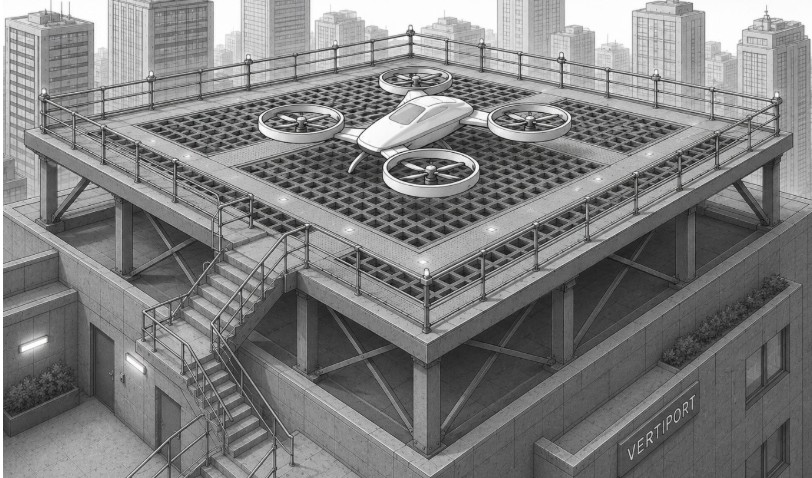
Silent Yachts’ partnership with VRCO, designers and manufacturers of the Xcraft XP4 eVTOL aircraft, marks the first time a yacht builder and an aircraft manufacturer have collaborated, with the XP4 being customised to match the interiors of the Silent 120. The XP4 can be landed on the roof of the Silent 120, where large solar panels will slide outboard to port and starboard to reveal a touch-and-go landing pad.
The XP4, which is due for certification in 2024, offers convenient aerial personal transportation for up to four people, and is designed with an array of safety features including detection and avoidance technology, a ballistic parachute and low-altitude crash prevention systems. In addition to utilising technologies such as nanomaterials and hydrogen-based range extension, the XP4 can not only be charged from the Silent 120’s solar panels but can also deliver power from its own battery to the yacht as a back-up power source. The collaboration not only extends the remote cruising profile of the Silent 120 but also marks a real advancement in carbon-responsible travel.
The U-Boat Worx Nemo submarine offers diving to 100 metre depths for two people in an all-electric package whose footprint is smaller than two jet-skis. The Nemo features the trademark acrylic pressure globe that gives pilot and passenger a breathtaking view of the depths, while the Manta control interface is both easy to learn and easy to operate.
The Nemo sub offers up to eight hours of autonomy, speeds underwater of up to three knots and positive buoyancy for automatic resurfacing in the unlikely event of an issue. The Silent 120’s volume and deck space means owners will have two options for carrying their submarine – either in the port hull’s tender garage or on the main deck next to the pool.
Michael Köhler, founder and CEO of Silent Yachts said: “The trend is for bigger yachts and more luxury, more comfort, more water toys and more possibilities. In the Silent 120 Explorer we designed a boat that is bigger in volume although not in length and bigger gives the opportunity to store more of these toys.
“We build catamarans, which means more beam and more space. We also build our boats with solar power and electric propulsion and that means we don’t have to give a lot of space to an engine room, which means we gain room for things like a gym or extra tender storage. Finally, the extra beam of the catamaran form means the roof can accommodate an eVTOL aircraft. We can plug it in on board and it will be recharged in a couple of hours.”