

Women in Aviation sets sights on expansion in UK and beyond


Women in Aviation International (WAI) is pushing ahead with plans to grow its presence outside North America… and the UK is at the top of the list.
Speaking at this year’s Farnborough International Airshow, WAI’s chief executive Lynda Coffman said the 36-year-old non-profit organisation is determined to build a stronger UK and European network. It is also looking to cut the financial barriers that keep women out of membership, and open up career pathways in a sector still dominated by men.
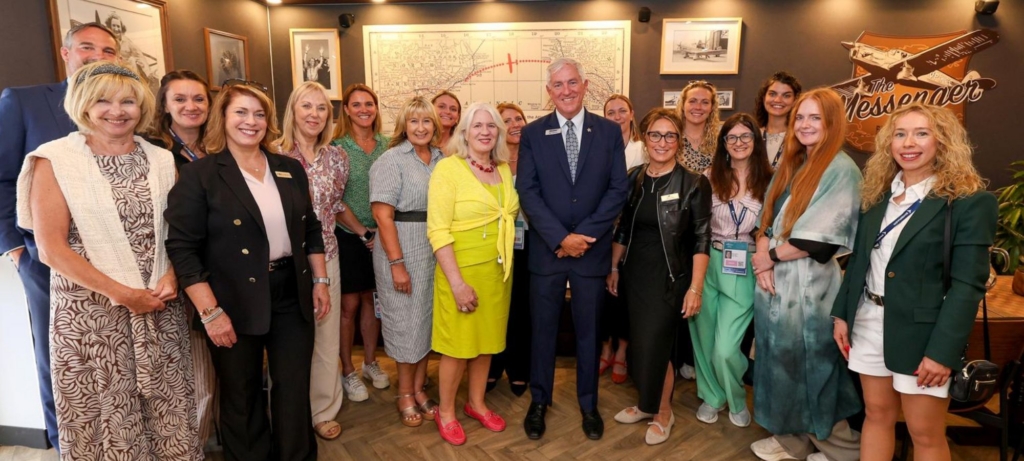
Coffman, who spent 30 years at United Airlines, where she served as the airline’s president and founding president of United Ground Express, said WAI’s roughly 20,000-strong membership remains heavily weighted towards the US. Changing that, she said, is a priority.
“Our mission is about lifting women up and helping them succeed,” Coffman said. “I want every woman, no matter where she lives in the world, to have access to a community that will support her.” She added that around a fifth of WAI’s members are men: “We don’t discriminate – we love our male allies, we need them – two of our board members are men, but our focus is on supporting women.”
Building a UK chapter network
WAI already runs more than 100 local chapters in the US, and Coffman said building out chapters in the UK is a target, alongside continued growth elsehwere in Europe, Asia and Africa.
“We have a lot of energy around building the UK chapters,” she said. “There’s no limit to how many chapters a country can have. We want to build that community worldwide.” Recent additions elsewhere include new chapters in Thailand, Singapore, Eastern Europe and several African nations.
Underpinning the organisation’s expansion is a restructuring of membership fees designed to make WAI viable for aspiring aviators in lower-income economies. Annual membership costs $59 (around £46) globally, a figure Coffman said is manageable for most UK members but prohibitive elsewhere. “In some developing economies that could be two weeks to a month’s salary,” she said. WAI has since introduced a sliding scale based on regional economic indices, cutting dues by as much as two-thirds in some markets, with the shortfall covered by donations from WAI’s board.
Closing the technical gap
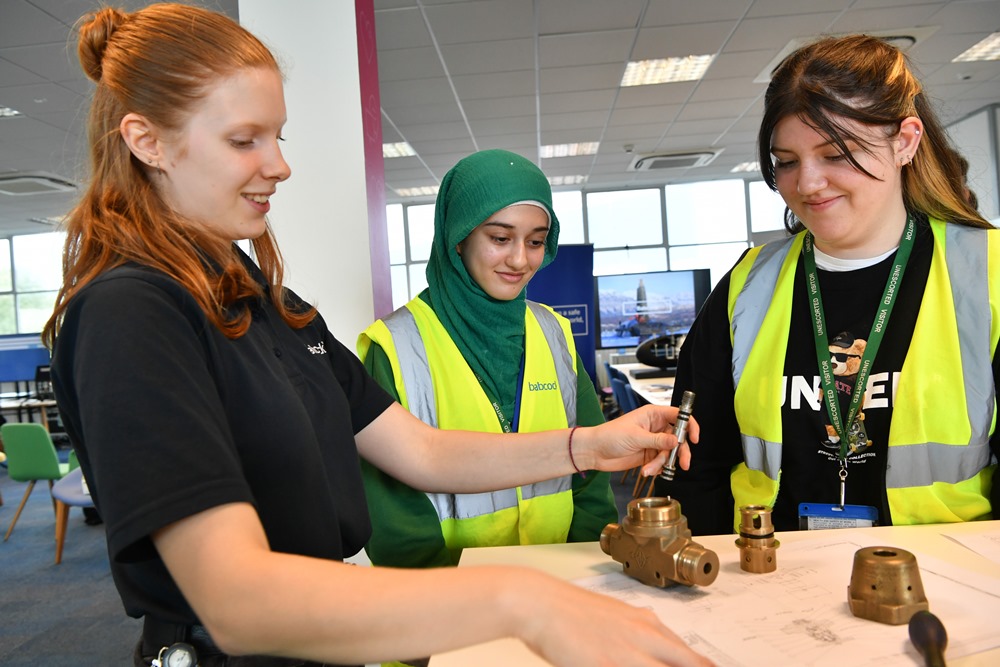
For the UK aviation sector, which continues to grapple with pilot and engineer shortages, WAI’s figures on technical representation make for sobering reading. Women account for roughly 30% of the global aviation workforce, Coffman said, but that headline figure is further skewed by roles such as cabin crew and customer service. “When you remove those roles, women make up only around 6% of the technical aviation workforce, a figure that has barely changed in decades,” she said.

Visibility, culture and cost remain the biggest obstacles, she added. “If girls don’t see women working as pilots, engineers or aircraft mechanics, they don’t believe those careers are for them. We still hear young girls being told that being a pilot or mechanic is a ‘boy’s job’.” WAI’s scholarship fund, which distributes hundreds of thousands of dollars annually, is aimed squarely at offsetting the high cost of pilot and engineering training. This is critical, argued Coffman, given the six-figure cost of achieving a commercial pilot’s licence.
Retention is a parallel concern. Citing US Federal Aviation Administration (FAA) research, Coffman said women continue to leave aviation careers at higher rates than men, driven by workforce culture and wider societal pressures. This is a pattern she believes is mirrored across the UK and Europe.
Mentoring the future workforce
WAI’s global mentoring programme, which matches mentors and mentees according to their experience, goals and location, is one tool aimed at improving retention internationally. Coffman cited last year’s Mentor of the Year, based in Dubai, who mentored a member in the US, as proof the model works across borders.
The organisation also runs International Girls in Aviation Day events, and Coffman said growing UK participation is now firmly on the agenda as WAI looks to, in her words, “create a global network where women can find support, mentorship and opportunities to progress their aviation career.”
Sign up for our newsletter and get our latest content in your inbox.
Similar Reads