World-first research project launched in Plymouth
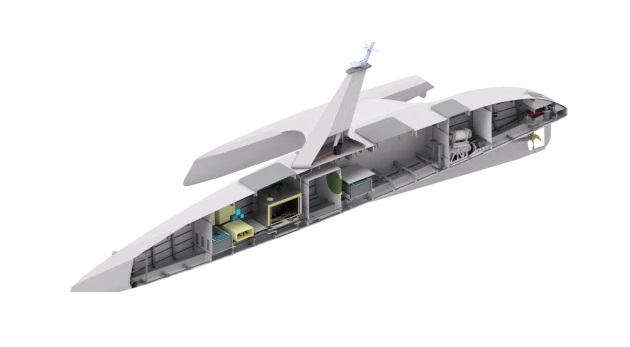
Image courtesy Marine AI
The eight-month project will see Marine AI finetune its baseline large language model (LLM) to process ADMIRALTY Sailing Directions (SDs) information and Radio Navigation Warnings (RNWs), currently written in natural language for human interpretation, and feed this structured information into the GuardianAI software suite for autonomous control. The breakthrough could transform global shipping by enabling uncrewed vessels to make safe, real-time decisions based on the same authoritative data used by professional mariners.

At present, MASS rely on human operators to interpret text-heavy navigation data, often described in non-standard nautical language and distributed through legacy systems. This project will address the challenges posed by unstructured text, legacy broadcast formats, and the lack of machine-readability, by retraining a bespoke large language model (LLM) and developing supporting AI agents to structure the data before it is fed into GuardianAI’s tactical engine and human–machine interface.
By solving these challenges, the research will allow autonomous vessels to operate more independently, responding immediately to navigational warnings and Sailing Directions without waiting for human interpretation.
The research programme will culminate in a live on-water demonstration in spring 2026, using ZeroUSV’s Oceanus12 vessel equipped with Marine AI’s GuardianAI suite on Plymouth’s waterways, alongside advanced simulation events. The results will also help inform the International Hydrographic Organization’s S-100 data framework, the new universal standard that will underpin the next generation of navigation technologies.

Oliver Thompson, technical director at Marine AI, said: “This is the first time anyone has attempted to process ADMIRALTY Sailing Directions and Radio Navigation Warnings in a way that an autonomous control system can act upon. By proving this capability on the water, we are closing one of the biggest gaps in MASS autonomy and taking a major step toward safe, fully automated operations.”
Mark Casey, Head of Research, Design and Innovation at the UK Hydrographic Office, said: “Working with Marine AI allows us to push the boundaries of how autonomous systems can use official hydrographic information. The outcomes will not only support the safety of lives at sea but also feed directly into the development of the IHO’s S-100 framework, ensuring that UKHO data continues to set the global benchmark for safe navigation in both crewed and uncrewed vessels.”
Autonomous shipping is a key priority for the UK maritime sector, with Plymouth already established as a national testbed for MASS technology. Demonstrating that uncrewed vessels can understand and act on the same official navigation information used by seafarers could:
Improve safety of life at sea through faster, automated responses to hazards.
Support the international community in defining the standards for autonomous navigation.
Accelerate the safe deployment of MASS across commercial, research and defence applications.