Cosmic trip set to help bacteria protect future space missions from radiation

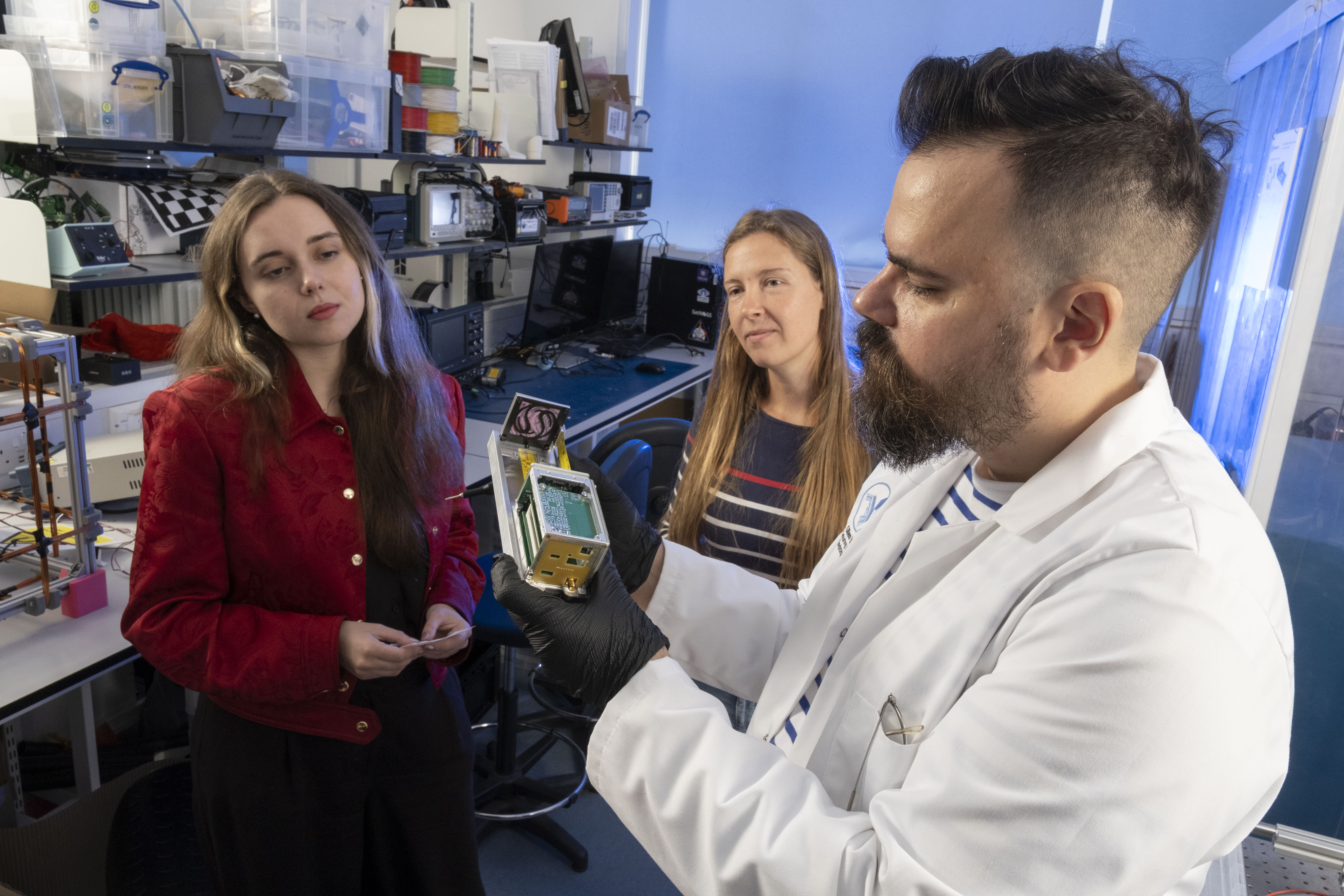
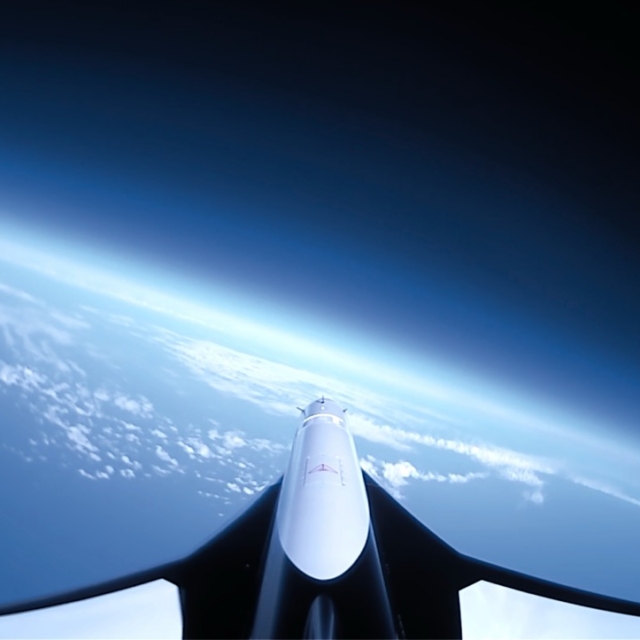
Image courtesy University of Glasgow
Scientists from Scottish institutions have teamed up with fashion designer to make fabrics painted with specially-designed dyes made from different types of bacteria.
When the multilayered, multicoloured fabric is exposed to radiation and UV light, the dyes in each layer fade, revealing the layer below and leaving visible evidence of the level of radiation they have absorbed.
The team plan to send a sample of the fabric into orbit around the Earth early next year aboard a tiny satellite called a PocketQube to test the dye’s performance in space.
In the future, fabrics painted with the dye could be used in space missions to make astronauts’ clothing and cover sensitive equipment, helping space explorers determine at a glance if they have been exposed to dangerous levels of radiation.
They could also be used on Earth in clinical settings, providing radiation-sensitive scrubs and aprons for radiotherapy of medical imaging staff. It could even be used in everyday fashions to create colour-changing clothes to help people monitor their exposure to sunlight, helping to reduce the risk of skin cancer.
The development of the fabric was supported by funding from EPSRC’s Impact Acceleration Account. Dr Gilles Bailet, a lecturer in space technology at the University of Glasgow’s James Watt School of Engineering, is leading the project, which is called Pigmented Space Pioneers.
He said: "Exposure to radiation breaks up the pigments in the bacteria, while similar exposure to radiation in humans breaks our DNA. For the bacteria, that means a reduction in their colour saturation, but for us it means greater risk of genetic mutations and cancers. We are aiming to harness the bacteria’s highly-visible response to create an unmistakable early-warning system for radiation exposure. It doesn’t need electronics or batteries to work – all you need are your eyes to see the colours respond to changes in ambient radiation.”
The team has developed fabrics using six different bacteria-based colours: red, yellow, pink, blue, and orange. The harmless bacteria naturally produce different pigments for various protective purposes, similar to how some bacteria defend against UV light, antibiotics, or other environmental threats.
The bacteria was grown and applied by Dr Keira Tucker, the lead biologist at the Edinburgh-based ASCUS – Art and Science Lab. The bacteria are applied to stacks of fabric by the University of Glasgow’s Professor Massimo Vassalli and Dr Vineetha Jayawarna. They use specialised needles and 3D printing techniques to create precise patterns and layers.
Once the bacteria die, they leave behind only their protective pigments, creating a stable, colourfast fabric that responds predictably to radiation exposure.
Fashion designer Katie Tubbing is behind the design of the fabric, which builds on previous collaborations with Dr Bailet exploring the intersection of art and science.
She said: “What we’re developing is a fabric with a design that is visually interesting but is also easily readable, so that in the future it will be easy to see at a glance when the dye has faded in response to potentially dangerous radiation exposure. It’s an exciting challenge, and it’s a unique fusion of art and science.”
Dr Keira Tucker said: “At ASCUS, we are working on ways to use common forms of bacteria to create more sustainable ways of dyeing clothes than relying on synthetic dyes, which can contaminate water supplies and have serious negative impacts on the environment. In this project, one of the pigmented bacteria we’re using, Serratia marcensens, you might have in your bathroom if you haven’t cleaned your sink in a while – it forms red rings around taps. It’s great to think that we can put these bacteria to new use in ambitious projects like Pigmented Space Pioneers.”
The team are working with Edinburgh-based space startup Spinning Around to send the first piece of fabric into space in February next year.
Alastair Broom, Founder and CEO of Spinning Around said: "We’re enchanted to be working with Dr Bailet and team on this crossover between engineering, science, fashion and art. Our small and mighty tech demonstrator PocketQube satellite, SpinnyONE, will return photographs of the fabric during next year’s mission and show the change in colour to the pigments as the satellite is exposed to months of radiation in low Earth orbit.
“Spinning Around is making tailor-made gravitational environments more affordable and accessible to Life Scientists for frequent experimentation, to build the next generation of manufacturing, research pharmaceuticals and more. So we’re delighted to demonstrate organic, experimental, microbiology-based art-science in space on our inaugural mission, showcasing the wide range of applications for life science.”
If the mission in February next year goes as planned, the team hopes to launch a more ambitious project which would take a larger piece of fabric to the surface of the Moon in early 2028. This would be the first Scottish-built hardware in history to reach the lunar surface.
The patch would be equipped with a dedicated camera and a microscope to enable the team to broaden their understanding of how the dye reacts to long-term exposure to the moon’s harsh radiation environment. The data they collect about radiation exposure patterns could help support safety measures for future manned missions to the moon.
Dr Bailet added: "If the project develops as we hope it will, we are exploring the possibility of sending a second, larger sample of the fabric to the moon to give it a stress test that will be literally out of this world. Glasgow is already the biggest city in Europe outside of the west coast of the USA for spacecraft manufacturing, but this would put us on the map internationally for the first art piece genuinely used as scientific equipment."
The project is the latest space-related research project led by Dr Bailet. He has also recently patented a system which overcomes the challenges of 3D printing in zero gravity, and developed the NextSpace TestRig, the world’s first dedicated facility for testing the structural integrity of materials that will be 3D printed in space.
Sign up for our newsletter and get our latest content in your inbox.
Similar Reads



Sign up for our newsletter. Select all sectors relevant to you.
Related