Why did the RAF’s Cold War V-bombers look so different?


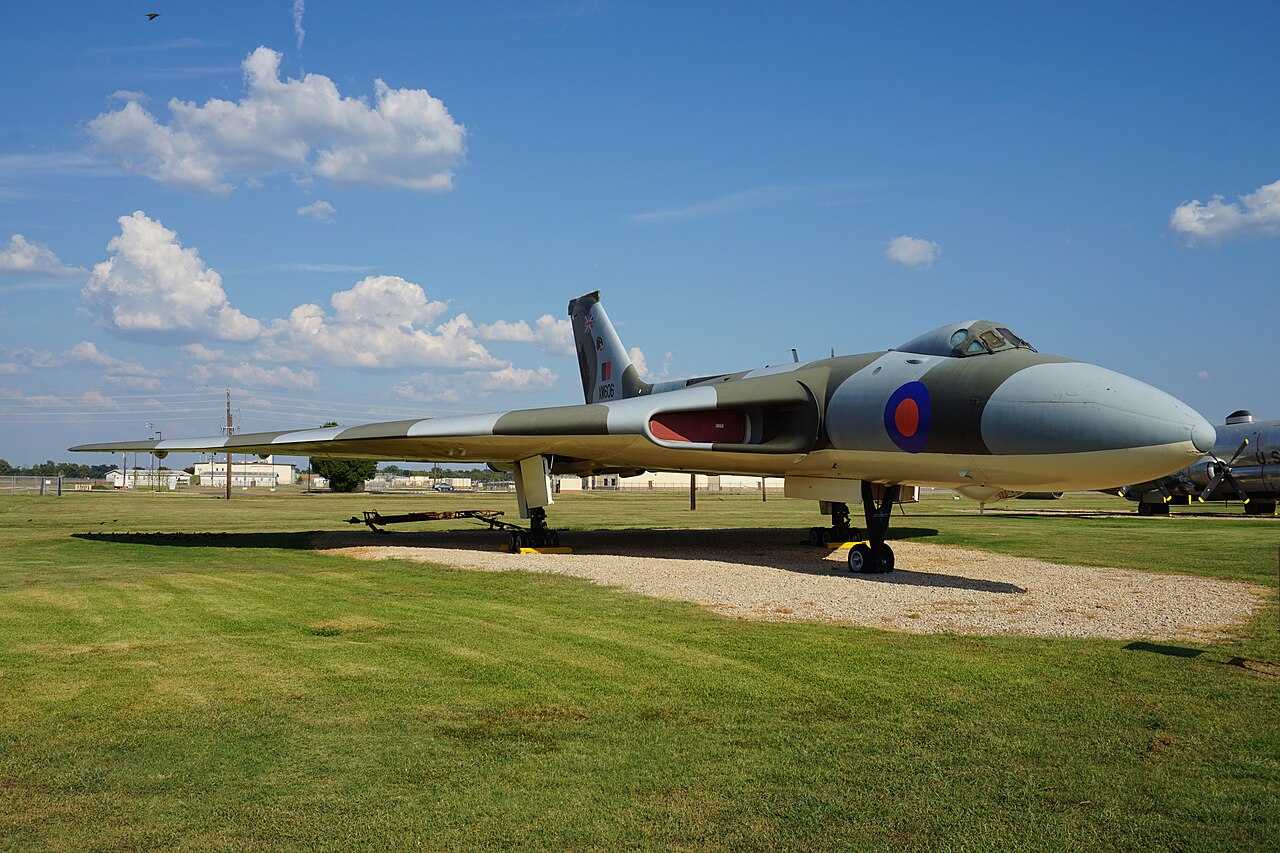
The Royal Air Force’s V-bombers were among the most important British aircraft of the early Cold War. Consisting of the Vickers Valiant, Avro Vulcan and Handley Page Victor, these three jet-powered bombers were developed to deliver Britain’s nuclear deterrent.
Although they shared the same overall purpose, their designs were remarkably different.
The Valiant had a conventional appearance, the Vulcan featured a distinctive delta wing, and the Victor had an unusual crescent-shaped wing and a tall, swept tail. These differences were the result of changing technology, competing engineering ideas and the RAF’s need to develop a bomber capable of surviving in the nuclear age.
The need for a new generation of bomber aircraft
After the Second World War, Britain recognised that its existing bomber force would soon become vulnerable to increasingly advanced enemy fighters and radar-guided anti-aircraft weapons. Britain also wanted to maintain its position as a major military power, particularly as the United States and Soviet Union developed nuclear weapons.
The RAF therefore required aircraft capable of carrying heavy nuclear bombs over long distances at high altitude and high speed. Jet engines offered greater performance than the piston engines of wartime bombers but designing an effective jet bomber was a considerable challenge. Britain’s aircraft manufacturers had different ideas about how to meet these requirements, leading to three vastly different designs.
The Vickers Valiant: a conventional approach
The Vickers Valiant was the first of the three V-bombers to enter RAF service, arriving in 1955. Its relatively conventional design reflected the urgent need to introduce a modern jet bomber without relying on the most experimental aerodynamic concepts.
The Valiant had swept wings, four jet engines and a conventional tail arrangement. Its straightforward design made it comparatively easy to develop and bring into service. This was particularly important because Britain needed a credible nuclear deterrent as quickly as possible.
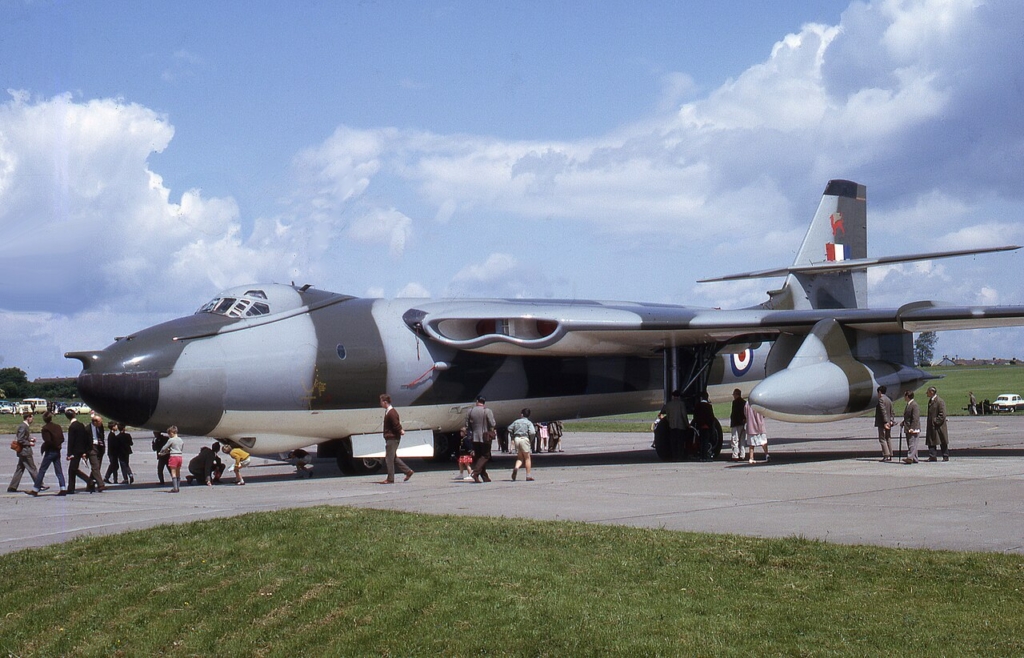
However, the Valiant was not simply an old-fashioned aircraft with jet engines. Its swept wings and streamlined fuselage were designed for high-speed flight, while its internal bomb bay allowed it to carry nuclear weapons. It also served in reconnaissance and conventional bombing roles.
Nevertheless, the Valiant’s relatively conservative design limited its potential for further development compared with the more advanced Vulcan and Victor. Structural fatigue problems eventually led to its retirement in 1965.
The Avro Vulcan: The advantages of the delta wing
The Avro Vulcan, which entered service in 1956, looked radically different from the Valiant. Its enormous delta wing gave it a distinctive triangular shape, with no conventional horizontal tailplane.
This design emerged from research into high-speed flight. As aircraft approached the speed of sound, conventional wing arrangements presented increasing aerodynamic challenges. A delta wing offered a combination of strength, internal space and favourable high-speed characteristics.
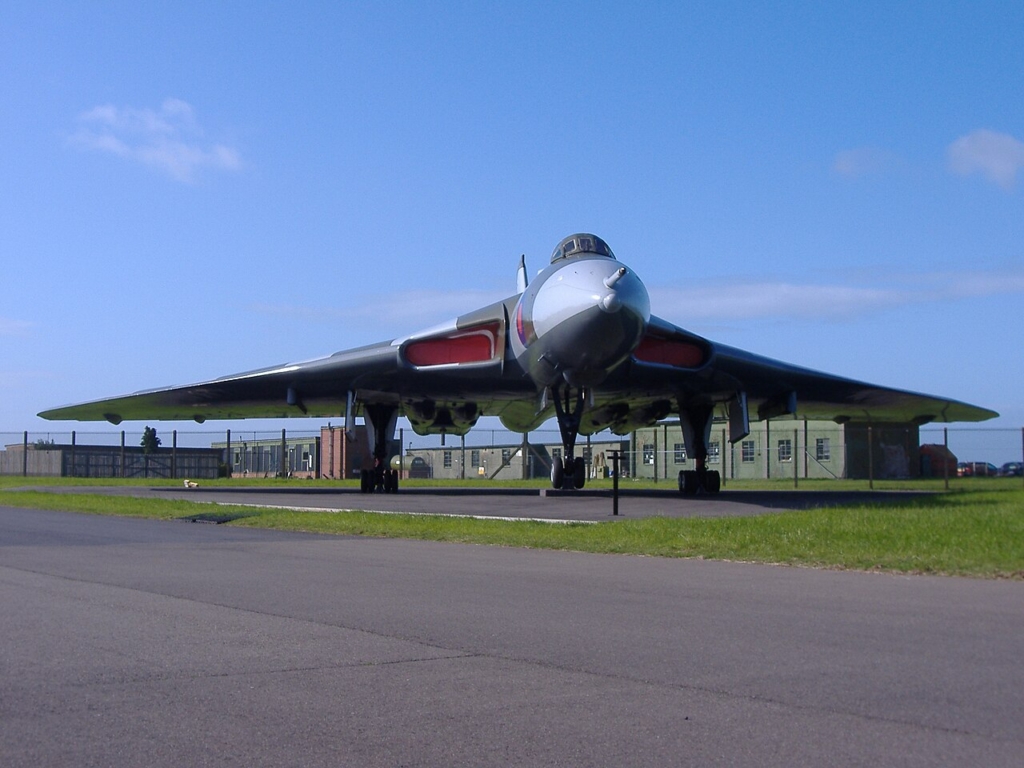
The Vulcan’s thick wing roots provided room for fuel, engines and structural components, while its broad wing helped generate lift. Its design also offered good performance at high altitude and allowed it to manoeuvre surprisingly well for such a large aircraft.
Avro’s approach was particularly ambitious because the Vulcan required extensive testing to understand its unusual handling characteristics. However, the result was an aircraft that combined a futuristic appearance with impressive performance. Its distinctive shape became one of the defining images of Britain’s Cold War air power.
The Handley Page Victor: an experimental aerodynamic design
The Handley Page Victor, which entered service in 1958, was perhaps the strangest-looking of the three aircraft. Its crescent-shaped wing, swept-back tail and elevated cockpit gave it an unusual appearance.
The Victor’s shape was the result of efforts to improve performance across a wide range of speeds. Its designers used a wing whose sweep and aerodynamic characteristics varied along its span. This helped manage the effects of airflow at high speeds while maintaining lift and efficiency.
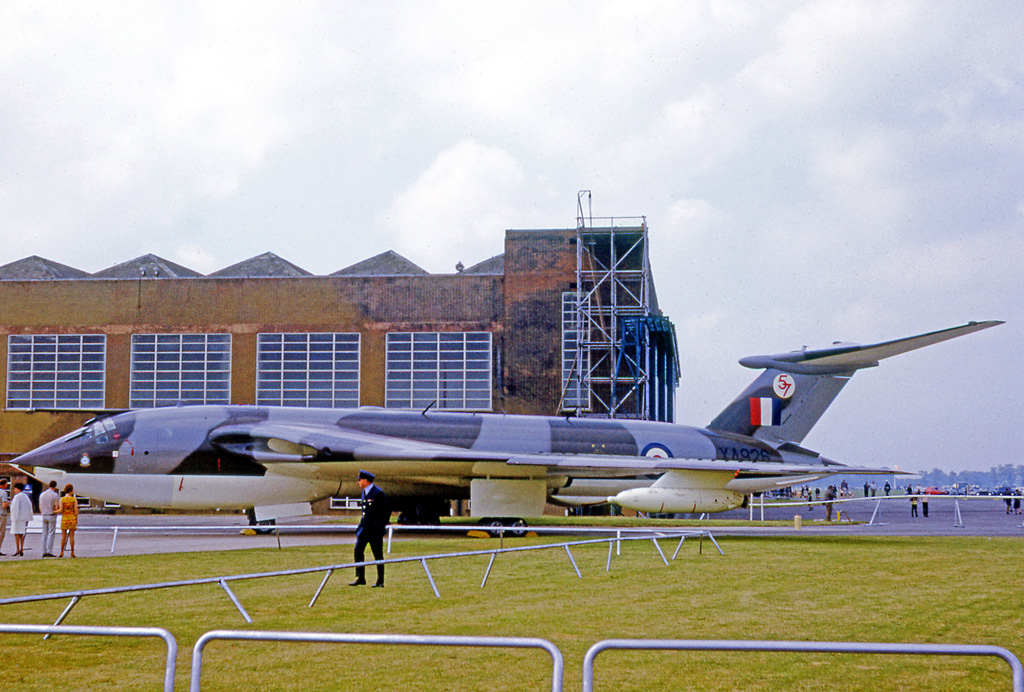
Like the Vulcan, the Victor was designed to operate at high altitude and carry nuclear weapons over long distances. Its advanced aerodynamic layout made it well suited to the demands of high-speed flight.
However, the Victor’s sophisticated design also reflected Handley Page’s willingness to pursue a different solution from its competitors. Rather than adopting the Vulcan’s delta wing or the Valiant’s more conventional arrangement, the company developed a distinctive design based on its own aerodynamic research.
Why not build just one design?
Britain did not deliberately require three completely different bombers simply for variety. Instead, the aircraft emerged from a combination of government specifications, independent manufacturers and the rapidly changing technology of the late 1940s and early 1950s.
The British government encouraged several companies to develop competing designs, reducing the risk that one unsuccessful project would leave the RAF without a modern bomber. Different engineering teams also interpreted the requirements in different ways, particularly as knowledge of high-speed aerodynamics developed.
Furthermore, the three aircraft entered service at different times. The Valiant reflected an earlier, more cautious stage of jet bomber development, while the Vulcan and Victor incorporated more advanced aerodynamic concepts.
Ultimately, all three aircraft fulfilled the same central purpose, but their different designs demonstrated that there was no single obvious solution to the challenge of building a high-performance nuclear bomber.
Different solutions to the same problem,
The RAF’s V-bombers looked so different because they represented competing engineering approaches to the same Cold War problem. The Valiant prioritised a relatively straightforward route into service, the Vulcan exploited the advantages of the delta wing, and the Victor used an innovative crescent-shaped design to improve aerodynamic performance.
Together, they illustrate how quickly aviation technology developed after the Second World War. Their differences were not merely cosmetic: they reflected the uncertainty, experimentation and ambition that shaped Britain’s efforts to maintain a credible nuclear deterrent during the early Cold War.
Sign up for our newsletter and get our latest content in your inbox.
Similar Reads


Sign up for our newsletter. Select all sectors relevant to you.
Related